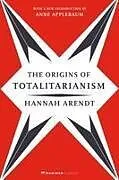
The Origins of Totalitarianism
Beschreibung
Autorentext Hannah Arendt (1906–1975) is considered one of the most important and influential thinkers of the twentieth century. A political theorist and philosopher, she is also the author of Crises of the Republic, On Violence, The Life of the Mind, an...Format auswählen
- Kartonierter EinbandCHF 25.10

Wird oft zusammen gekauft
Andere Kunden kauften auch
Beschreibung
Autorentext
Hannah Arendt (1906–1975) is considered one of the most important and influential thinkers of the twentieth century. A political theorist and philosopher, she is also the author of Crises of the Republic, On Violence, The Life of the Mind, and Men in Dark Times. The Origins of Totalitarianism was first published in 1951.
Anne Applebaum is a staff writer for The Atlantic and a Pulitzer Prize–winning historian. She is also a Senior Fellow at the Johns Hopkins School of Advanced International Studies and the Agora Institute. She is the author of Twilight of Democracy.
Anne Applebaum is a staff writer for The Atlantic and a Pulitzer Prize–winning historian. She is also a Senior Fellow at the Johns Hopkins School of Advanced International Studies and the Agora Institute. She is the author of Twilight of Democracy.
Klappentext
Hannah Arendt's definitive work on totalitarianism-an essential component of any study of twentieth-century political history-now with a new introduction by Anne Applebaum.
A cornerstone of modern political philosophy, The Origins of Totalitarianism has become essential reading as we grapple with the rise of autocrats and tyrannical thought across the globe.
The book begins with the rise of anti-Semitism in central and western Europe in the 1800s and continues with an examination of European colonial imperialism from 1884 to the outbreak of World War I.
Hannah Arendt then explores the institutions and operations of totalitarian movements, focusing on the two genuine forms of totalitarian government in our time, Nazi Germany and Stalinist Russia, which she adroitly recognizes were two sides of the same coin, rather than opposing philosophies of Right and Left. From this vantage point, this work of European history discusses the evolution of classes into masses, the role of propaganda in dealing with the nontotalitarian world, the use of terror, and the nature of isolation and loneliness as preconditions for total domination.
This edition includes an introduction by Anne Applebaum-a leading voice on authoritarianism and Russian history-who fears that "once again, we are living in a world that Arendt would recognize."
- Ideology and Terror: Explore Arendt's groundbreaking analysis of how totalitarian movements use propaganda and terror not merely as tools of power, but as instruments to reshape reality itself.
- The End of the Rights of Man: Understand the frightening process by which the nation-state's decay leads to the creation of stateless peoples and the collapse of the legal protections that guarantee human dignity.
- From Classes to Masses: Examine the historical shift from a class-based society to an atomized mass, and how isolation and loneliness become the terrifying preconditions for total domination.
- A Seminal Work of Political Philosophy: Delve into the definitive text on the nature of totalitarianism, a masterwork of twentieth-century political history that remains essential for understanding the modern world.
Zusammenfassung
Hannah Arendt's definitive work on totalitarianisman essential component of any study of twentieth-century political historynow with a new introduction by Anne Applebaum.
A cornerstone of modern political philosophy, The Origins of Totalitarianism has become essential reading as we grapple with the rise of autocrats and tyrannical thought across the globe.
The book begins with the rise of anti-Semitism in central and western Europe in the 1800s and continues with an examination of European colonial imperialism from 1884 to the outbreak of World War I.
Hannah Arendt then explores the institutions and operations of totalitarian movements, focusing on the two genuine forms of totalitarian government in our time, Nazi Germany and Stalinist Russia, which she adroitly recognizes were two sides of the same coin, rather than opposing philosophies of Right and Left. From this vantage point, this work of European history discusses the evolution of classes into masses, the role of propaganda in dealing with the nontotalitarian world, the use of terror, and the nature of isolation and loneliness as preconditions for total domination.
This edition includes an introduction by Anne Applebauma leading voice on authoritarianism and Russian historywho fears that once again, we are living in a world that Arendt would recognize.
- Ideology and Terror: Explore Arendt's groundbreaking analysis of how totalitarian movements use propaganda and terror not merely as tools of power, but as instruments to reshape reality itself.
- The End of the Rights of Man: Understand the frightening process by which the nation-state's decay leads to the creation of stateless peoples and the collapse of the legal protections that guarantee human dignity.
- From Classes to Masses: Examine the historical shift from a class-based society to an atomized mass, and how isolation and loneliness become the terrifying preconditions for total domination.
- A Seminal Work of Political Philosophy: Delve into the definitive text on the nature of totalitarianism, a masterwork of twentieth-century political history that remains essential for understanding the modern world.