
IHR WARENKORB IST AKTUELL LEER.
Haben Sie noch nichts passendes gefunden? Stöbern Sie durch unser komplettes Sortiment.
Oder melden Sie sich an bzw. registrieren Sie sich.
- Kostenlose Lieferung
- Kauf auf Rechnung
- Ex Libris Tiefpreis
- Filiallieferung und 650+ Abholorte
- Rabatt-Bons als Club-Mitglied
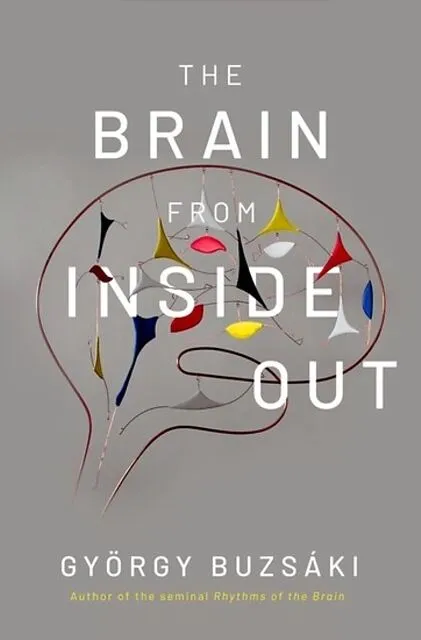
The Brain from Inside Out
Beschreibung
Zusatztext This outstanding book will challenge you to think deeply about how we should view the route to discovery in brain research. The primary argument of the book is that the brain is a self-organized system with a preexisting organization designed to gen...Format auswählen
- Fester EinbandCHF 106.80

Wird oft zusammen gekauft
Andere Kunden kauften auch
Beschreibung
Zusatztext This outstanding book will challenge you to think deeply about how we should view the route to discovery in brain research. The primary argument of the book is that the brain is a self-organized system with a preexisting organization designed to generate actions and to evaluate and predict the consequences of those actions. This is contrasted with the dominant view in modern neuroscience that the brain exists to represent the world! process information and decidehow to respond. The consequences of this distinction are presented from an historical and a scientific perspective done with remarkable scholarship and scientific rigor. As a welcome addition to the rapidly expanding dialogue on brain science and society! I hope it finds its way onto the desks ofyoung people commencing careers in the neurosciences. Informationen zum Autor György Buzsáki is Biggs Professor of Neuroscience at New York University. Member of the National Academy of Sciences USA, Co-recipient of the 2011 Brain Prize.His main interest is "neural syntax", how segmentation of neural information is organized to support cognitive functions.Book: G. Buzsáki, Rhythms of the Brain, Oxford University Press, 2006 Klappentext Gy rgy Buzs 's The Brain from Inside Out examines why the outside-in framework for understanding brain function have become stagnant and points to new directions for understanding neural function. Building upon the success of Rhythms of the Brain, Professor Buzs presents the brain as a foretelling device that interacts with its environment through action and the examination of action's consequence. Consider that our brains are initiallyfilled with nonsense patterns, all of which are gibberish until grounded by action-based interactions. By matching these nonsense " to the outcomes of action, they acquire meaning. Once its circuits are " by action and experience, the brain can disengage from its sensors and actuators, and examine " scenarios by peeking into its own computation, a process that we refer to as cognition.Winner of the 2020 Prose Award for Excellence in Biomedicine & Neuroscience by the Association of American Publishers Zusammenfassung Is there a right way to study how the brain works? Following the empiricist's tradition! the most common approach involves the study of neural reactions to stimuli presented by an experimenter. This 'outside-in' method fueled a generation of brain research and now must confront hidden assumptions about causation and concepts that may not hold neatly for systems that act and react.György Buzsáki's The Brain from Inside Out examines why the outside-in framework for understanding brain function has become stagnant and points to new directions for understanding neural function. Building upon the success of 2011's Rhythms of the Brain! Professor Buzsáki presents the brain as a foretelling device that interacts with its environment through action and the examination of action's consequence. Consider that our brains are initially filled withnonsense patterns! all of which are gibberish until grounded by action-based interactions. By matching these nonsense "words" to the outcomes of action! they acquire meaning. Once its circuits are "calibrated" by action and experience! the brain can disengage from its sensors and actuators! and examine "what happens if" scenarios bypeeking into its own computation! a process that we refer to as cognition. The Brain from Inside Out explains why our brain is not an information-absorbing coding device! as it is often portrayed! but a venture-seeking explorer constantly controlling the body to test hypotheses. Our brain does not process information: it creates it. ...
Vorwort
Winner of the 2020 Prose Award for Excellence in Biomedicine & Neuroscience by the Association of American Publishers
Autorentext
György Buzsáki is Biggs Professor of Neuroscience at New York University. Member of the National Academy of Sciences USA, Co-recipient of the 2011 Brain Prize. His main interest is "neural syntax", how segmentation of neural information is organized to support cognitive functions. Book: G. Buzsáki, Rhythms of the Brain, Oxford University Press, 2006
Klappentext
Is there a right way to study how the brain works? Following the empiricist's tradition, the most common approach involves the study of neural reactions to stimuli presented by an experimenter. This 'outside-in' method fueled a generation of brain research and now must confront hidden assumptions about causation and concepts that may not hold neatly for systems that act and react. György Buzsáki's The Brain from Inside Out examines why the outside-in framework for understanding brain function has become stagnant and points to new directions for understanding neural function. Building upon the success of 2011's Rhythms of the Brain, Professor Buzsáki presents the brain as a foretelling device that interacts with its environment through action and the examination of action's consequence. Consider that our brains are initially filled with nonsense patterns, all of which are gibberish until grounded by action-based interactions. By matching these nonsense "words" to the outcomes of action, they acquire meaning. Once its circuits are "calibrated" by action and experience, the brain can disengage from its sensors and actuators, and examine "what happens if" scenarios by peeking into its own computation, a process that we refer to as cognition. The Brain from Inside Out explains why our brain is not an information-absorbing coding device, as it is often portrayed, but a venture-seeking explorer constantly controlling the body to test hypotheses. Our brain does not process information: it creates it.
Inhalt
- Preface
- Chapter 1: The Problem
- Chapter 2: Causation and Logic in Neuroscience
- Chapter 3: Perception from Action
- Chapter 4: Neuronal Assembly: The Fundamental Unit of Communication
- Chapter 5: Internalization of Experience: Cognition from Action
- Chapter 6: Brain Rhythms Provide a Framework for Neural Syntax
- Chapter 7: Internally Organized Cell-Assembly Trajectories
- Chapter 8: Internally Organized Activity During Off-Line Brain States
- Chapter 9: Enhancing Brain Performance by Externalizing Thought
- Chapter 10: Space and Time in the Brain
- Chapter 11: Gain and Abstraction
- Chapter 12: Everything is a Relationship: The Non-Egalitarian, Log-Scaled Brain
- Chapter 13: The Brain's Best Guess
- Chapter 14: Epilogue
- Index