Beschreibung
The need for green metrics, or environmental metrics, stems from the growing awareness and urgency to address environmental issues. Green metrics help in quantifying the impact of human activities on the environment. This includes measuring carbon footprints,...The need for green metrics, or environmental metrics, stems from the growing awareness and urgency to address environmental issues. Green metrics help in quantifying the impact of human activities on the environment. This includes measuring carbon footprints, water usage, waste generation, and pollution levels. By providing tangible data, these metrics guide individuals, businesses, and governments in making more sustainable decisions. They highlight areas where environmental impact can be reduced. Also, green metrics are crucial for tracking progress towards environmental goals, such as those set by the Paris Agreement or the Sustainable Development Goals (SDGs).
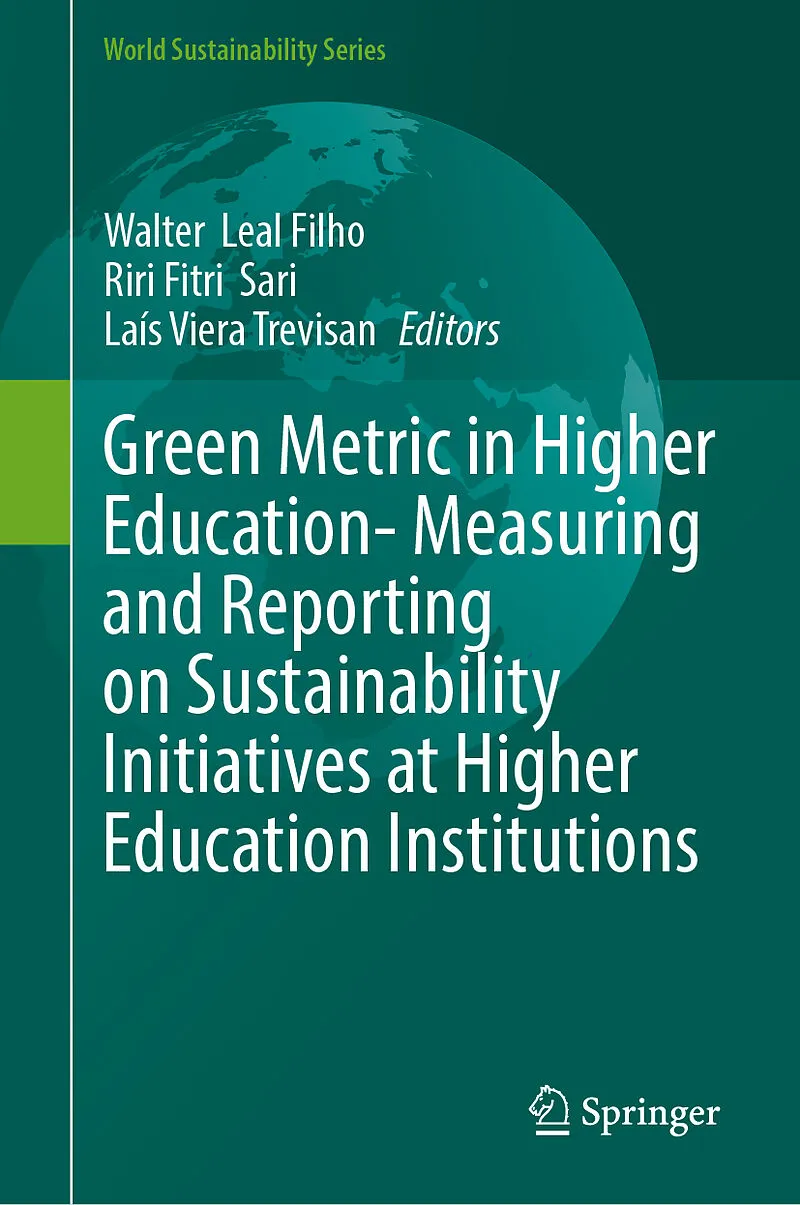
Against this backdrop and in order to facilitate a broad discussion on the contribution of universities towards sustainability, this book is being produced.
The book gathers inputs from universities and research organisations working on matters related to sustainable development and green metrics, in a variety of contexts. It also provides a platform for the dissemination of information on the latest initiatives.Furthermore, the book intends to provide a fertile basis upon which universities may cooperate more closely in this key area. Last but not least, a further aim of the book is to present methodological approaches and experiences deriving from case studies and projects, which aim to show how green metrics may be incorporated as part of university programmes.
Very international A combination of projects, case studies and practical experiences Interdisciplinary authorship
Autorentext
Professor Walter Leal Filho (BSc, PhD, DSc, DPhil, DTech, DL, DEd, DLitt) is a distinguished "Euro-Professor", holding professorial posts at Universities in Germany (Chair of Climate Change Management at the Hamburg University of Applied Sciences), United Kingdom (Manchester Manchester Metropolitan University), Sweden (University of Uppsala) and Poland (Merito University). He has two main research interests. The first is in the field of sustainable development, where he holds a world record of publications. The second is climate change, to which he has been providing a key contribution to the literature, also including aspects of climate change and health. He is founding editor of the World Sustainability Series and the Climate Change Management Series, the leading peer-reviewed book series on sustainable development and climate change issues, respectively, with an excess of 100 books published to date.
Professor Riri Fitri Sari (Ir, MM, MSc, PhD) is an established academic in computer engineering and sustainability. She served as the Founding Chairperson of the UI GreenMetric World University Rankings, where she led the development of a global platform for sustainability in higher education. A Professor at Universitas Indonesia and former Director of Information Technology, her interdisciplinary work connects ICT, artificial intelligence, and sustainability, contributing meaningfully to the international discourse on green universities. Prof. Sari has received international recognition, including Honorary Professorships from KazNARU (Kazakhstan), RUDN (Russia), and NPUST (Taiwan). Her research focuses on smart campuses, AI, and blockchain applications for the SDGs. She continues to contribute through keynote speeches and global academic collaborations. Laís Viera Trevisan is a Project Manager and Research Associate at the Hamburg University of Applied Sciences, Germany. Her background is in Business, and her research interests are sustainability, technology and innovation for sustainable development, smart campuses, and education for sustainability.
Inhalt
Chapter 1. Sustainable Development Assessments for Afyon Kocatepe University.- Chapter 2. The role of the environment and sustainability in medical student education.- Chapter 3.Implementing Sustainable Development Goals in Iraqi Universities : Opportunities and Challenges. Facts from Al-Noor University College.- Chapter 4. GreenMetric-Driven Sustainable Campus Framework: A Case Study of Allama Iqbal Open University, Pakistan.- Chapter 5. Higher Education Prominent Activities Towards Sustainability.- Chapter 6. Transformative Interdisciplinary Research Initiatives by Autonomous University of the State of Mexico: Advancing Education and Diminishing Inequalities in Latin America.- Chapter 7. Sustainability Efforts of Bakent University Regarding the Sustainable Development and Participation of All University Members.- Chapter 8. Strengthening sustainability in higher education institutions: The Experience of a State University in the Philippines.- Chapter 9. Mapping BSU Strategy and Implementation of University's Measures for Achieving the Interlinked and Integrated Sustainability Development Goals.- Chapter 10. Sustainability in Academic Institutions: The Case of Bezmialem Vakif University.- Chapter 11. Sustainability as a Leading Principle of a university the case of Budapest Business University.- Chapter 12. Cultivating Change: Bukhara State University's Gentle Steps Towards Sustainability.- Chapter 13. An integrated strategy of Cairo University sustainability Development.- Chapter 14. Green Campus Features A case study of CUST.- Chapter 15. Contribution of Higher Education Institutions to Climate Actions: Carbon Neutral Campus Certification at Universidad Catolica de Manizales, Colombia.- Chapter 16. CETYS University Commitment to Sustainability. Experiences of a Mexican Private University.- Chapter 17. Strengthening International Cooperation and Knowledge Expansion in Sustainable Development: Impacts of the Annual SDUC Conference and Collaborative Projects at Daneshpajoohan Pishro Higher Education Institute.- Chapter 18. A 22-year Quest to a Sustainable DLSU-D: Making Green Greener.- Chapter 19. SUSTAINABILITY INITIATIVES OF DUZCE UNIVERSITY BY THE PERSPECTIVE OF UI GREENMETRIC WORLD UNIVERSITY RANKING: TOWARDS A CARBON NEUTRAL AND GREEN CAMPUS.- Chapter 20. Development of a Decision Support System for Sustainable Water Management in an UI GreenMetric Member Campus.- Chapter 21. Sustainable Endeavors at a Turkish University: A UI GreenMetric Exploration.- Chapter 22. Sustainability Initiatives of nönü University Provided Support to Recover After the Destructive Earthquake.- Chapter 23. Environmental Sustainability Practices at Institute of Business Management, Karachi, Pakistan.- Chapter 24. Implementing the sustainability culture through extension in a public university.- Chapter 25. Transaction Cost of The Green Campus Management Program at IPB University, Indonesia.- Chapter 26. Sustainability Performance of Istanbul Technical University (ITU): Lessons Learned from UI Green Metrics.- Chapter 27. Sustainable Development in Action: IUBAT's Path to a Greener Future.- Chapter 28. GreenMetric Journey of Izmir Institute of Technology: Agile Strategies Towards a Green Campus.- Chapter 29. Sustainability Initiatives at Mangalagangotri Campus of Mangalore University: A Status Report.- Chapter 30. ACHIEVE-ing Sustainability through Strategic and Committed Action: The Case of Mariano Marcos State University.- Chapter 31. Mersin University's Sustainability Journey: Innovations for a Green Campus.- Chapter 32. Pathways to Sustainable Development Goals: NCNU's Initiatives.- Chapter 33. Toward net-zero emissions by 2040 at National Chung Hsing University.- Chapter 34. Sustainable Development Initiatives and Experiences in NPUST.- Chapter 35. Developing a Sustainable University Model for Turkmen Universities: A Case Study of ETUT.- Chapter 36. University and discourse of ethical sustainable development.- Chapter 37. Integration of Sustainability at Qassim University: An overview of the Innovative Approaches to Support the Implementation of Sustainable Development Goals.- Chapter 38.Implementing a Whole-Institution Approach (WIA) to Nurture Engaged Citizens for Sustainable Development.- Chapter 39. The Environmental Club:…