
IHR WARENKORB IST AKTUELL LEER.
Haben Sie noch nichts passendes gefunden? Stöbern Sie durch unser komplettes Sortiment.
Oder melden Sie sich an bzw. registrieren Sie sich.
- Kostenlose Lieferung
- Kauf auf Rechnung
- Ex Libris Tiefpreis
- Filiallieferung und 650+ Abholorte
- Rabatt-Bons als Club-Mitglied
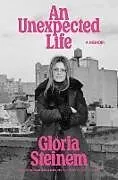
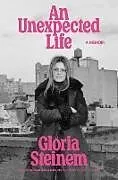
An Unexpected Life
Beschreibung
New York Times bestselling author of My Life on the Road Autorentext Gloria Steinem Klappentext NEW YORK TIMES BESTSELLER • In her final memoir, Gloria Steinem offers a candid, inspiring portrait of her early life and journey as an activist, while looking...Format auswählen
- Fester EinbandCHF 20.65
- TaschenbuchCHF 28.50

Wird oft zusammen gekauft
Andere Kunden kauften auch
Beschreibung
New York Times bestselling author of My Life on the Road
Autorentext
Gloria Steinem
Klappentext
NEW YORK TIMES BESTSELLER • In her final memoir, Gloria Steinem offers a candid, inspiring portrait of her early life and journey as an activist, while looking ahead to the next chapters of the fight for equality—a rare opportunity to learn directly from one of feminism’s most enduring voices.
“In revisiting the equal-rights movements Steinem helped build, she offers wisdom to new generations.”—Vanity Fair
**“An Unexpected Life is a luminous act of remembrance and generosity.”—Roxane Gay, New York Times bestselling author of *Bad Feminist
*
Before she became a feminist leader, Gloria Steinem was a curious child: going on road trips with her itinerant father, caring for her mother, and devouring every book she could find. In An Unexpected Life, Steinem reflects on the unlikely experiences and pivotal moments—from a childhood rat bite that opened her eyes to the dangers of poverty to the 1970 Women’s March honoring the right to vote—that shaped the visionary woman she would become.
She shares her years living in India, learning from the nonviolent movement there, and her travels around the world advocating for women’s rights. Along the way, she honors the people who influenced her most, including trailblazers, writers, and thinkers who expanded her understanding of power, community, justice, and solidarity.
Moving between past and present, Steinem examines the progress and setbacks of six decades of activism. As she reflects on the movements she helped build and the victories won for women’s and human rights, she also looks ahead, urging new generations to imagine bolder, more inclusive paths forward.
Intimate, funny, and rich with hard-earned wisdom, An Unexpected Life offers inspiration as we continue the work of building a better future for all.
Zusammenfassung
In her final memoir, Gloria Steinem offers a candid, inspiring portrait of her early life and journey as an activist, while looking ahead to the next chapters of the fight for equality—a rare opportunity to learn directly from one of feminism’s most enduring voices.
“In revisiting the equal-rights movements Steinem helped build, she offers wisdom to new generations.”—Vanity Fair
**“An Unexpected Life is a luminous act of remembrance and generosity.”—Roxane Gay, New York Times bestselling author of *Bad Feminist
Before she became a feminist leader, Gloria Steinem was a curious child: going on road trips with her itinerant father, caring for her mother, and devouring every book she could find. In An Unexpected Life, Steinem reflects on the unlikely experiences and pivotal moments—from a childhood rat bite that opened her eyes to the dangers of poverty to the 1970 Women’s March honoring the right to vote—that shaped the visionary woman she would become.
She shares her years living in India, learning from the nonviolent movement there, and her travels around the world advocating for women’s rights. Along the way, she honors the people who influenced her most, including trailblazers, writers, and thinkers who expanded her understanding of power, community, justice, and solidarity.
Moving between past and present, Steinem examines the progress and setbacks of six decades of activism. As she reflects on the movements she helped build and the victories won for women’s and human rights, she also looks ahead, urging new generations to imagine bolder, more inclusive paths forward.
Intimate, funny, and rich with hard-earned wisdom, An Unexpected Life offers inspiration as we continue the work of building a better future for all.
Leseprobe
Chapter 1
Bad Things I’m Glad Happened to Me
The act of writing is the act of discovering what you believe. —David Hare, A Map of the World
In the first half of my life, I counted as useful only the many good things that happened to me. For instance, both my parents were loving and respectful of the unique self within each of their two very different daughters, born nine years apart. My older sister was blond and blue-eyed, and longed for a married life after her rewarding career as a gemologist. Indeed, she did marry and have six children.
As a teenager, I had an impractical fantasy of tap-dancing my way into the future, since show business seemed the most likely path out of East Toledo, though I knew I wasn’t good enough for a career. Instead, I went to college and, after graduation in 1956, got a fellowship that allowed me to study in India, where I stayed for two years. I fell in love with that country for its ancient diversity as much as for its then modern rebellion against colonialism. I felt inspired by the independence movement that had been slowed but not eliminated by Mahatma’s Gandhi’s assassination. I also loved wearing saris, as well as the easier salwar kameez, and living in student dormitories. For free, I was able to audit classes at a university. I can’t say I learned much, since my academic studies were then still devoted mostly to a curriculum from England, but I did learn about the universality of human aspiration.
I’m still grateful to the students at Miranda House, a women’s college at the University of Delhi, who accepted me as a foreign student and took me with them on their coffeehouse adventures. To my surprise, I found that I felt at home. I had spent my junior year of college in Geneva, Switzerland, and had traveled around Europe, but not until India had I ever felt as comfortable in any country not my own. While traveling alone in India, I found I had less to worry about, in part because, as a woman, I had the advantage of special seats in restaurants and railroad cars. Once I knew about those opportunities, I just had to relax and enjoy them.
In New Delhi, I saw up close what massive poverty looked like. I also witnessed what a national movement, started by women and taken up by Gandhi, was doing to release people from the bonds of caste, sex, and economic and colonial dependency as well as British rule. In the villages surrounding Delhi, I was welcomed with warmth and curiosity, and saw the pride that came with independence. For instance, shoemakers were considered one of the lowest professions because they worked with animal hides, but when a shoemaker began to repair a village’s only street after he had seen that initiative being taken in a neighboring village, others began to help him. Soon the street was no longer a slough, but a neatly bricked thoroughfare.
My second year there allowed me to move around more of the country and learn. I traveled safely in the women-only compartments of third-class trains, and stayed for very little money in student hostels. When I ran out of money, I got the courage to submit essays to Indian newspapers, written as a foreign observer. Surprisingly, some were accepted and I was paid small sums.
One of the articles I published in India, “In the Camp of the Radical Humanists,” described my observing a study camp in the hills of Mussoorie. The radical humanists, a group of gentle activists and intellectuals, taught that the means we choose dictate the ends we achieve. In other words, the means are the ends. The experience caused me to rethink my romance with Marxism, which had started in college when Joseph McCarthy’s persecution of actual or imagined Communists made Marxists seem admirable by comparison.
My time in newly independent India also gave me faith in the power of social justice movements. From listening to the radical humanists&rs…