Beschreibung
This edited volume tracks emerging perspectives to understanding contemporary and future-oriented trends relating to entrepreneurship in Africa. Following recent developments, such as the rising interest in Pan Africanism, and socio-economic developments with...
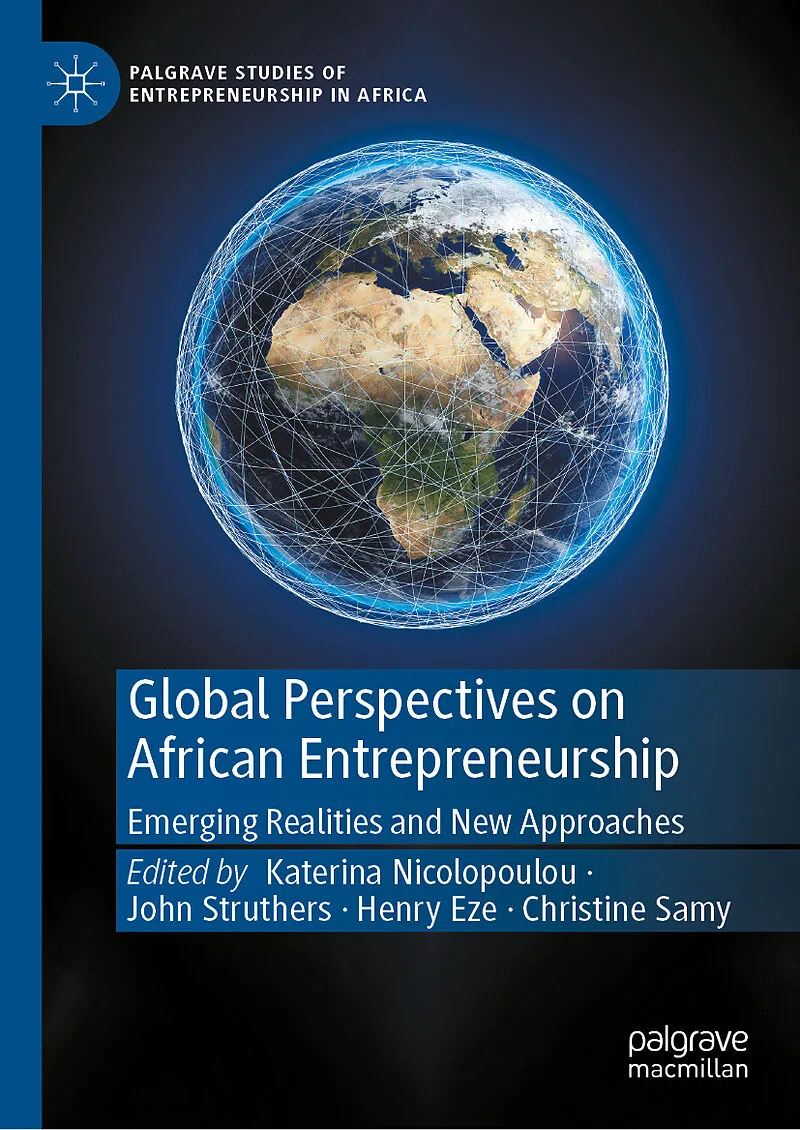
This edited volume tracks emerging perspectives to understanding contemporary and future-oriented trends relating to entrepreneurship in Africa. Following recent developments, such as the rising interest in Pan Africanism, and socio-economic developments with several African countries emerging as new regional hotspots for economic growth and entrepreneurship (e.g. Nigeria, Egypt), chapters provide case-based evidence and relevant theorisation in order to account for aspects of the emerging realities in Africa. While much of the existing literature takes an overarching economistic approach, in this book contributors do not overlook the necessity for constantly providing evidence and updating such frameworks. Instead, authors take an in-depth look at emerging perspectives to African entrepreneurship, which are currently overlooked and merit further investigation from a theoretical standpoint. Featuring context-based analysis, theoretical and conceptual approaches, case-based material as well as original interviews, the book is a vital resource for students, researchers and policy makers.
Offers a context-based analysis to illuminate institutional perspectives and regional realities Covers the wider emerging market reality such as the rise of the middle class and rise of entrepreneurial powers Contributes to the growing body of work on entrepreneurship in Africa
Autorentext
Katerina Nicolopoulou is a Professor in Entrepreneurship and Social Innovation for large scale strategic change at the Hunter Centre for Entrepreneurship, and the Global DBA Director of the Strathclyde Business School, UK. She is also the University Academic Lead for Socially Progressive Innovation and Entrepreneurship, one of the three Academic Mentors for the Doctoral Training Centre and Director of the Research Group Global Socially Progressive Entrepreneurship and Innovation.
John Struthers is Professor and Director for the Centre for African Research on Enterprise and Economic Development (CAREED), School of Business and Enterprise, University of West of Scotland (UWS), UK. An experienced academic and economist with over 35 years working in a variety of universities in the UK and in Africa, he has extensive publications in a range of economics journals.
Henry Eze is a PhD student at the University of Strathclyde, UK.
Christine Samy is a Business & Entrepreneurship Lecturer at Leeds Trinity University, UK. She is currently completing a PhD in Entrepreneurship at the University of Strathclyde. Prior to joining LTU, she has worked at the University of Strathclyde and the British University in Egypt.
Inhalt
Chapter 1: Introduction to the edited volume 'African Entrepreneurship: Global Perspectives and Context-based problematisation'.- Section A- Theoretical, conceptual chapters.- Chapter 2: Post-colonial theorizing as a meaningful heterodoxy: Contemporary realities and a forthcoming agenda for Entrepreneurship.- Chapter 3: Theorising Entrepreneurship in Africa through a post-colonial lens.- Chapter 4: Political Leadership and Emerging Conditions in African Entrepreneurship.- Chapter 5: Understanding the digital entrepreneurship ecosystem dynamics in Egypt post the 2011 revolution era (A study based on supply and demand framework to the entrepreneurship ecosystems theory).- Chapter 6: Advancing Predictive Entrepreneurship in West Africa: policy directions for strengthening indigenous capacities and shaping future pathways.- Chapter 7: Women's digital entrepreneurship in Africa : negotiating legitimacy building amid alterity, an integrative perspective from institutional theory and digital affordance.- Chapter 8: Entrepreneurship as a catalyst for China's economic engagement in Africa.- Chapter 9: Navigating African Entrepreneurship dynamics in a globalised world.- Section B - Empirical, case-based chapters.- Chapter 10: Analysis of a Ghanaian entrepreneurship incubator using the Actiotope model.- Chapter 11: The correlate of product innovation in a low technology African context: examining garment MSEs in Nairobi.- Chapter 12: The Jamestown Community Theatre Centre : a model of cultural enterprise in West Africa.- Section C- Interviews.- Chapter 13: Dr Ismaeel Tharwat : Entrepreneurship in Egypt within the wider context of Africa.- Chapter 14: Professor Charles Mully : Mully Children's Family in Kenya.- Chapter 15: Professor David Kirby : Focusing on the role of context for Entrepreneurship Education in Egypt and beyond.