
IHR WARENKORB IST AKTUELL LEER.
Haben Sie noch nichts passendes gefunden? Stöbern Sie durch unser komplettes Sortiment.
Oder melden Sie sich an bzw. registrieren Sie sich.
- Kostenlose Lieferung
- Kauf auf Rechnung
- Ex Libris Tiefpreis
- Filiallieferung und 650+ Abholorte
- Rabatt-Bons als Club-Mitglied
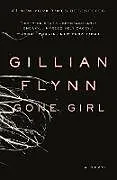
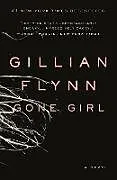
Gone Girl (Special Edition)
Beschreibung
Autorentext Gillian Flynn Klappentext ONE OF TIME'S 100 BEST MYSTERY AND THRILLER BOOKS OF ALL TIME • ONE OF CNN'S MOST INFLUENTIALBOOKS OF THE DECADE • ONE OF ENTERTAINMENT WEEKLY'S BEST BOOKS OF THE DECADE #1 NEW YORK TIMES BESTSELLER • The &l...Format auswählen
- Kartonierter EinbandCHF 16.20
- Fester EinbandCHF 37.50
- Kartonierter EinbandCHF 25.50
- Livre Audio CDCHF 59.90

Wird oft zusammen gekauft
Andere Kunden kauften auch
Beschreibung
Autorentext
Gillian Flynn
Klappentext
**ONE OF TIME'S 100 BEST MYSTERY AND THRILLER BOOKS OF ALL TIME • ONE OF CNN'S MOST INFLUENTIALBOOKS OF THE DECADE • ONE OF ENTERTAINMENT WEEKLY'S BEST BOOKS OF THE DECADE
#1 NEW YORK TIMES BESTSELLER • The “mercilessly entertaining” (Vanity Fair) instant classic “about the nature of identityand the terrible secrets that can survive and thrive in even the most intimate relationships” (Lev Grossman, Time “One of the BestBooks of the Decade”)**
On a warm summer morning in North Carthage, Missouri, it is Nick and Amy Dunne’s fifth wedding anniversary. Presents are being wrapped and reservations are being made when Nick’s clever and beautiful wife disappears. Husband-of-the-Year Nick isn’t doing himself any favors with cringe-worthy daydreams about the slope and shape of his wife’s head, but passages from Amy's diary reveal that the alpha-girl perfectionist could have put anyone dangerously on edge. Under mounting pressure from the police and the media—as well as Amy’s fiercely doting parents—the town golden boy parades an endless series of lies, deceits, and inappropriate behavior. Nick is oddly evasive, and he’s definitely bitter—but is he really a killer?
Zusammenfassung
**ONE OF TIME’S 100 BEST MYSTERY AND THRILLER BOOKS OF ALL TIME • ONE OF CNN’S MOST INFLUENTIAL BOOKS OF THE DECADE • ONE OF ENTERTAINMENT WEEKLY’S BEST BOOKS OF THE DECADE
SPECIAL LOW-PRICED EDITION OF THE #1 NEW YORK TIMES BESTSELLER • The “mercilessly entertaining” (Vanity Fair) instant classic “about the nature of identity and the terrible secrets that can survive and thrive in even the most intimate relationships” (Lev Grossman, Time “One of the Best Books of the Decade”)**
On a warm summer morning in North Carthage, Missouri, it is Nick and Amy Dunne’s fifth wedding anniversary. Presents are being wrapped and reservations are being made when Nick’s clever and beautiful wife disappears. Husband-of-the-Year Nick isn’t doing himself any favors with cringe-worthy daydreams about the slope and shape of his wife’s head, but passages from Amy's diary reveal that the alpha-girl perfectionist could have put anyone dangerously on edge. Under mounting pressure from the police and the media—as well as Amy’s fiercely doting parents—the town golden boy parades an endless series of lies, deceits, and inappropriate behavior. Nick is oddly evasive, and he’s definitely bitter—but is he really a killer?
Leseprobe
**Nick Dunne
The Day Of**
When I think of my wife, I always think of her head. The shape of it, to begin with. The very first time I saw her, it was the back of the head I saw, and there was something lovely about it, the angles of it. Like a shiny, hard corn kernel or a riverbed fossil. She had what the Victorians would call a finely shaped head. You could imagine the skull quite easily.
I’d know her head anywhere.
And what’s inside it. I think of that too: her mind. Her brain, all those coils, and her thoughts shuttling through those coils like fast, frantic centipedes. Like a child, I picture opening her skull, unspooling her brain and sifting through it, trying to catch and pin down her thoughts. What are you thinking, Amy? The question I’ve asked most often during our marriage, if not out loud, if not to the person who could answer. I suppose these questions stormcloud over every marriage: What are you thinking? How are you feeling? Who are you? What have we done to each other? What will we do?
My eyes flipped open at exactly six a.m. This was no avian fluttering of the lashes, no gentle blink toward consciousness. The awakening was mechanical. A spooky ventriloquist-dummy click of the lids: The world is black and then, showtime! 6-0-0 the clock said—in my face, first thing I saw. 6- 0-0. It felt different. I rarely woke at such a rounded time. I was a man of jagged risings: 8:43, 11:51, 9:26. My life was alarmless.
At that exact moment, 6-0-0, the sun climbed over the skyline of oaks, revealing its full summer angry-god self. Its reflection flared across the river toward our house, a long, blaring finger aimed at me through our frail bedroom curtains. Accusing: You have been seen. You will be seen.
I wallowed in bed, which was our New York bed in our new house, which we still called the new house, even though we’d been back here for two years. It’s a rented house right along the Mississippi River, a house that screams Suburban Nouveau Riche, the kind of place I aspired to as a kid from my split-level, shag-carpet side of town. The kind of house that is immediately familiar: a generically grand, unchallenging, new, new, new house that my wife would—and did—detest.
“Should I remove my soul before I come inside?” Her fi rst line upon arrival. It had been a compromise: Amy demanded we rent, not buy, in my little Missouri hometown, in her firm hope that we wouldn’t be stuck here long. But the only houses for rent were clustered in this failed development: a miniature ghost town of bank-owned, recession-busted, price-reduced mansions, a neighborhood that closed before it ever opened. It was a compromise, but Amy didn’t see it that way, not in the least. To Amy, it was a punishing whim on my part, a nasty, selfish twist of the knife. I would drag her, caveman-style, to a town she had aggressively avoided, and make her live in the kind of house she used to mock. I suppose it’s not a compromise if only one of you considers it such, but that was what our compromises tended to look like. One of us was always angry. Amy, usually.
Do not blame me for this particular grievance, Amy. The Missouri Grievance. Blame the economy, blame bad luck, blame my parents, blame your parents, blame the Internet, blame people who use the Internet. I used to be a writer. I was a writer who wrote about TV and movies and books. Back when people read things on paper, back when anyone cared about what I thought. I’d arrived in New York in the late ’90s, the last gasp of the glory days, although no one knew it then. New York was packed with writers, real writers, because there were magazines, real magazines, loads of them. This was back when the Internet was still some exotic pet kept in the corner of the publishing world—throw some kibble at it, watch it dance on its little leash, oh quite cute, it definitely won’t kill us in the night. Think about it: a time when newly graduated college kids could come to New York and get paid to write. We had no clue that we were embarking on careers that would vanish within a decade.
I had a job for eleven years and then I didn’t, it was that fast. All around the country, magazines began shuttering, succumbing to a sudden infection brought on by the busted economy. Writers (my kind of writers: aspiring novelists, ruminative thinkers, people whose brains don’t work quick enough to blog or link or tweet, basically old, stubborn blowhards) were through. We were like women’s hat makers or buggy-whip manufacturers: Our time was done. Three weeks after I got cut loose, Amy lost her job, such as it was. (Now I can feel Amy looking over my shoulder, smirking at the time I’ve spent discussing my career, my misfortune, and dismissing her experience in one sentence. That, she would tell you, is typical. Just like Nick, she would say. It was a refrain of hers: Just like Nick to . . . and whatever followed, whatever was just like me, was bad.) Two jobless grown-ups, we spent weeks wandering around our Brooklyn brownstone in socks and pajamas, ignori…