
IHR WARENKORB IST AKTUELL LEER.
Haben Sie noch nichts passendes gefunden? Stöbern Sie durch unser komplettes Sortiment.
Oder melden Sie sich an bzw. registrieren Sie sich.
- Kostenlose Lieferung
- Kauf auf Rechnung
- Ex Libris Tiefpreis
- Filiallieferung und 650+ Abholorte
- Rabatt-Bons als Club-Mitglied
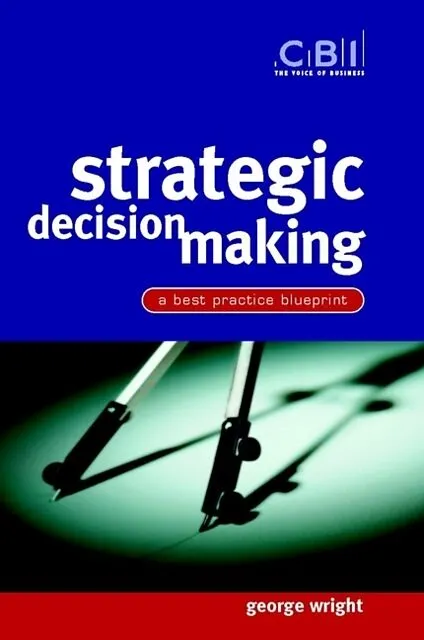
Strategic Decision Making
Beschreibung
Zusatztext "..this series has much to commend it..." (Modern Management! February 2002) Informationen zum Autor Multi-published author Cheryl Wright, former secretary, debt collector, account manager, writing instructor, and shopping tour hostess, loves readin...Format auswählen
- Kartonierter EinbandCHF 58.40

Wird oft zusammen gekauft
Andere Kunden kauften auch
Beschreibung
Zusatztext "..this series has much to commend it..." (Modern Management! February 2002) Informationen zum Autor Multi-published author Cheryl Wright, former secretary, debt collector, account manager, writing instructor, and shopping tour hostess, loves reading.She writes historical and contemporary western romance, as well as small town romance and romantic suspense.She lives in a small village on the outskirts of Melbourne, Australia, and is married with two adult children and has six grandchildren. When she's not writing, she can be found in her craft room. Klappentext * Why are large organisations, including household names, sometimes accused of 'losing the plot' in their business strategy? * Why do organisations fail to exploit new opportunities such as that presented by Dyson's innovative vacuum cleaner design? * Why were funds poured into the UK Dome and the City of London Taurus computer project when it was clear that 'good money' was following 'bad'? The answers will surprise you. Using psychological theory, paper and pencil 'thought problems', and well-chosen quotations from newspaper articles written at the time, the book demonstrates and explains the causes of these 'strategic blunders'. It also shows how to recognise and avoid your own organisation making the same mistakes. Providing clear guidance with a number of tried and tested methods and techniques, the author shows how organisational decision making can be improved by avoiding delaying tactics and a 'blame culture' and how scenario planning can be used to overcome management overconfidence in predicting the future. Zusammenfassung Good decision making is crucial to good management and successful strategic planning. Sadly the decision making capabilities within organisations are often poor. Inhaltsverzeichnis Series Foreword by Digby Jones ix About the author xi Preface xiii Acknowledgements xv 1 Challenging Routines 1 Success formulas 3 Frames of reference 4 2 Decision Making in Management Teams 15 Groupthink 17 Alleviating groupthink 25 3 Overcoming Overconfidence 29 Overconfidence 30 Confirmation bias 32 Hindsight bias 33 Expert predictions 33 Alleviating overconfidence 39 4 How to Think with Scenarios 43 Scenario planning 44 Scenario construction: the extreme World method 45 Using scenarios in decision making 49 Scenario construction: the driving-forces method 55 The benefits of scenario planning 62 5 Dealing with Decision Dilemmas 73 Avoiding difficult decisions 74 Case study of a management team facing a decision dilemma 76 Dealing with psychological reactions to difficult decisions 80 6 Expectation and Decision Making 85 Decision trees 86 Blame culture and risk taking 93 7 How to Make Trade-offs 105 Simplifying choices can result in poor decisions 106 Making trade offs 113 8 Harnessing the Minds of Managers 121 Strategy development 122 A technique for the facilitation of strategic thinking 123 The role of the facilitator 124 Lessons from this book 126 Notes 131 Appendix A 137 Appendix B 138 Appendix C 139 Index 141 ...
"..this series has much to commend it..." (Modern Management, February 2002)
Autorentext
Multi-published author Cheryl Wright, former secretary, debt collector, account manager, writing instructor, and shopping tour hostess, loves reading.She writes historical and contemporary western romance, as well as small town romance and romantic suspense.She lives in a small village on the outskirts of Melbourne, Australia, and is married with two adult children and has six grandchildren. When she's not writing, she can be found in her craft room.
Klappentext
Why are large organisations, including household names, sometimes accused of 'losing the plot' in their business strategy?
Why do organisations fail to exploit new opportunities such as that presented by Dyson's innovative vacuum cleaner design?
Why were funds poured into the UK Dome and the City of London Taurus computer project when it was clear that 'good money' was following 'bad'?
The answers will surprise you. Using psychological theory, paper and pencil 'thought problems', and well-chosen quotations from newspaper articles written at the time, the book demonstrates and explains the causes of these 'strategic blunders'. It also shows how to recognise and avoid your own organisation making the same mistakes.
Providing clear guidance with a number of tried and tested methods and techniques, the author shows how organisational decision making can be improved by avoiding delaying tactics and a 'blame culture' and how scenario planning can be used to overcome management overconfidence in predicting the future.
Zusammenfassung
Good decision making is crucial to good management and successful strategic planning. Sadly the decision making capabilities within organisations are often poor.
Inhalt
Series Foreword by Digby Jones ix
About the author xi
Preface xiii
Acknowledgements xv
1 Challenging Routines 1
Success formulas 3
Frames of reference 4
2 Decision Making in Management Teams 15
Groupthink 17
Alleviating groupthink 25
3 Overcoming Overconfidence 29
Overconfidence 30
Confirmation bias 32
Hindsight bias 33
Expert predictions 33
Alleviating overconfidence 39
4 How to Think with Scenarios 43
Scenario planning 44
Scenario construction: the extreme World method 45
Using scenarios in decision making 49
Scenario construction: the driving-forces method 55
The benefits of scenario planning 62
5 Dealing with Decision Dilemmas 73
Avoiding difficult decisions 74
Case study of a management team facing a decision dilemma 76
Dealing with psychological reactions to difficult decisions 80
6 Expectation and Decision Making 85
Decision trees 86
Blame culture and risk taking 93
7 How to Make Trade-offs 105
Simplifying choices can result in poor decisions 106
Making trade offs 113
8 Harnessing the Minds of Managers 121
Strategy development 122
A technique for the facilitation of strategic thinking 123
The role of the facilitator 124
Lessons from this book 126
Notes 131
Appendix A 137
Appendix B 138
Appendix C 139
Index 141