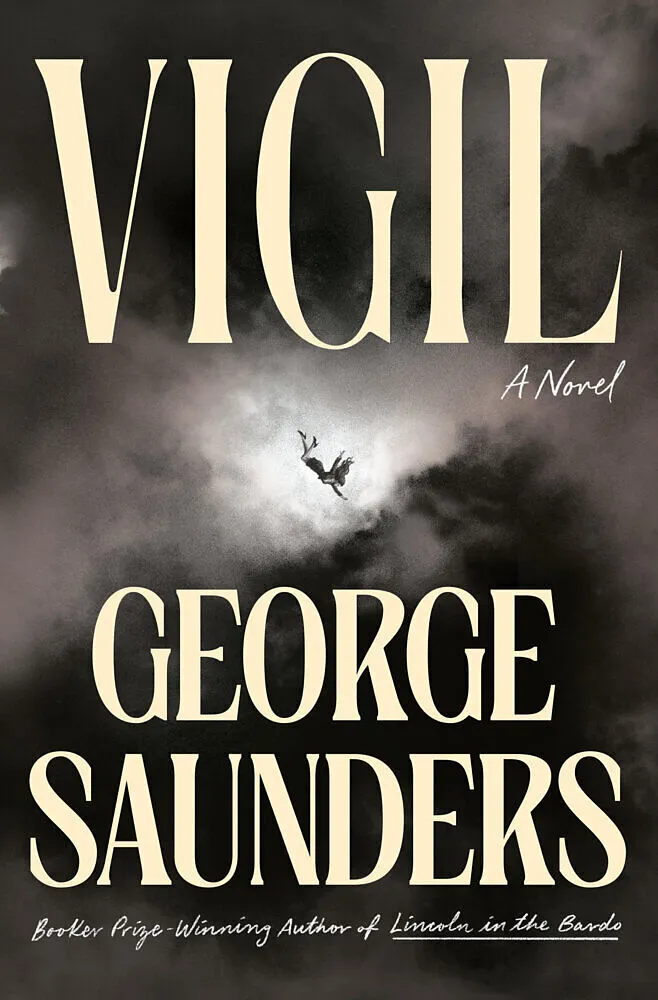
Vigil
Beschreibung
A wise, playful, electric novel from the #1 Not for the first time, Jill “Doll” Blaine finds herself hurtling toward earth, reconstituting as she falls, right down to her favorite black pumps.; She plummets towards her newest charge, yet another so...Format auswählen
- Kartonierter EinbandCHF 21.10
- Fester EinbandCHF 29.50
- Kartonierter Einband (Kt)CHF 33.20

Wird oft zusammen gekauft
Andere Kunden kauften auch
Beschreibung
A wise, playful, electric novel from the #1 Not for the first time, Jill “Doll” Blaine finds herself hurtling toward earth, reconstituting as she falls, right down to her favorite black pumps.; She plummets towards her newest charge, yet another soul she must usher into the afterlife, and lands headfirst in the circular drive of his ornate mansion. She has performed this sacred duty three hundred and forty-three times since her own death.; Her charges, as a rule, have been greatly comforted in their final moments. But this charge, she soon discovers, isn’t like the others: the powerful K.J. Boone will not be consoled, because he has nothing to regret.; He lived a big, bold life, and the world is better for it. Isn’t it? With the acuity and explosive imagination we’ve come to expect, George Saunders takes on the gravest issues of our time--the menace of corporate greed, the toll of capitalism, the environmental perils of progress--and, in the process, spins a tale that encompasses life and death, good and evil, and the thorny question of absolution.
Autorentext
George Saunders
Klappentext
**#1 NEW YORK TIMES BESTSELLER • “After his spectacular Lincoln in the Bardo, Saunders returns . . . with a new novel even more spectacular than the last.”—*Los Angeles Times
*A “daring” (Time) novel from the #1 New York Times bestselling, Booker Prize–winning author of A Swim in a Pond in the Rain and Tenth of December, taking place at the bedside of an oil company CEO in the twilight hours of his life as he is ferried from this world into the next
“Vibrant, fiendishly clever . . . Vigil is pure Saunders: the death of empathy, he insists, is greatly exaggerated.”—The Boston Globe**
Not for the first time, Jill “Doll” Blaine finds herself hurtling toward earth, reconstituting as she falls, right down to her favorite black pumps. She plummets towards her newest charge, yet another soul she must usher into the afterlife, and lands headfirst in the circular drive of his ornate mansion.
She has performed this sacred duty 343 times since her own death. Her charges, as a rule, have been greatly comforted in their final moments. But this charge, she soon discovers, isn’t like the others. The powerful K. J. Boone will not be consoled, because he has nothing to regret. He lived a big, bold, epic life, and the world is better for it. Isn’t it?
Vigil transports us, careening, through the wild final evening of a complicated man. Visitors begin to arrive (worldly and otherworldly, alive and dead), clamoring for a reckoning. Birds swarm the dying man’s room; a black calf grazes on the love seat; a man from a distant, drought-ravaged village materializes; two oil-business cronies from decades past show up with chilling plans for Boone’s postdeath future.
With the wisdom, playfulness, and explosive imagination we’ve come to expect, George Saunders takes on the gravest issues of our time—the menace of corporate greed, the toll of capitalism, the environmental perils of progress—and, in the process, spins a tale that encompasses life and death, good and evil, and the thorny question of absolution.
Leseprobe
What a lovely home I found myself plummeting toward, acquiring, as I fell, arms, hands, legs, feet, all of which, as usual, became more substantial with each passing second.
Below: a fountain.
At the center of the fountain: a gold-plated statue.
Of a dog. (Someone must have really loved that dog.)
In the mouth of the golden dog: a golden duck. The duck’s beak was hanging open in death and a pocked area in its flank seemed meant to represent the entry-field of the shot-cluster.
I observed all of this as I plummeted past and then my head and torso pierced the asphalt crust of a semicircular drive and lodged in the dirt below.
My rear was in the air, my fresh new legs bicycling energetically. I found myself alternately clothed and unclothed. That is to say: one instant naked and the next clothed. Or to be more precise: partly clothed. (Over time, that is, the elements of my outfit grew more reliably visible.)
My beige skirt soon became a near constant.
Meanwhile, here was a burrowing worm to consider and a brown bottle-shard and the rich smell of the loam now completely encasing my (inverted) upper half.
Once in Tennessee, having landed in the more conventional upright posture, I spent six hours in a paddock, my head protruding above the surface of the earth, being trotted through again and again by three black horses and one roan, who never, during those hours, ceased being panicked by my presence.
And yet I had a fine success on that occasion.
My charge being greatly comforted.
Tonight, blessedly, the thaw proceeded quickly.
And I found myself able, by sheer force of will, to bolt up out of the ground gymnastically and stand upright, both fully and consistently clothed.
Beige skirt, pale pink blouse, black pumps.
The golden dog shone in the glare of an ornate carriage lamp.
I made for the front door and, not yet walking competently, collapsed to the earth like a just-unstrung puppet, then leapt to my feet and moved on relentlessly to my work.
The door (immense, heavy, dead-bolted) presented no meaningful impediment. Passing through, I emerged into a magnificent entryway, then ascended a spacious stairwell lined with image after image of my charge:
Leaning confidently against a podium, speaking to a tremendous crowd.
Squatting with a kaffiyeh-wearing fellow before the Great Pyramid of Giza.
Knee-deep in the shallows of some high mountain lake, beside a young woman I took to be his daughter.
Driving (pretending to drive) a piece of heavy machinery, wearing a hard hat and a three-piece suit.
Posing before an oil rig.
And another.
And another.
Standing with his wife on the Great Wall of China, both beaming as if this represented a singular moment in their union.
Arm in arm with her in what looked to be the Rose Garden of the White House.
With her again, before what I understood to be a second home, in Colorado.
And a third, in Hawaii.
A fourth, in Key West.
Often, on his face, the same look: more grimace than smile, albeit shot through with a measure of forced goodwill.
Reaching the second floor, I moved along a hallway hung with numerous paintings in gilt frames, each marked by a plaque mentioning some experience our charge and his wife associated with its acquisition:
“Lovely cliffside dinner, Positano.”
“Catacomb tour, Paris, Mr. Pavarotti sang beautifully for us after dinner.”
“Guest of Senator Jepps and Maria in their fabulous desert home.”
At the end of the hall hung a double door of sturdy oak.
A familiar tan purse now appearing over my shoulder, I patted it (once, twice) as I would in the bygone days when about to embark on a challenging task, then passed through, knowing that my charge must be found on the other side.
And here he was.
A tiny, crimped fellow in an immense mahogany bed.
I was not too late.
Neither was I too early.
His wife, exhausted by care, slept fully dressed on a love seat near the bed. Her slippers lay on the floor, turned in toward each other as if being worn by some invisible pigeon-toed individual.
But she was not my concern.
My charge’s sleeping clothes were of silk, his initials monogrammed above the heart.
Moving closer, I entered the orb of his thoughts.
Within him abided a formidable stubbornness. A steady flow of satisfaction, even triumph, coursed through him, regarding all he had managed to do, see, …