
IHR WARENKORB IST AKTUELL LEER.
Haben Sie noch nichts passendes gefunden? Stöbern Sie durch unser komplettes Sortiment.
Oder melden Sie sich an bzw. registrieren Sie sich.
- Kostenlose Lieferung
- Kauf auf Rechnung
- Ex Libris Tiefpreis
- Filiallieferung und 650+ Abholorte
- Rabatt-Bons als Club-Mitglied
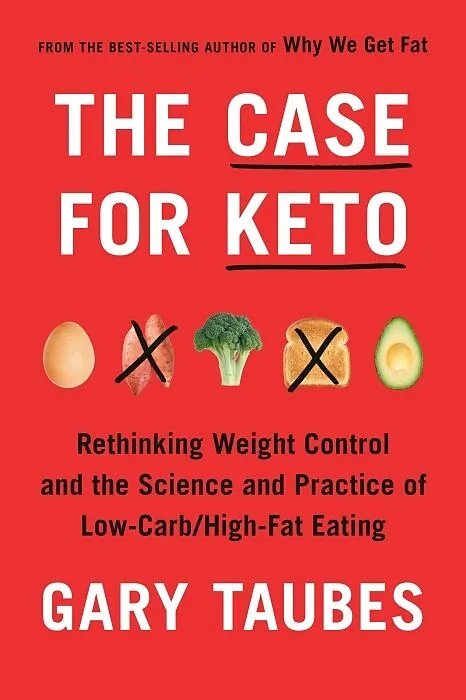
The Case for Keto
Beschreibung
Zusatztext 105248081 Informationen zum Autor Gary Taubes, an award-winning science and health journalist, is the cofounder and director of the Nutrition Science Initiative (NuSI). He is the author of The Case Against Sugar , Why We Get Fat , and Good Calories,...Format auswählen
- Fester EinbandCHF 30.00

Wird oft zusammen gekauft
Andere Kunden kauften auch
Beschreibung
Zusatztext 105248081 Informationen zum Autor Gary Taubes, an award-winning science and health journalist, is the cofounder and director of the Nutrition Science Initiative (NuSI). He is the author of The Case Against Sugar , Why We Get Fat , and Good Calories, Bad Calories . A former staff writer for Discover and correspondent for Science , he has written three cover articles on nutrition and health for The New York Times Magazine , and his writing has appeared in numerous Best of anthologies, including The Best of the Best American Science Writing (2010). He has received three Science in Society Journalism Awards from the National Association of Science Writers and is the recipient of a Robert Wood Johnson Foundation Investigator Award in Health Policy Research. He lives in Oakland, California, with his wife, the author Sloane Tanen, and their two sons. www.garytaubes.com Klappentext The best-selling author of Why We Get Fat and The Case Against Sugar reveals why the established rules about eating healthy might be the wrong approach to weight loss for millions of people, and how low-carbohydrate, high-fat/ketogenic diets can help so many of us achieve and maintain a healthy weight for life . Based on twenty years of investigative reporting and interviews with 100 practicing physicians who embrace the keto lifetstyle as the best prescription for their patients' health, Taubes's book puts the ketogenic diet movement in the necessary historical and scientific perspective. It makes clear the vital misconceptions in how we've come to think about obesity and diet (no, people do not become fat simply because they eat too much; hormones play the critical role) and uses the collected clinical experience of the medical community to provide essential practical advice. This book sets out to revolutionize how we think about eating healthy, and what foods we can and can't eat to prevent and reverse both obesity and diabetes. For years, health organizations have preached the same rules for losing weight: restrict your calories, eat less, exercise more. So why doesn't it work for everyone? Gary Taubes, whose seminal book Good Calories, Bad Calories and cover stories for The New York Times Magazine changed the way we look at nutrition and health, sets the record straight, clarifying a century of misunderstanding about the differences between diet, weight control, and health. The Case for Keto gives us a revolutionary manifesto for the twenty-first-century fight against obesity and diabetes. Leseprobe 1 The Basics A brief lesson in the history of obesity research On June 22, 1962, a Tufts University Medical School professor named Edwin Astwood tried and failed to correct how we think about the cause of obesity. We have been living with that failure ever since. Astwood was presenting a counterargument to what had become since the end of the Second World War the dominant thinking among medical authorities and researchers on why we get fat. Astwood called this thinking the conviction of the primacy of gluttony, by which he meant the unshakable belief that virtually all cases of obesity, child or adult, mild or extreme, are caused ultimately by the overconsumption of calories; that is, people get fat because they eat too much. Astwood considered this belief systemfor that's what it isto be almost willfully naïve and perhaps the primary reason so little progress had been made in understanding obesity, let alone preventing and treating it. It is also the reason those who have the misfortune to suffer from obesity are held responsible for their condition. Obesity is a disorder, he said in opening his presentation, which, like venereal disease, is blamed upon the patient, the direct consequence of their failing. Astwood was an ...
“Gary Taubes deserves a national science medal for helping to raise the critical question of why the food we eat is killing us. He hasn’t sat on the sidelines saying just do more of the same. As a result, his insightful reading of the medical literature offers new hope to people suffering from obesity.”—Kevin Schulman, M.D., Professor of Medicine, Stanford University
“In my 40 years as a nutrition professor, I've never run across a diet book that so clearly explains how to follow a weight-loss diet and why it works. In addition, Gary Taubes shows how continuing the Keto Diet contributes to good health for years to come.”—Janet C. King, Ph.D., Professor of the Graduate School, Department of Nutritional Sciences and Toxicology, University of California, Berkeley
“In The Case for Keto Gary Taubes vigorously challenges the conventional view that low-fat, plant-based diets are healthy and that eating fats is risky, providing an historical context of the effectiveness of keto diets that goes back more than 150 years. I thoroughly recommend the book to anyone who struggles with weight control.”—Lewis Cantley, director of the Meyer Cancer Center at Weill Cornell Medicine and New York Presbyterian Hospital
“The Case for Keto is built on fundamental principles that will pass the test of time. Taubes persuasively argues that reversing fat accumulation can be achieved without hunger through a high-fat, low-carb diet. As a clinician treating such obesity-prone individuals with type 2 diabetes, I have repeatedly and reproducibly seen the diet work miracles for those who will embrace it.”—David M. Harlan, M.D., William & Doris Krupp Professor of Medicine, co-director, UMass Diabetes Center of Excellence
“For the last decade and a half, Gary Taubes has been the unrelenting Socrates of the diet composition dialogue, peppering the field, journalists, the general public, and experts alike to question their assumptions and ask what we really know. Like those of Socrates, Taubes’ questions do not always make others happy, but they need to be heard. We need to ask whether our presumed knowledge about diet, health, and weight is well-founded. Taubes may not provide all the answers, but his incisive questions cannot and should not be ignored.”—David B. Allison, Ph.D, Distinguished Professor, Obesity Researcher, and Academic Dean
“What should we eat? Gary Taubes provides the answer. Drawing on exhaustive research, and in clear language, he explains which foods are healthy for us, which foods are unhealthy—and why. He shows why obesity, diabetes, hypertension, and other chronic conditions are on the rise, and how we can intervene effectively. Gary Taubes’s work has changed everything about the way I eat.”—Gretchen Rubin, author of The Happiness Project
“In this outstanding book, Taubes presents a manifesto challenging the energy balance dietary dogma of the medical and nutritional authorities, along with a repudiation of Michael Pollan’s plant food principles. A compelling case is made for low-carb, high-fat eating—towards ‘nutritional ketosis’—for people who fatten easily (most of us), while addressing the potential risk and unknowns.” —Eric Topol, M.D., cardiologist and Professor of Molecular medicine at Scripps Research, and author of Deep Medicine
“Taubes blends science and clinical examples for a uniquely sound and honest explanation of a movement that has transformed the way we think and eat to improve our health.”—Marty Makary, M.D., Johns Hopkins, and author of The Price We Pay **
“If you have a weight problem, or you know someone who does, then *The Case for Keto *is required reading. This is the book all health practitioners must read to understand obesity and diabetes and how to treat them.”—Kevin Fontaine, chair, Department of Health Behavior, Univer…