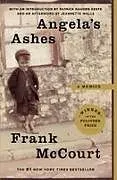
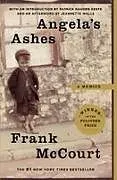
Angela's Ashes
Beschreibung
Zusatztext "The power of this memoir is that it makes you believe the claim: that despite the rags and hunger and pain! love and strength do come out of misery -- as well as a page-turner of a book. And though the experience it tells of was individual! the poi...Format auswählen
- Kartonierter EinbandCHF 24.80
- Fester EinbandCHF 43.10

Wird oft zusammen gekauft
Andere Kunden kauften auch
Beschreibung
Zusatztext "The power of this memoir is that it makes you believe the claim: that despite the rags and hunger and pain! love and strength do come out of misery -- as well as a page-turner of a book. And though the experience it tells of was individual! the point -- and the story -- is universal." Informationen zum Autor Frank McCourt (19302009) was born in Brooklyn, New York, to Irish immigrant parents, grew up in Limerick, Ireland, and returned to America in 1949. For thirty years he taught in New York City high schools. His first book, Angela's Ashes , won the Pulitzer Prize, the National Book Critics Circle Award, and the Los Angeles Times Book Award. He is also the author of the memoirs 'Tis and Teacher Man. In 2006, he won the prestigious Ellis Island Family Heritage Award for Exemplary Service in the Field of the Arts and the United Federation of Teachers John Dewey Award for Excellence in Education. Klappentext Frank McCourt returned to America when he was nineteen. For many years, he was an English teacher at Stuyvesant High School in New York City. The sequel to "Angela's Ashes, 'Tis, " will be published in the fall of 1999. McCourt lives in Connecticut. Chapter One My father and mother should have stayed in New York where they met and married and where I was born. Instead, they returned to Ireland when I was four, my brother, Malachy, three, the twins, Oliver and Eugene, barely one, and my sister, Margaret, dead and gone. When I look back on my childhood I wonder how I survived at all. It was, of course, a miserable childhood: the happy childhood is hardly worth your while. Worse than the ordinary miserable childhood is the miserable Irish childhood, and worse yet is the miserable Irish Catholic childhood. People everywhere brag and whimper about the woes of their early years, but nothing can compare with the Irish version: the poverty; the shiftless loquacious alcoholic father; the pious defeated mother moaning by the fire; pompous priests; bullying schoolmasters; the English and the terrible things they did to us for eight hundred long years. Above all -- we were wet. Out in the Atlantic Ocean great sheets of rain gathered to drift slowly up the River Shannon and settle forever in Limerick. The rain dampened the city from the Feast of the Circumcision to New Year´s Eve. It created a cacophony of hacking coughs, bronchial rattles, asthmatic wheezes, consumptive croaks. It turned noses into fountains, lungs into bacterial sponges. It provoked cures galore; to ease the catarrh you boiled onions in milk blackened with pepper; for the congested passages you made a paste of boiled flour and nettles, wrapped it in a rag, and slapped it, sizzling, on the chest. From October to April the walls of Limerick glistened with the damp. Clothes never dried: tweed and woolen coats housed living things, sometimes sprouted mysterious vegetations. In pubs, steam rose from damp bodies and garments to be inhaled with cigarette and pipe smoke laced with the stale fumes of spilled stout and whiskey and tinged with the odor of piss wafting in from the outdoor jakes where many a man puked up his week´s wages. The rain drove us into the church -- our refuge, our strength, our only dry place. At Mass, Benediction, novenas, we huddled in great damp clumps, dozing through priest drone, while steam rose again from our clothes to mingle with the sweetness of incense, flowers and candles. Limerick gained a reputation for piety, but we knew it was only the rain. My father, Malachy McCourt, was born on a farm in Toome, County Antrim. Like his father before, he grew up wild, in trouble with the English, or the Irish, or both. He fought with the Old IRA and for some desperate act he wound up a fugitive with a price on his head. When I was a child I would look at my father, the thinning hair, the collapsing teeth, and wonder why anyon...
Autorentext
Frank McCourt (1930–2009) was born in Brooklyn, New York, to Irish immigrant parents, grew up in Limerick, Ireland, and returned to America in 1949. For thirty years he taught in New York City high schools. His first book, Angela’s Ashes, won the Pulitzer Prize, the National Book Critics Circle Award, and the Los Angeles Times Book Award. He is also the author of the memoirs 'Tis and Teacher Man. In 2006, he won the prestigious Ellis Island Family Heritage Award for Exemplary Service in the Field of the Arts and the United Federation of Teachers John Dewey Award for Excellence in Education.
Klappentext
Frank McCourt returned to America when he was nineteen. For many years, he was an English teacher at Stuyvesant High School in New York City. The sequel to "Angela's Ashes, 'Tis, " will be published in the fall of 1999. McCourt lives in Connecticut.
Zusammenfassung
A Pulitzer Prize–winning, #1 New York Times bestseller, Angela’s Ashes is Frank McCourt’s masterful memoir of his childhood in Ireland.
“When I look back on my childhood I wonder how I managed to survive at all. It was, of course, a miserable childhood: the happy childhood is hardly worth your while. Worse than the ordinary miserable childhood is the miserable Irish childhood, and worse yet is the miserable Irish Catholic childhood.”
So begins the luminous memoir of Frank McCourt, born in Depression-era Brooklyn to recent Irish immigrants and raised in the slums of Limerick, Ireland. Frank’s mother, Angela, has no money to feed the children since Frank’s father, Malachy, rarely works, and when he does he drinks his wages. Yet Malachy—exasperating, irresponsible, and beguiling—does nurture in Frank an appetite for the one thing he can provide: a story. Frank lives for his father’s tales of Cuchulain, who saved Ireland, and of the Angel on the Seventh Step, who brings his mother babies.
Perhaps it is story that accounts for Frank’s survival. Wearing rags for diapers, begging a pig’s head for Christmas dinner and gathering coal from the roadside to light a fire, Frank endures poverty, near-starvation and the casual cruelty of relatives and neighbors—yet lives to tell his tale with eloquence, exuberance, and remarkable forgiveness.
Angela’s Ashes, imbued on every page with Frank McCourt’s astounding humor and compassion, is a glorious book that bears all the marks of a classic.
Leseprobe
Chapter One
My father and mother should have stayed in New York where they met and married and where I was born. Instead, they returned to Ireland when I was four, my brother, Malachy, three, the twins, Oliver and Eugene, barely one, and my sister, Margaret, dead and gone.
When I look back on my childhood I wonder how I survived at all. It was, of course, a miserable childhood: the happy childhood is hardly worth your while. Worse than the ordinary miserable childhood is the miserable Irish childhood, and worse yet is the miserable Irish Catholic childhood.
People everywhere brag and whimper about the woes of their early years, but nothing can compare with the Irish version: the poverty; the shiftless loquacious alcoholic father; the pious defeated mother moaning by the fire; pompous priests; bullying schoolmasters; the English and the terrible things they did to us for eight hundred long years.
Above all -- we were wet.
Out in the Atlantic Ocean great sheets of rain gathered to drift slowly up the River Shannon and settle forever in Limerick. The rain dampened the city from the Feast of the Circumcision to New Year´s Eve. It created a cacophony of hacking coughs, bronchial rattles, asthmatic wheezes, consumptive croaks. It turned noses into fountains, lungs into bacterial sponges. It provoked cures galore; to ease the catarrh you boiled onions in milk blackened with pepper; for the congested passages you made a paste of boiled flour and nettles, wrapped it in a rag, and slapped it, sizzlin…