
IHR WARENKORB IST AKTUELL LEER.
Haben Sie noch nichts passendes gefunden? Stöbern Sie durch unser komplettes Sortiment.
Oder melden Sie sich an bzw. registrieren Sie sich.
- Kostenlose Lieferung
- Kauf auf Rechnung
- Ex Libris Tiefpreis
- Filiallieferung und 650+ Abholorte
- Rabatt-Bons als Club-Mitglied

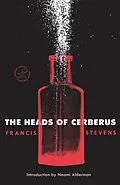
The Heads of Cerberus
Beschreibung
A rediscovered classic of science fiction, set in a dystopian twenty-second-century society where the winner takes all, a precursor to The Hunger Games by one of the genre’s first major female writers--with an introduction by Naomi Alderman, New York Tim...Format auswählen
- Kartonierter EinbandCHF 18.40

Wird oft zusammen gekauft
Andere Kunden kauften auch
Beschreibung
A rediscovered classic of science fiction, set in a dystopian twenty-second-century society where the winner takes all, a precursor to The Hunger Games by one of the genre’s first major female writers--with an introduction by Naomi Alderman, New York Times bestselling author of The Power and Disobedience Philadelphia, 1918: Three friends--brave, confident Viola Trenmore, clever but shy Robert Drayton, and Viola’s strong and hot-tempered brother, Terry--discover a mysterious powder that transports them two hundred years into the future. The Philadelphia of 2118 is no longer a bustling metropolis but instead a completely isolated city recovering from an unknown disaster. Citizens are issued identification tags instead of having names, and society is split between a wealthy, powerful minority and a downtrodden lower class. The position of supreme authority is held by a woman, and once a year she oversees competitions to the death to determine who rules alongside her. When Viola, Terry, and Robert are forced to take part in these strange and deadly games, it will take their combined wits for them to escape this strange world and return home. Equal parts adventure and dystopia, The Heads of Cerberus is an unjustly forgotten work of early science fiction written by a trailblazing master of the genre. Praise for The Heads of Cerberus “An early-twentieth-century time-travel dystopia whose vision of 2118 resonates eerily with our own century . . . a fast-paced, imaginative yarn.” --Kirkus Reviews “An intriguing and political time-travel adventure.” -- Publishers Weekly The Modern Library Torchbearers series features women who wrote on their own terms, with boldness, creativity, and a spirit of resistance.
ldquo;An early-twentieth-century time-travel dystopia whose vision of 2118 resonates eerily with our own century . . . a fast-paced, imaginative yarn.”—Kirkus Reviews
Autorentext
Francis Stevens was the pen name of Gertrude Barrows Bennett (1883–1948). Bennett was the first major female writer of science fiction and fantasy in the United States, and has been credited as the inventor of the subgenre of dark fantasy.
Leseprobe
CHAPTER 3: ARRIVALS AND DEPARTURES
In his first moments of stunned surprise it seemed to Drayton that the end of all things had come. The maddest, most impossible surmises flashed across his mind. He scarcely would have felt further amazement had Lucifer himself, in all the traditional panoply of hoofs, tail, and brimstone, risen sudden and flaming through the midst of that dreary-hued heap of mysterious Dust. Had the tables and chairs begun to move about the room on their own legs it would have appeared only the natural sequel to such an event as had just transpired. Indeed, it seemed strangely terrible that nothing more should occur. That Nature, having broken her most sacred law, the indestructibility of matter, should carry her sacrilege no further.
But had that law been broken? Was it possible that by some unheard-of property the gray powder had noiselessly, without shock or visible sign of explosion resolved the great body of his friend into the component gases to which all matter may, in one way or another, be reduced? Or was he, Robert Drayton, stark mad, and had the whole absurd, horrible episode been a part of some delirious dream?
There lay the crystal vial on the floor, where he had dropped it in his first dismay. There was the newspaper, with half of a bargain-sale advertisement extending from beneath the gray heap. And now he became aware that in the library a bell was ringing with regular, monotonous persistence.
Scarcely knowing what he did, Drayton crossed the room and lifted the telephone receiver from its hook.
"Hello, hello! What? Yes, this is James Burford's home. What's that? Mr.-Mr. Trenmore? Yes; he's here. No-I-I mean, he was here a moment ago. No; I don't know where he is or when he will be back. My God, I wish I did! What's that? You are--whom did you say?... Oh, my Lord!"
Drayton dropped the receiver and stood staring in blank horror. After a while, leaving the receiver to dangle and click unheeded, he turned and walked slowly back toward the chair on whose broad arm Terence Trenmore's cigar still glowed behind a lengthening ash. With a slight shudder he forced himself to pass his hands carefully over the chair's entire inner surface, seat, arms, and back. The leather covering retained a trace of warmth from its recent occupant; but it was most indubitably empty.
The enormity, the unprecedented horror of the whole situation swept up on Drayton like a rising tide, wiping out for a time all thought of the telephone or the person to whom he had just been speaking. With a dazed, sick look he again circled the newspaper and its burden, righted his own chair, and sat down. He had a queer feeling that some one had just played a particularly cruel practical joke of which he was the victim.
And yet--what if that gray Dust had really possessed just the terrific, unbelievable history with which Trenmore had credited it?
He strove to arrange his facts and premises in a logical and reasonable order, but found himself continually returning to that one scene--he, Drayton, sitting where he now sat; Trenmore opposite, bending over the paper; the cloud that rose, gray and nebulous, and hung in the air after his friend was gone.
Presently he was again roused from his stupor, and again by a bell. The sound came faintly from the rear of the house. Drayton waited, thinking to hear Martin pass through the reception hall on his way to the front door. Again the bell rang, and this time in a long, steady, insistent peal. Some one seemed to have placed a finger on the button and determined that it should not be removed until the door opened. Martin must be out, on an errand perhaps.
Half dazedly, as he had answered the phone, Drayton at length responded to this new demand. As he unlocked the front door and opened it a burst of summer sunshine rushed in and with it the small, angry figure of a much perturbed young lady.
"Where is he? What has happened to my brother? Who was that man at the telephone? Answer me instantly, I say! Where is my brother, Terry Trenmore?"
The questions beat upon Drayton's ears like blows, rousing him to some semblance of his normal self-possession.
"You are--you are Miss Trenmore?" he asked in turn, though a sudden conscience-stricken remembrance smote him and assured him that she was. He had terminated that telephone conversation so very abruptly. No doubt the girl had run in from Atlantic City to see her brother, called him up, and--
"I am Viola Trenmore, and I want my brother. Where is he?"
Drayton faced her with a feeling of helpless fright, though in herself, Trenmore's sister was of no terrifying appearance. Nearly as little as her brother was large, she looked even younger than the seventeen years Drayton knew to be hers. She had her brother's eyes, azure as an Italian sky, and her straight, fine brows and curling lashes were black--beautifully so and in vivid contrast to the clear white and rose of her eager face, flushed now like an excited child's. Her small, modish hat, trim pumps, and tailored suit, all matched in color the bright, clear hue of her eyes. Despite his desperate preoccupation, Drayton's first sight of Viola Trenmore brought him the same momentary flash of joy that comes with the sight of a bluebird in springtime. She was like a bluebird, fluttering in from the sunshine. His troubled mind scarcely recognized the thought, but always afterward he remembered that first beauty of her as the flash of a bluebird's wing.
"What have you done with him?" she demanded, while from those blue eyes there blazed the very twin spirit of Terence Trenmore--Terence the impetuous, angered and scorning all cautio…