Beschreibung
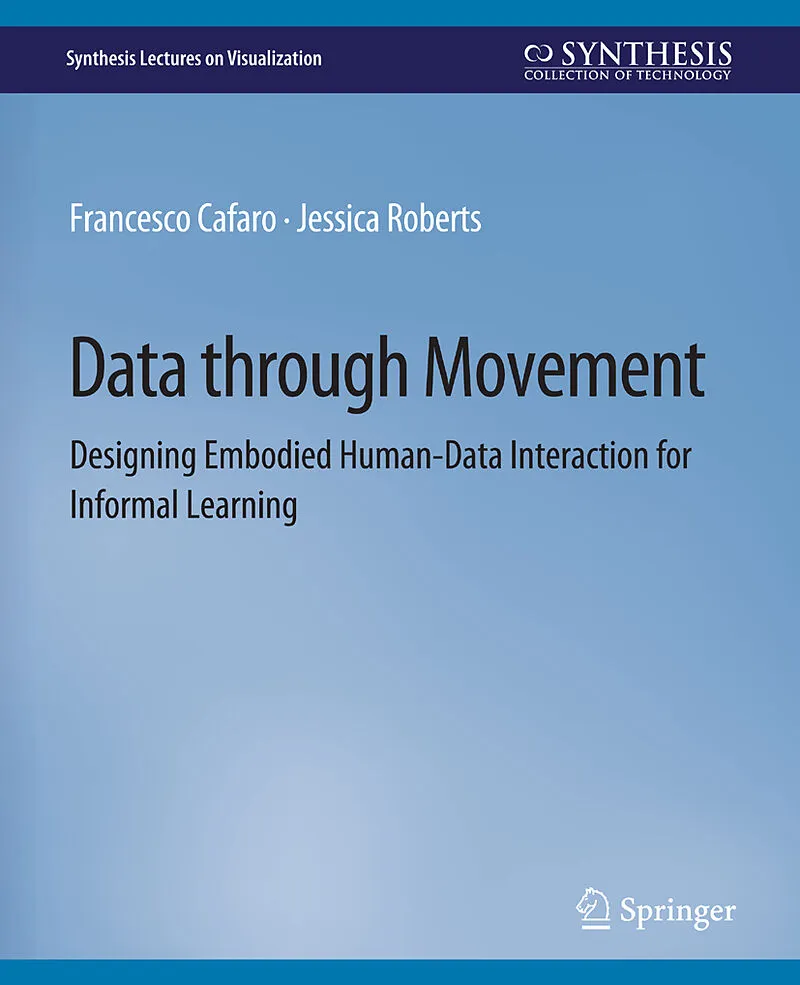
When you picture human-data interactions (HDI), what comes to mind? The datafication of modern life, along with open data initiatives advocating for transparency and access to current and historical datasets, has fundamentally transformed when, where, and how ...When you picture human-data interactions (HDI), what comes to mind? The datafication of modern life, along with open data initiatives advocating for transparency and access to current and historical datasets, has fundamentally transformed when, where, and how people encounter data. People now rely on data to make decisions, understand current events, and interpret the world. We frequently employ graphs, maps, and other spatialized forms to aid data interpretation, yet the familiarity of these displays causes us to forget that even basic representations are complex, challenging inscriptions and are not neutral; they are based on representational choices that impact how and what they communicate. This book draws on frameworks from the learning sciences, visualization, and human-computer interaction to explore embodied HDI. This exciting sub-field of interaction design is based on the premise that every day we produce and have access to quintillions of bytes of data, the exploration and analysis of which are no longer confined within the walls of research laboratories. This volume examines how humans interact with these data in informal (not work or school) environments, paritcularly in museums. The first half of the book provides an overview of the multi-disciplinary, theoretical foundations of HDI (in particular, embodied cognition, conceptual metaphor theory, embodied interaction, and embodied learning) and reviews socio-technical theories relevant for designing HDI installations to support informal learning. The second half of the book describes strategies for engaging museum visitors with interactive data visualizations, presents methodologies that can inform the design of hand gestures and body movements for embodied installations, and discusses how HDI can facilitate people's sensemaking about data. This cross-disciplinary book is intended as a resource for students and early-career researchers in human-computer interaction and the learning sciences, as well asfor more senior researchers and museum practitioners who want to quickly familiarize themselves with HDI.
Autorentext
Francesco Cafaro is an Associate Professor of Human-Computer Interaction at the Luddy School of Informatics Computing and Engineering, Indiana University Indianapolis. His work investigates how theories from learning, cognitive, and computer sciences can be used to design intuitive, embodied experiences. His research brings data to life by moving it beyond the traditional screen, focusing on how full-body, embodied interactions can transform learning and sensemaking in public spaces. Dr. Cafaro has designed and evaluated prototype interactive installations in collaboration with numerous museums and cultural sites, including the New York Hall of Science in Queens, the Jane Addams Hull-House Museum in Chicago, Historic New Harmony, the Indiana State Museum, and Discovery Place in Charlotte. Jessica Roberts is an Associate Professor in Interactive Computing at Georgia Tech. As a learning scientist, her work explores technology-mediated social learning with a focus on public engagement with science and scientific data. Drawing on her background as a middle school teacher and a theatre designer, Dr. Roberts creates human-data interaction experiences that encourage learners in classrooms and free-choice settings to play with data through tangible, embodied, and collaborative interactions. She earned her Ph.D. in the Learning Sciences from the University of Illinois at Chicago, specializing in geospatial analysis and visualization. Her designs of interactive learning technologies have been exhibited at venues including the Field Museum of Natural History in Chicago, the New York Hall of Science, and the Georgia Aquarium. Dr. Roberts directs the Technology-Integrated Learning Environments (TILEs) Lab and leads interdisciplinary learning research efforts spanning topics from air pollution to zooplankton.
Inhalt
Figure Credits List.- Foreword by Niklas Elmqvist.- Acknowledgments.- Introduction.- Understanding Human-Data Interaction.- Theoretical Foundations: Embodiment.- Background: Designing for Learning in Museums.- Background: Visualizations to Support Learning.- Designing Engaging Human-Data Interactions.- Designing Hand Gestures and Body Movements for HDI.- Embodiment and Sensemaking.- Conclusion.- Bibliography.- Authors' Biographies.