Haben Sie noch nichts passendes gefunden? Stöbern Sie durch unser komplettes Sortiment.
Oder melden Sie sich an bzw. registrieren Sie sich.


Beschreibung
This volume provides a comprehensive, interdisciplinary exploration of financial literacy, highlighting its pivotal role in addressing modern global challenges. By examining the intersection of financial literacy with sustainability, education, technological ...
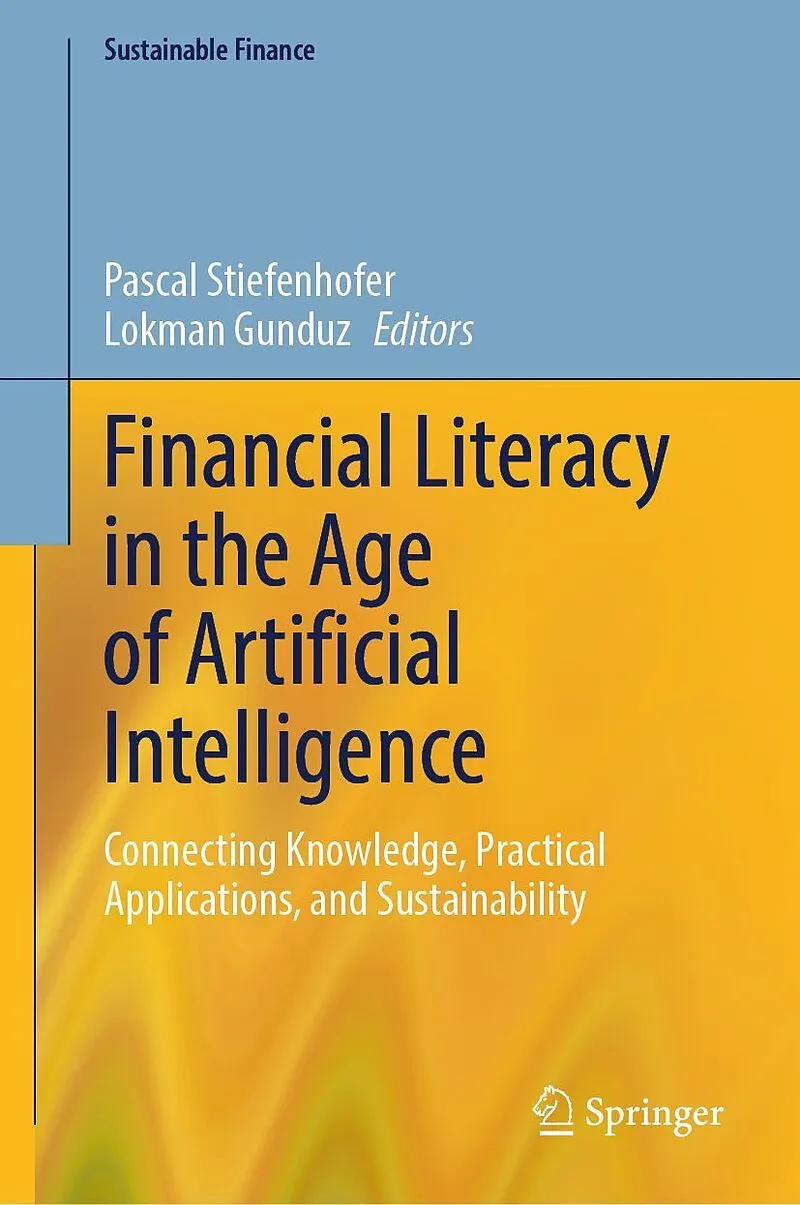
This volume provides a comprehensive, interdisciplinary exploration of financial literacy, highlighting its pivotal role in addressing modern global challenges. By examining the intersection of financial literacy with sustainability, education, technological advancementsparticularly Artificial Intelligence (AI)entrepreneurship, and philanthropy, the book demonstrates how financial knowledge is essential for personal financial well-being and broader societal and environmental sustainability.
Featuring contributions by professionals and academics from a diverse selection of international institutes and organizations, the chapters focus on practical, often underexplored areas of financial literacy. These include the role of charitable organizations in fostering basic financial education, particularly in underserved communities, and how primitive or foundational financial literacy plays a critical role in poverty alleviation. The book also discusses specialized topics such as Islamic finance and behavioral finance, broadening the scope of financial literacy beyond traditional paradigms to include culturally diverse and ethically driven financial systems.
By addressing less frequently discussed topics alongside cutting-edge advancements in AI and finance, this work offers a holistic view of financial literacy as both a personal asset and a driver of positive societal transformation. As such, it is suitable for academics and professionals interested in financial literacy, fintech, ethics, and sustainability.
Illustrates how financial literacy can drive sustainable decisions, supporting green finance and ethical investing Discusses how AI democratises financial services, enhancing financial inclusion in emerging economies Emphasizes the role of AI in detecting and preventing financial fraud and ensuring a safer financial future
Autorentext
Dr. Pascal Stiefenhofer is a mathematician and economist with dual PhDs and expertise in financial economics and mathematics education. His interdisciplinary research bridges mathematical theories and economic applications, making significant contributions to academia and industry. As an educator, Pascal has taught finance, economics, and applied mathematics, inspiring students for careers in academia, industry, and government. He currently supervises PhD students in financial literacy and sustainable finance, while also collaborating with industry on financial literacy projects.
Dr. Lokman Gündüz earned his Ph.D. in Banking from Marmara University (Turkey). He held roles as a financial analyst and academic, later serving on the Board of the Central Bank of Turkey (CBRT) from 2005 to 2017. He now teaches at Fatih Sultan Mehmet Vakif University, where he is also dean of the Faculty of Economics and Administrative Sciences.
Inhalt
Chapter 1: Mapping The Research Frontier: A Bibliometric Analysis of Artificial Intelligence and Financial Literacy.- Chapter 2: Financial Literacy as a Layered Construct: From Budgeting to Algorithmic Thinking.- Chapter 3: Beyond the Basics: Rethinking National Financial Literacy Strategies in Diverse Contexts and the Age of Artificial Intelligence.- Chapter 4: Artificial Intelligence, Financial Literacy, and Capital Market Regulation: Rethinking Market Integrity in the Age of Smart Algorithms.- Chapter 5: Financial Literacy and AI: An Integrated Framework Grounded in Catholic Social Teaching.- Chapter 6: When Human Judgment Meets Artificial Intelligence: Redefining Financial Fraud and Personal Defence.- Chapter 7: Artificial Intelligence in Financial Advisory: Perceptions, Practices, and Professional Identity in Türkiye.- Chapter 8: Artificial Intelligence, Financial Literacy, and Confidence in Robo-Advising: Evidence from Italy.- Chapter 9: From Green Rhetoric to Financial Resilience: ESG Literacy and Climate-Aligned Investment in the AI Era.- Chapter 10: The Transformation of Financial Literacy in the Age of Sustainability: Doconomy, Ant Forest and Robo-Advisors' Role.- Chapter 11: Financial Literacy and Artificial Intelligence in the Global Fashion Industry: The Path to Digital Well-Being.- Chapter 12: Advancing Cyber Financial Safety in Smart Energy Communities through Behavior Centered AI Modeling.- Chapter 13: The State of Finance and Inclusion in the Muslim World: Structural Gaps, Digital Transformation, and Policy Pathways.- Chapter 14: Financial Literacy as a Capability-Enabling Mechanism for Economic Sustainability: Insights from Namibia.- Chapter 15: Digital Financial Inclusion Patterns and Adoption Gaps among Indonesian MSMEs.- Chapter 16: AI, Digital and Financial Literacy: Evidence from Turkish Youth.- Chapter 17: The Impact of Islamic Financial Planning on Gen-Z Financial Readiness: A Case in Indonesia.- Chapter 18: The Effect of Belief on Investment Decisions: A Field Study on Türkiye with the Framework of Behavioral Financial Theory.- Chapter 19: Perception, Expectation, and Economic Literacy: Households and Firms in High Inflation.- Chapter 20: Unpacking the Retirement Puzzle: The Mediating Role of Investment Decisions between Financial Literacy and Retirement Age.- Chapter 21: Age-Friendly Digital Financial Literacy in the Age of AI: Bridging Digital Divide and Vulnerability in Later-Life Financial Inclusion.- Chapter 22: Financial Socialization in Childhood: Lessons from Japan's Kids' Banking Ecosystem.- Chapter 23: Currency and Criticality: Transforming Financial Literacy in Elementary School Teacher Education.- Chapter 24: AI for Curriculum Reform: A Policy and Pedagogical Framework.- Chapter 25: Teaching Financial Literacy through the Lens of Career Exploration.- Chapter 26: Sustainable Financial Literacy and Citizenship in the Canadian Post-Secondary Context.- Chapter 27: Integrating Artificial Intelligence and Financial Literacy for Sustainable Development.- Chapter 28: The Missing Leg of Corporate Governance: Financial Literacy of Managers.- Chapter 29: Behavioral Economics and AI-Enhanced Targeted Support.