
IHR WARENKORB IST AKTUELL LEER.
Haben Sie noch nichts passendes gefunden? Stöbern Sie durch unser komplettes Sortiment.
Oder melden Sie sich an bzw. registrieren Sie sich.
- Kostenlose Lieferung
- Kauf auf Rechnung
- Ex Libris Tiefpreis
- Filiallieferung und 650+ Abholorte
- Rabatt-Bons als Club-Mitglied
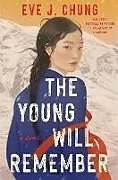
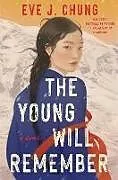
The Young Will Remember
Beschreibung
A sweeping novel about a correspondent trapped behind enemy lines during the Korean War, and the women who help her find her way home, from the national bestselling author of 1950. It’s the coldest winter in decades, and twenty-eight-year-old Chinese Ame...Format auswählen
- Fester EinbandCHF 33.20

Wird oft zusammen gekauft
Andere Kunden kauften auch
Beschreibung
A sweeping novel about a correspondent trapped behind enemy lines during the Korean War, and the women who help her find her way home, from the national bestselling author of 1950. It’s the coldest winter in decades, and twenty-eight-year-old Chinese American journalist Ellie Chang has hitched a ride on a military flight to cover a battle in the mountains of North Korea when her plane is shot down in enemy territory, stranding her there. Hwa-Ja, who introduces herself as “Emma,” has been searching for her own daughter since the last war ended. When she rescues Ellie from local soldiers, she sees a girl whose mother must be worrying somewhere, and so convinces the family she is sheltering with--The Paks--to take Ellie in. The matriarch of the Pak home, who Ellie only knows as “Imo,” has no patience for this American whose presence could mean the death of them all. She knows too well the danger of being seen with the enemy. As bombing intensifies, Ellie urges the women to flee southward with her. Together they chase the constantly moving frontline: Emma always searching, Imo haunted by the past, and Ellie keeping her identity hidden at all costs . . . even as her life becomes forever entangled with theirs. Moving and triumphant, <The Young Will Remember< sheds light on a “Forgotten War” and emphasizes the resilience of love within some of our darkest histories and the indefatigable determination of mothers in war.
Autorentext
Eve J. Chung is a Taiwanese American human rights lawyer focusing on gender equality and women’s rights. She lives in New York with her husband, two children, and two dogs.
Leseprobe
1
Touchdown
August 12, 2019
Seoul is unrecognizable.
I press my forehead against the plane's window, my breath fogging the view of this flamboyant metropolis. It is silver, with bridges that leap over rivers and roads that whip into mountains, claiming a horizon that was once viridescent. A few years ago, NASA shared an image of the Korean peninsula from space, its southern half flaring with light while the north lay engulfed in darkness. Though I have seen that iconic photo, I am still unprepared to be here.
My son's fingers graze my hand. "Are you okay, Mom?"
A deluge of emotions converge within me, and I cannot tell what I feel, only that it is overwhelming.
"Do you want some water?" he asks, raising his voice and enunciating each word. "Wah-ter?"
This is our first plane ride together, and he believes that he is my chaperone. Though he has his own years mapped in the wrinkles across his face, I don't want to speak until I am steady. Children get upset when they see their parents cry, no matter how old they are.
I wait for the ache in my throat to go away, but the immensity of everything that I've never told him hardens that knot. While I've known my son for his whole life, he has known me for only part of mine. He tells people that I am terrified of flying, but seventy years ago I was traipsing around airfields with my typewriter tucked under my arm, begging pilots to take me to the front lines. Back then, I was a correspondent for the Global Tribune.
I have seen Seoul from the sky at least a hundred times.
I don't talk much about the war, but since then, I have tried my best to live well. The fear of disappointing her has held me hostage.
A tone dings as the fasten seat belt sign comes on.
"Mom?" My son shakes my arm with urgency.
We are about to touch down.
2
Home by Christmas
"Recently catastrophic events in the Far East suggest strongly that . . . we are on the brink of, if not already involved in, World War III . . ."
-Lt. Gen. Albert C. Wedemeyer,
San Francisco, November 16, 1950
December 5, 1950
General MacArthur promised our troops that they would be home for Christmas. If any of them were going back to America, though, it was going to be on a stretcher or in a coffin. The six a.m. sun, already weary from winter, cast lukewarm rays over Tachikawa Airfield, where technicians towed a C-47 onto the runway. Mount Fuji arched in the background, a snow-cloaked spirit serene beneath its crown of clouds. On the tarmac, half a dozen flight nurses gathered, their arms crossed in their thick air force-issued coats. Though they had the day off, they had arrived early, and were stewing as they waited for the next pilot.
Nothing excited me more than angry women who had gotten organized.
In my own corner, I squatted with my back against the wall, balancing my typewriter on my knees. With a biscuit between my teeth and red bean mochi in my pocket, I began typing:
In North Korea's Chosin Reservoir, our haggard survivors are stripping their dead comrades of their clothing and stacking up corpses to block the gales. Though the Soviets aren't formally fighting in Korea, the blizzard blowing down from Siberia is its own horrifying army. At minus 40 degrees, soldiers' blackened toes are breaking off in their boots and carbines are jamming.
Chairman Mao had warned us not to cross into North Korea, but General MacArthur was arrogant.
My fingers slowed to a halt. Was that last sentence too abrasive?
Letting my biscuit fall from my lips, I uncapped my pen and slashed a line through "arrogant," perusing a mental list of synonyms. "Confident," maybe? I started writing in "confident," but I'd barely crossed the "t" before Barbara, one of the flight nurses, yanked the paper from my feed roller.
"We have boys in Korea who still have no winter uniforms!" she exclaimed, flipping her bangs up from her forehead. "It's December. If that's not arrogant, I don't know what is!"
Her chestnut hair, usually back-combed and bombastically curled, hung limp over her freckled cheeks. She pulled out her own pen and scribbled furiously over "confident," her lines as jagged as a lightning bolt. In all capitals, she wrote ARROGANT with so much force that she punctured the paper.
"Give that back!" I cried, surging to my feet. My ankles tingled from squatting. "The Global Tribune already got a warning from MacArthur's office. If I get us another, we might get blocked from the embassy briefings!"
Censorship was supposed to be patriotic, but Barbara wasn't with the press. Unrepentantly, she underlined ARROGANT before returning my article, her thumbprint smudged into the ink. I shooed her away, smoothing the crinkled paper before inserting it back into my typewriter.
Barbara and I had arrived in Japan on the same flight in July 1950, shortly after the North Korean People's Army-KPA for short-invaded South Korea, and the US initiated a "police action" under the United Nations. I'd been covering the Korean War for the past five months, but while every other correspondent was chasing MacArthur's top officers, I had been hanging around with Barbara and the other flight nurses of the Medical Air Evacuation Squadron. Being a female war correspondent was hard enough. It was even harder when you looked like the enemy.
Though I was born and raised in San Francisco, I was ethnically Chinese, with straight black hair and eyes that folded at the corners. My nose was small but broad like my father's, and my lips were plump like my mother's. Despite my perfect English and my Californian slang, American officers often balked when I tried to talk to them, let alone press them for information.
It was annoying, but at twenty-eight I had spent most of my life prying open side doors when the entrance was blocked. Many correspondents can attack a front-page story head-on, shark-style, but some of us can advance only if we get really good at picking the glitter from the dust. I began my career by writing about the Women Air Force Service Pilots, which few other outlets covered in detail. Through that series, I shone enough to get an assignment abroad. Though my bosses were …