
IHR WARENKORB IST AKTUELL LEER.
Haben Sie noch nichts passendes gefunden? Stöbern Sie durch unser komplettes Sortiment.
Oder melden Sie sich an bzw. registrieren Sie sich.
- Kostenlose Lieferung
- Kauf auf Rechnung
- Ex Libris Tiefpreis
- Filiallieferung und 650+ Abholorte
- Rabatt-Bons als Club-Mitglied
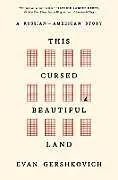
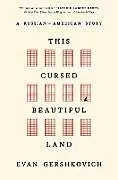
This Cursed Beautiful Land
Beschreibung
The revelatory, much-anticipated memoir from the In March 2023, a year after Russia invaded Ukraine, Evan Gershkovich met with a union boss connected with a Russian tank factory. As the journalist sat with his source in an empty restaurant in an industrial cit...Format auswählen
- Fester EinbandCHF 30.50
- Kartonierter EinbandCHF 30.95

Wird oft zusammen gekauft
Andere Kunden kauften auch
Beschreibung
The revelatory, much-anticipated memoir from the In March 2023, a year after Russia invaded Ukraine, Evan Gershkovich met with a union boss connected with a Russian tank factory. As the journalist sat with his source in an empty restaurant in an industrial city 900 miles east of Moscow, a squad of masked agents charged in, blindfolded Evan, and dragged him into an unmarked van.;The agents were from the FSB, Putin’s powerful security service, and the successor to the Soviet-era KGB. Five years earlier, Evan had arrived in Moscow to jumpstart his journalism career. His parents had left the Soviet Union in the 1970s, forging a middle-class life in New Jersey, where Evan grew up on Soviet-era cartoons and weekend trips to Brighton Beach. In Moscow, Evan dove into life--unpacking politics for readers of Western journalists had long felt insulated from the dangers their Russian counterparts experienced. But war, it seemed, had changed the rules. Interrogated for hours after his arrest, Evan was told he was being charged with spying and thrown in Moscow’s notorious Lefortovo prison--a pawn in a geopolitical chess match.; After his world suddenly shrunk to a tiny, cement-walled cell, Evan did something remarkable: he continued reporting. For the next sixteen months, he documented a life in Russia that few Westerners will ever experience: its sprawling prison system, with its own vocabulary and customs--and surprising pockets of humanity. In writing by turns riveting and humorous, Evan brings readers inside the events leading to his arrest, his nearly 500 days in Russian prisons, and the blockbuster, multi-country prisoner swap that freed him. More than a prison memoir, <This Cursed Beautiful Land< is an extraordinary, deeply reported chronicle of a misunderstood people and their land--marked at once by stunning beauty and a haunting history....
Autorentext
Evan Gershkovich
Klappentext
NEW YORK TIMES BESTSELLER • The “enthralling” (New York Times), much-anticipated memoir from the Wall Street Journal reporter who was wrongly imprisoned in Putin’s Russia for more than a year—a glimpse inside the perils and contradictions of a country in the midst of autocracy
“Propulsive . . . a taut thriller.”—Patrick Radden Keefe, #1 New York Times bestselling author of London Falling
**“Beautiful writing . . . a phenomenal book.”—Jon Stewart, The Daily Show
“Extraordinary . . . deeply insightful into Russia . . . I really urge everyone to pick up this book.”—Ben Rhodes, Pod Save the World**
In March 2023, a year after Russia invaded Ukraine, Evan Gershkovich met with a union boss connected with a Russian tank factory. As the journalist sat with his source in an empty restaurant in an industrial city 900 miles east of Moscow, a squad of masked agents charged in, blindfolded Evan, and dragged him into an unmarked van. The agents were from the FSB, Putin’s powerful security service, and the successor to the Soviet-era KGB.
Five years earlier, Evan had arrived in Moscow to jumpstart his journalism career. His parents had left the Soviet Union in the 1970s, forging a middle-class life in New Jersey, where Evan grew up on Soviet-era cartoons and weekend trips to Brighton Beach. In Moscow, Evan dove into life—unpacking politics for readers of The Moscow Times and developing a circle of deep friendships with Russian peers, all striving to make their way in perilous times.
Western journalists had long felt insulated from the dangers their Russian counterparts experienced. But war, it seemed, had changed the rules. Interrogated for hours after his arrest, Evan was told he was being charged with spying and thrown in Moscow’s notorious Lefortovo prison—a pawn in a geopolitical chess match.
After his world suddenly shrunk to a tiny, cement-walled cell, Evan did something remarkable: he continued reporting. For the next sixteen months, he documented a life in Russia that few Westerners will ever experience: its sprawling prison system, with its own vocabulary and customs—and surprising pockets of humanity.
In writing by turns riveting and humorous, Evan brings readers inside the events leading to his arrest, his nearly 500 days in Russian prisons, and the blockbuster, multi-country prisoner swap that freed him. More than a prison memoir, This Cursed Beautiful Land is an extraordinary, deeply reported chronicle of a misunderstood people and their land—marked at once by stunning beauty and a haunting history.
Leseprobe
One
Suburban Soviets
October 1991–October 2017
I am an American, born in New Jersey, but the place my parents came from has never felt far away.
I arrived in the world exactly two months before the collapse of the Soviet Union. Twelve years earlier, in 1979, my parents left the country for America. They were part of a sustained wave of Jewish emigration set off by a law passed by the U.S. Congress to ease Cold War tensions—legislation that tied trade relations to freedom of movement for Soviet citizens. Many Jews were eager to go.
My mother left Leningrad with her own mother and landed in Detroit. My father and his parents departed Odessa—the port city in today’s Ukraine that is now Odesa—and settled in Brooklyn near Brighton Beach, an area known as Little Odessa.
My father would later joke how, in the years before his departure, “when two Jews met on the street, they greeted each other not with hello but with a question: So, you getting ready?” Leaving was an easy decision. His father, Mark, hated the Soviet Union. Mark’s father, my greatgrandfather, vanished after his arrest in 1937 at the height of Stalin’s purges. Mark and his mother had spent years moving from city to city in fear of persecution. As my grandfather watched his own son grow up, he was filled with unease, fearing my father would face mandatory conscription into the Soviet Army.
For my mother, who was twenty-two, leaving simply felt logical. She was born in 1957, several years after the so-called “doctors’ plot affair,” a state-sponsored campaign that saw Jewish doctors dismissed from their jobs or arrested on false charges of conspiring to assassinate Stalin. One of these unfortunate doctors was a neighbor in her parents’ communal apartment.
Antisemitism loomed over daily life. My grandfather originally wanted to name my mother Etya, short for Esther, after his sister, who had recently passed away. But my grandmother worried that an overtly Jewish name would draw unwanted attention and instead suggested the name Ella. That the starkly Jewish last name Milman would stick out anyway didn’t soothe my grandmother’s worries. In any case, Soviet passports listed ethnic nationalities, of which “Jew” was one—it was there on paper, for anyone to see.
Growing up, my mother adored the Soviet literary magazine Yunost, or Youth, and dreamed of becoming a writer. But she was laughed off when she applied to Leningrad State University’s journalism department. The woman receiving her application took one look at my mother’s passport and said, “Sweetheart, did you just drop from the moon?”
My mother ended up studying at the Leningrad Order of Lenin Shipbuilding Institute. She was depressed about her prospects. On Voice of America, she listened to jazz and the Rolling Stones, as well as rumors that the Kremlin would soon round up Jews and forcibly send them thousands of miles east to Birobidzhan, the capital of the so-called “Jewish Autonomous Region” near the border with China. Created in the 1930s and touted as the world’s first …