
IHR WARENKORB IST AKTUELL LEER.
Haben Sie noch nichts passendes gefunden? Stöbern Sie durch unser komplettes Sortiment.
Oder melden Sie sich an bzw. registrieren Sie sich.
- Kostenlose Lieferung
- Kauf auf Rechnung
- Ex Libris Tiefpreis
- Filiallieferung und 650+ Abholorte
- Rabatt-Bons als Club-Mitglied
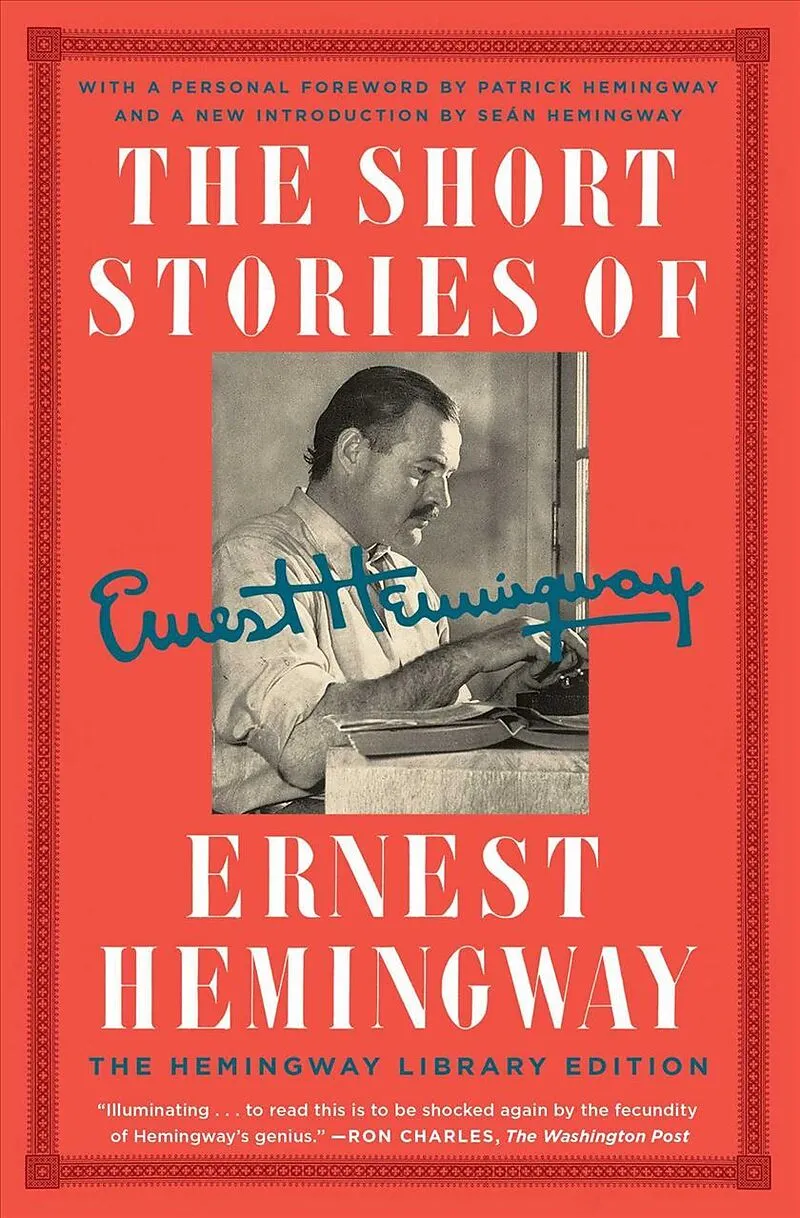
Short Stories of Ernest Hemingway
Beschreibung
Zusatztext Serves as a fine introduction to readers unfamiliar with Hemingway [and] also makes a fine addition to the libraries of Ernest Hemingway's many admirers. Informationen zum Autor Ernest Hemingway did more to change the style of English prose than any...Format auswählen
- TaschenbuchCHF 22.70
Wird oft zusammen gekauft
Andere Kunden kauften auch
Beschreibung
Zusatztext Serves as a fine introduction to readers unfamiliar with Hemingway [and] also makes a fine addition to the libraries of Ernest Hemingway's many admirers. Informationen zum Autor Ernest Hemingway did more to change the style of English prose than any other writer of his time. Publication of The Sun Also Rises and A Farewell to Arms immediately established Hemingway as one of the greatest literary lights of the twentieth century. His classic novel The Old Man and the Sea won the Pulitzer Prize in 1953. Hemingway was awarded the Nobel Prize for Literature in 1954. Known for his larger-than-life personality and his passions for bullfighting, fishing, and big-game hunting, he died in Ketchum, Idaho, on July 2, 1961. Klappentext The fourth in the series of new annotated editions of Ernest Hemingway's work, edited by the author's grandson Seán and introduced by his son Patrick, this illuminating ( The Washington Post ) collection includes the best of the well-known classics as well as unpublished stories, early drafts, and notes that offer insight into the mind and methods of one of the greatest practitioners of the story form ( Kirkus Reviews ). Ernest Hemingway is a cultural iconan archetype of rugged masculinity, a romantic ideal of the intellectual in perpetual exilebut, to his countless readers, Hemingway remains a literary force much greater than his image. Of all of Hemingway's canonical fictions, perhaps none demonstrate so forcefully the power of the author's revolutionary style as his short stories. In classics like Hills like White Elephants, The Butterfly in the Tank, and The Short Happy Life of Francis Macomber, Hemingway shows us great literature compressed to its most potent essentials. We also see, in Hemingway's short fiction, the tales that created the legend: these are stories of men and women in love and in war and on the hunt, stories of a lost generation born into a fractured time. The Short Stories of Ernest Hemingway presents many of Hemingway's most famous classics alongside rare and unpublished material: Hemingway's early drafts and correspondence, his dazzling out-of-print essay on the art of the short story, and two marvelous examples of his earliest workhis first published story, The Judgment of Manitou, which Hemingway wrote when still a high school student, and a never-before-published story, written when the author was recovering from a war injury in Milan after WWI. This work offers vital insight into the artistic development of one of the twentieth century's greatest writers. It is a perfect introduction for a new generation of Hemingway readers, and it belongs in the collection of any true Hemingway fan. Zusammenfassung The fourth in the series of new annotated editions of Ernest Hemingway's work, edited by the author's grandson Seán and introduced by his son Patrick, this illuminating ( The Washington Post ) collection includes the best of the well-known classics as well as unpublished stories, early drafts, and notes that offer insight into the mind and methods of one of the greatest practitioners of the story form ( Kirkus Reviews ). Ernest Hemingway is a cultural iconan archetype of rugged masculinity, a romantic ideal of the intellectual in perpetual exilebut, to his countless readers, Hemingway remains a literary force much greater than his image. Of all of Hemingway's canonical fictions, perhaps none demonstrate so forcefully the power of the author's revolutionary style as his short stories. In classics like Hills like White Elephants, The Butterfly in the Tank, and The Short Happy Life of Francis Macomber, Hemingway shows us great literature compressed to its most potent essentials. We also see, in Hemingway's short fiction, the tales that created the legend: these are stories of men and women in love and in war and on ...
ldquo;Serves as a fine introduction to readers unfamiliar with Hemingway… [and] also makes a fine addition to the libraries of Ernest Hemingway’s many admirers.”
Autorentext
Ernest Hemingway did more to change the style of English prose than any other writer of his time. Publication of The Sun Also Rises and A Farewell to Arms immediately established Hemingway as one of the greatest literary lights of the twentieth century. His classic novel The Old Man and the Sea won the Pulitzer Prize in 1953. Hemingway was awarded the Nobel Prize for Literature in 1954. His life and accomplishments are explored in-depth in the PBS documentary film from Ken Burns and Lynn Novick, Hemingway. Known for his larger-than-life personality and his passions for bullfighting, fishing, and big-game hunting, he died in Ketchum, Idaho on July 2, 1961.
Klappentext
The fourth in the series of new annotated editions of Ernest Hemingway’s work, edited by the author’s grandson Seán and introduced by his son Patrick, this “illuminating” (The Washington Post) collection includes the best of the well-known classics as well as unpublished stories, early drafts, and notes that “offer insight into the mind and methods of one of the greatest practitioners of the story form” (Kirkus Reviews).
Ernest Hemingway is a cultural icon—an archetype of rugged masculinity, a romantic ideal of the intellectual in perpetual exile—but, to his countless readers, Hemingway remains a literary force much greater than his image. Of all of Hemingway’s canonical fictions, perhaps none demonstrate so forcefully the power of the author’s revolutionary style as his short stories. In classics like “Hills like White Elephants,” “The Butterfly in the Tank,” and “The Short Happy Life of Francis Macomber,” Hemingway shows us great literature compressed to its most potent essentials. We also see, in Hemingway’s short fiction, the tales that created the legend: these are stories of men and women in love and in war and on the hunt, stories of a lost generation born into a fractured time.
The Short Stories of Ernest Hemingway presents many of Hemingway’s most famous classics alongside rare and unpublished material: Hemingway’s early drafts and correspondence, his dazzling out-of-print essay on the art of the short story, and two marvelous examples of his earliest work—his first published story, “The Judgment of Manitou,” which Hemingway wrote when still a high school student, and a never-before-published story, written when the author was recovering from a war injury in Milan after WWI. This work offers vital insight into the artistic development of one of the twentieth century’s greatest writers. It is a perfect introduction for a new generation of Hemingway readers, and it belongs in the collection of any true Hemingway fan.