
IHR WARENKORB IST AKTUELL LEER.
Haben Sie noch nichts passendes gefunden? Stöbern Sie durch unser komplettes Sortiment.
Oder melden Sie sich an bzw. registrieren Sie sich.
- Kostenlose Lieferung
- Kauf auf Rechnung
- Ex Libris Tiefpreis
- Filiallieferung und 650+ Abholorte
- Rabatt-Bons als Club-Mitglied
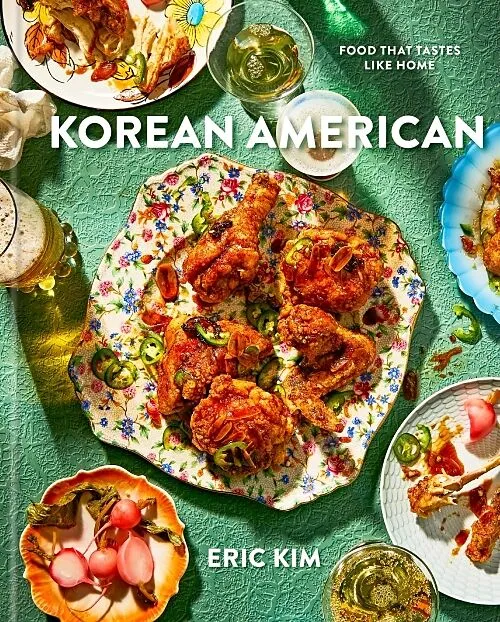
Korean American
Beschreibung
“This is such an important book: an enquiry into identity, and a rich repository of memories and deliciousness. And, as deeply personal as it is, it invites everyone into the kitchen with such brio. I savored every word and want to cook every recipe!&rdq...Format auswählen
- Fester EinbandCHF 34.00
Wird oft zusammen gekauft
Andere Kunden kauften auch
Beschreibung
“This is such an important book: an enquiry into identity, and a rich repository of memories and deliciousness. And, as deeply personal as it is, it invites everyone into the kitchen with such brio. I savored every word and want to cook every recipe!”—Nigella Lawson, author of Cook, Eat, Repeat
“Eric Kim is a triple threat: great writer, elegant innovator, and sublime aesthete. Korean American is far more than a collection of essential recipes and deeply felt memories; it is an important ode to a beautiful family.”—Min Jin Lee, author of Free Food for Millionaires and Pachinko, a finalist for the National Book Award
“Eric’s book is wonderful. Every page shows his personality and good taste, and the recipes are inventive, fun, and traditional all at the same time! Very Korean and very American—with lots of kimchi.”—Maangchi, author of Maangchi's Big Book of Korean Cooking
“In Korean American, Eric Kim gives his readers bold new recipes and expansive yet grippingly personal essays, but also a model for the dream mother-child relationship in Jean and Eric: mutually adoring and understanding, with unlimited room for connection and growth. I’ve never read a book like it, and didn’t know how much I needed it.”—Kristen Miglore, author of Genius Recipes and Genius Desserts
Autorentext
Eric Kim is a New York Times staff food writer born and raised in Atlanta, Georgia. He worked his way through the literary and culinary world to eventually become a digital manager at Food Network and a senior editor at Food52, where he amassed a devoted readership for his “Table for One” column. He now hosts regular videos on NYT Cooking’s YouTube channel. A former contributing editor at Saveur, Eric taught writing and literature at Columbia University, and his work has been featured in The Washington Post, Bon Appétit, and Food & Wine. He lives with his rescue pup, Quentin Compson, in New York City.
Klappentext
"An homage to what it means to be Korean American with more than 85 delectable recipes that explore how new culinary traditions can be forged to honor both your past and your present. New York Times staff writer Eric Kim grew up in Atlanta, the son of two Korean immigrants. Food has always been central to his story, from Friday-night Korean barbecue with his family to hybridized Korean-ish meals for one--like Gochujang-Buttered Radish Toast and his Kimchi Fried Rice--that he makes in his tiny New York City apartment. In this book, Eric shares these recipes alongside insightful, touching stories and stunning images shot by photographer Jenny Huang. Playful, poignant, and informative, Korean American: A Cookbook also includes essays ranging from the life-changing act of leaving home and coming back, to what Thanksgiving means to a first-generation family both conceptually and culinarily--all the while teaching readers about the Korean pantry, the history of Korean immigration in America, and the importance of white rice in Korean cuisine. Recipes like Sheet-Pan Bibimbap with Roasted Fall Vegetables and Caramelized-Kimchi Baked Potatoes demonstrate Eric's prowess at introducing Korean flavors to comforting American classics, while a dish such as Meatloaf-Glazed Kalbi with Gamja Salad does the opposite by making a traditional Korean dish immediately more familiar through the addition of a beloved American flavor profile. In this book of recipes and thoughtful insights, especially about his mother, Jean, Eric divulges not only what it means to be Korean American but how, through food and cooking, he found acceptance, strength, and the confidence to own his story"--
Zusammenfassung
****NEW YORK TIMES AND LOS ANGELES TIMES BESTSELLER • An homage to what it means to be Korean American with delectable recipes that explore how new culinary traditions can be forged to honor both your past and your present.
SHORTLISTED FOR THE ART OF EATING PRIZE • IACP AWARD FINALIST • ONE OF THE BEST COOKBOOKS OF THE YEAR: Bon Appétit, The Boston Globe, Saveur, NPR, Food & Wine, Salon, Vice, Epicurious, Publishers Weekly, Simply Recipes
“This is such an important book: an enquiry into identity, and a rich repository of memories and deliciousness.”—Nigella Lawson, author of Cook, Eat, Repeat**
**
**New York Times staff writer Eric Kim grew up in Atlanta, the son of two Korean immigrants. Food has always been central to his story, from Friday-night Korean barbecue with his family to hybridized Korean-ish meals for one—like Gochujang-Buttered Radish Toast and Caramelized-Kimchi Baked Potatoes—that he makes in his tiny New York City apartment. In his debut cookbook, Eric shares these recipes alongside insightful, touching stories and stunning images shot by photographer Jenny Huang.
Playful, poignant, and vulnerable, Korean American also includes essays on subjects ranging from the life-changing act of leaving home and returning as an adult, to what Thanksgiving means to a first-generation family, complete with a full holiday menu—all the while teaching readers about the Korean pantry, the history of Korean cooking in America, and the importance of white rice in Korean cuisine. Recipes like Gochugaru Shrimp and Grits, Salt-and-Pepper Pork Chops with Vinegared Scallions, and Smashed Potatoes with Roasted-Seaweed Sour Cream Dip demonstrate Eric's prowess at introducing Korean pantry essentials to comforting American classics, while dishes such as Cheeseburger Kimbap and Crispy Lemon-Pepper Bulgogi with Quick-Pickled Shallots do the opposite by tinging traditional Korean favorites with beloved American flavor profiles. Baked goods like Milk Bread with Maple Syrup and Gochujang Chocolate Lava Cakes close out the narrative on a sweet note.
In this book of recipes and thoughtful insights, especially about his mother, Jean, Eric divulges not only what it means to be Korean American but how, through food and cooking, he found acceptance, strength, and the confidence to own his story.
Leseprobe
Introduction
When I was seventeen years old, I ran away from home. College acceptance letters had just come in, and my mother, Jean, had torn into all of mine before I could come home from school that afternoon. I was so angry with her for opening my mail that I packed a bag in the middle of the night, took the car with the GPS, and drove from our house in Atlanta (where this story begins and ends) to Nashville (where my cousin Semi lived, four hours northwest). In the morning, when Jean saw that my bed was empty and my toothbrush gone, she called me, over and over. In my very first act of rebellion as her son, I didn’t pick up.
I remember that trip to Nashville distinctly because Semi and I cooked coq au vin together. By then, as an avid watcher of the Food Network, I had tried my hand at a variety of non-Korean dishes, mostly flash fries and quick pan sauces, but never a proper braise. It was liberating to braise chicken with red wine on Semi’s tiny stove, not least because that just wasn’t how we cooked back in Georgia. My mother’s Korean soups and stews were vociferously boiled, the meat made fall-apart tender in stainless-steel stock pots or burbling earthenware called ttukbaegi. Slow-cooked dishes in general were a whole new frontier for me and wouldn’t become a fixture in my home cooking until years later in New York, where I would eventually go to college, take an internship at the Cooking Channel, and buy a yellow Dutch oven with my first paycheck. But for now, at seventeen, tucked away in Semi’s Tennessee bachelorette pad, I tasted freedom for the first time in my life. A vast world of p…