
IHR WARENKORB IST AKTUELL LEER.
Haben Sie noch nichts passendes gefunden? Stöbern Sie durch unser komplettes Sortiment.
Oder melden Sie sich an bzw. registrieren Sie sich.
- Kostenlose Lieferung
- Kauf auf Rechnung
- Ex Libris Tiefpreis
- Filiallieferung und 650+ Abholorte
- Rabatt-Bons als Club-Mitglied
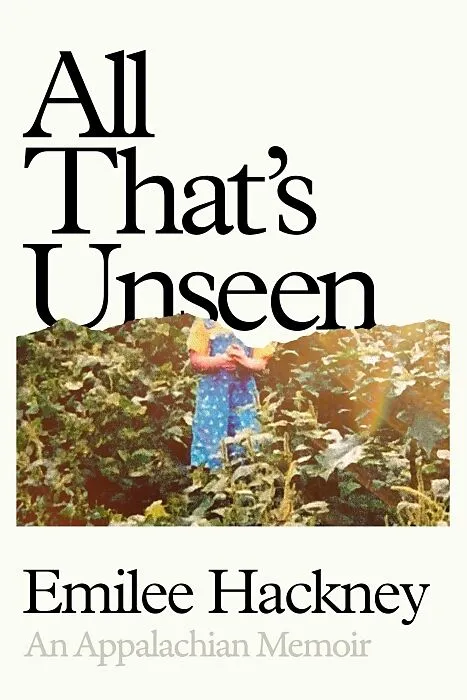
All That's Unseen
Beschreibung
In her luminous debut, Emilee Hackney offers both a love letter and a reckoning of the place that made her--a story of losing her faith, finding her way back to her Appalachian home, and discovering what endures Born and raised deep in the hollers of the Appal...Format auswählen
- Fester EinbandCHF 41.50
Wird oft zusammen gekauft
Andere Kunden kauften auch
Beschreibung
In her luminous debut, Emilee Hackney offers both a love letter and a reckoning of the place that made her--a story of losing her faith, finding her way back to her Appalachian home, and discovering what endures Born and raised deep in the hollers of the Appalachian Mountains, Emilee Hackney knew little beyond the ridgelines and coalfields of southwestern Virginia. As an eighth-generation Appalachian, her childhood was steeped in the stories of her grandparents--tales of the coal mines’ brutal grip and the way the land, both beautiful and unforgiving, never quite let anyone go. At fourteen, Emilee meets Sam, a senior at her high school, who offers her a glimpse at a promising future together. But as they begin attending services at Deliverance Christian Church as a couple, Emilee is thrust into the radical realm of Pentecostalism. In a culture where marriage at nineteen isn’t uncommon, Emilee is engaged to Sam. Eager to make her relationship work, she embraces the extremist doctrines of the religion, submitting herself fully to God, to Sam, and to a life of repentance. But what she doesn’t yet know is the man she plans to marry is not who he claims to be. Years later, Emilee finds herself isolated from friends, family, and her own sense of truth. Wracked with shame and self-doubt, she reaches a breaking point. On the verge of spiraling out of control, she applies to Harvard in a stunning act of defiance and hope; against all odds, she is accepted. From the magisterial mountains of Tazewell to the storied halls of Cambridge, Emilee begins the arduous process of reinventing herself and her relationships with her home, faith, and values against the backdrop of the divisive 2016 election. <All That’s Unseen< is Emilee Hackney’s fiercely honest memoir about spiritual entrapment, hard-won liberation, and the courage to reclaim her voice after she had been taught to stay silent.
Autorentext
Emilee Hackney grew up in the coalfields of southwest Virginia. She graduated from Harvard University with a BA in English and briefly attended Vanderbilt University’s MFA program. All That’s Unseen is her first book.
Klappentext
**The New York Times bestseller
“[An] achingly intelligent memoir . . . we finally have an Appalachian memoir worthy of its origins.” —*New York Times Book Review
*“Unflinching . . . Hackney gives readers an intimate look at a way of life unfamiliar to many. . . . [A] gripping exploration of identity, class, religion and a large swath of American life that is fighting with all its might to survive.” —Atlanta Journal Constitution
In her luminous debut, Emilee Hackney offers both a love letter to and a reckoning of the place that made her—a story of losing her faith, finding her way back to her Appalachian home, and discovering what endures**
Born and raised deep in the hollers of the Appalachian Mountains, Emilee Hackney knew little beyond the ridgelines and coalfields of southwest Virginia. As an eighth-generation Appalachian, her childhood was steeped in the stories of her grandparents—tales of the coal mines’ brutal grip and the way the land, both beautiful and unforgiving, never quite let anyone go. At fourteen, Emilee meets Sam, a senior at her high school, who offers her a glimpse at a promising future together. But as they begin attending services at Deliverance Christian Church as a couple, Emilee is thrust into the radical realm of Pentecostalism. In a culture where marriage at nineteen isn’t uncommon, Emilee is engaged to Sam. Eager to make her relationship work, she embraces the extremist doctrines of the religion, submitting herself fully to God, to Sam, and to a life of repentance. But what she doesn’t yet know is the man she plans to marry is not who he claims to be.
Years later, Emilee finds herself isolated from friends, family, and her own sense of truth. Wracked with shame and self-doubt, she reaches a breaking point. On the verge of spiraling out of control, in a stunning act of defiance and hope, she applies to Harvard; against all odds, she is accepted. From the magisterial mountains of Tazewell to the storied halls of Cambridge, Emilee begins the arduous process of reinventing herself and her relationships with her home, faith, and values against the backdrop of the divisive 2016 election. All That’s Unseen is Emilee Hackney’s fiercely honest memoir about spiritual entrapment, hard-won liberation, and the courage to reclaim her voice after she had been taught to stay silent.
Leseprobe
Prologue
The church is in the shadow of a mountain, bordered by forest, a trailer park, and a creek that floods the parking lot every time it rains. The walls are stone. The few windows are narrow and darkly tinted. The American, Virginia, and Christian flags fly on the front lawn. Beneath the flagpoles is a large white sign: DELIVERANCE CHRISTIAN CHURCH, bold black letters except for the t in “Christian,” which is a red cross in forward slant.
Inside, a large room with a high ceiling. In my first memory of Deliverance, I am five years old, and my mother is standing beside me, my eyes closed, lips moving in silent prayer. The rest of the congregation is shouting, moaning, singing, chanting. Yes, Lord. Yes, Father. Jesus. Jesus. Jesus. Jesus. There are other sounds, guttural and repetitive: a holy language I won’t understand even when I learn to speak it myself years later. The worship rises above the swaying bodies, above the waving arms and shaking heads and weeping faces, in a collective cry to God.
The lights grow dim. The music swells. People move out of their seats toward the front of the church. Some stand, arms high and open, at the altar beneath the pastor’s pulpit. Some kneel and bow until their foreheads touch the floor. A few lie on their stomachs, still and silent as death.
In my memory, everyone is faceless, a congregation of amorphous figures behaving in ways I have never seen and do not at all understand. But something about the unashamed, unrestrained worship seems natural, even necessary, for the rapturous atmosphere. There does seem to be some kind of presence. Something sacred.
Whatever it is, I begin to sense it myself. It swallows me up in a slow wave of warmth. The whole of the room—the people, the music, the cries of praise—blurs into a great, urgent energy that settles heavily on my shoulders.
The pressure grows. My legs go soft.
My mother’s eyes remain closed. I wonder vaguely what she will think if she happens to look down. sense, inexplicably, that her thoughts do not matter, that nothing matters except conceding to the absolute whim of the mighty something that fills the room. My knees touch the floor, and I am Moses at the burning bush, hiding my face from the holy presence. It is a mysterious and all-consuming force: powerful enough to drive me to the ground, and heavy enough to hold me there.
1.
In one of my earliest memories, I'm shrinking. I'm in the back seat of my parents' car, face pressed against the window, straining to see the peaks of the mountains outside. The road we're driving on snakes through a deep, narrow cut between two ridges. The farther we go, the steeper the mountains grow, and the smaller I feel. I am dwarfed by their magnitude and majesty.
Even as a toddler, I'm awed by the mountains. They are confining and comforting, ancient and noble. They radiate a soft old wisdom, as if they were born at the very dawn of the world. I feel as if I were born from them, as if my bones were formed from their dirt. In a way, they were: I'm an eighth-generation Appalachian, attached to the land by something more sacred, more mysterious, than mere blood and history. There is magic in that mystery, and i…