
IHR WARENKORB IST AKTUELL LEER.
Haben Sie noch nichts passendes gefunden? Stöbern Sie durch unser komplettes Sortiment.
Oder melden Sie sich an bzw. registrieren Sie sich.
- Kostenlose Lieferung
- Kauf auf Rechnung
- Ex Libris Tiefpreis
- Filiallieferung und 650+ Abholorte
- Rabatt-Bons als Club-Mitglied
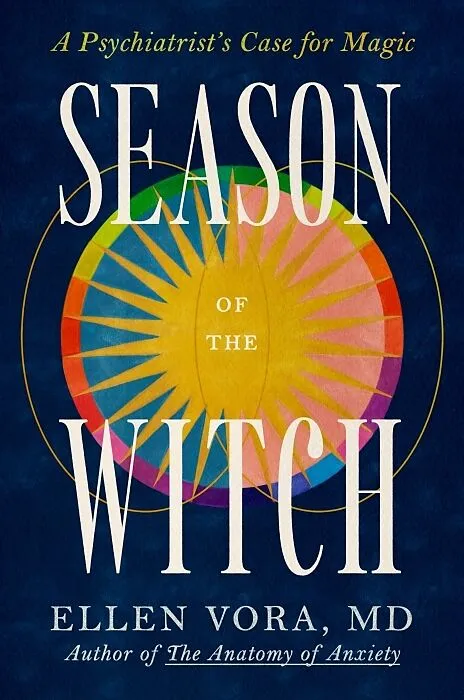
Season of the Witch
Beschreibung
A provocative call for women to awaken to their innate connection to the magic that gives life its depth, meaning, and transcendence—from the author of <The Anatomy of Anxiety< <Witch: /wiCH/ noun: Any woman who has reclaimed the intuitive, mystical,...Format auswählen
- Fester EinbandCHF 31.60

Wird oft zusammen gekauft
Andere Kunden kauften auch
Beschreibung
A provocative call for women to awaken to their innate connection to the magic that gives life its depth, meaning, and transcendence—from the author of <The Anatomy of Anxiety<
<Witch: /wiCH/ noun: Any woman who has reclaimed the intuitive, mystical, and embodied ways of knowing that our culture tries to shame and suppress<
We are caught in a crisis of disconnection. The cost of this shows up everywhere: in our bodies, which cry out with digestive issues and chronic conditions; in our relationships, where we’ve lost the communities that once held us; and in our day-to-day, where we feel rudderless, anxious, and incapable of navigating our lives without outsourced advice.
For years, Yale and Columbia-trained psychiatrist Ellen Vora has taken a holistic approach to helping her patients navigate these challenges. But when she herself experienced a shattering loss, she realized that true healing will never come from a wellness program. What we need is an openness to mystery.
According to Vora, every woman possesses a natural connection to magic, but our culture’s biases have severed our ties to the mystical. In <Season of the Witch<, Vora examines those biases and reveals the five practices that can help us reclaim the full spectrum of our intelligence: embodiment; presence; valuing the yin; being open to mystery; and serving the collective.
By engaging with these practices, we become witches: women who walk through the world with a quiet conviction, anchored in our own knowing, grounded and resilient, trusting that we are whole onto ourselves—women fully alive to mystery. This is what true witchiness looks like: not an escape from reality, but a deeper way of being in it.
Autorentext
Ellen Vora, MD, is a holistic psychiatrist, acupuncturist, and yoga teacher, and the author of The Anatomy of Anxiety. She takes a functional medicine approach to mental health—considering the whole person and addressing imbalance at the root. Dr. Vora received her BA from Yale University and her medical degree from Columbia University, and she is board-certified in psychiatry and integrative holistic medicine. She lives in New York City with her husband and daughter.
Klappentext
**A provocative call for women to reclaim the intuition, mystery, and transcendence that modern life has trained us to dismiss—from the author of The Anatomy of Anxiety
**
Witch: /wiCH/ noun: Any woman who has reclaimed the intuitive, mystical, and embodied ways of knowing that our culture tries to shame and suppress
We are caught in a crisis of disconnection. The cost of this shows up everywhere: in our bodies, which cry out with digestive issues and chronic conditions; in our relationships, where we’ve lost the communities that once held us; and in our day-to-day, where we feel rudderless, anxious, and incapable of navigating our lives without outsourced advice.
For years, Yale and Columbia-trained psychiatrist Ellen Vora has taken a holistic approach to helping her patients navigate these challenges. But when she herself experienced a shattering loss, she realized that true healing will never come from a wellness program.
According to Vora, every woman possesses a natural connection to magic, but our culture’s biases have severed our ties to the mystical. In Season of the Witch, Vora examines those biases and reveals the five practices that can help us reclaim the full spectrum of our intelligence: embodiment; presence; valuing the yin; being open to mystery; and serving the collective.
By engaging with these practices, we become witches: women who walk through the world with a quiet conviction, anchored in our own knowing, trusting that we are whole unto ourselves—women fully alive to mystery. This is what true witchiness looks like: not an escape from reality, but a deeper way of being in it.
Leseprobe
Chapter 1
The Medicine of Magic
Your first act of rebellion is to see clearly. —Mya Zin, If You Can’t Break the Wall, Become the Grass That Grows Through Its Cracks
I’ve observed that patients who view the world as random, material, and devoid of divinity tend to slip more easily into demoralization and depression, especially when facing difficult circumstances like loneliness, moral injury, or loss. Those with a spiritual orientation, on the other hand, seem to be protected. This protective effect particularly shines in the face of challenge.
Dr. Lisa Miller, a professor of psychology and education at Columbia University, has pioneered groundbreaking studies on the relationship between spirituality and mental health. Her research reveals that individuals with a strong sense of spirituality—defined not as religious doctrine but as a personal connection to something greater than themselves—are 90 percent less likely to experience major depression compared to those who don’t consider spirituality important.
This kind of spirituality—sometimes called secular spirituality—doesn’t require adherence to any religion or dogma. It’s simply an openness to mystery, a sense that the universe holds meaning. Research consistently shows that this orientation correlates with increased happiness and lower rates of depression and suicide. What’s most fascinating is that this isn’t just psychological but also biological. Miller’s neuroimaging studies show that individuals with strong spiritual or religious commitment have measurably thicker cortical regions in areas associated with emotional regulation and resilience.
But this isn’t something you can force. You can’t fake your way into genuine belief, and I wouldn’t ask you to try. What I will invite you to consider is this: If you view spirituality with skepticism, is that skepticism truly yours, or have you internalized a cultural skepticism? Do you have an openness to mystery that’s buried beneath layers of social conditioning? Many of us carry a latent receptivity to magic that we’ve learned to suppress. And in suppressing it, we may be missing out on what spiritual openness has to offer. That was certainly my experience.
As the steward of many people’s mental health, I know the benefits and limitations of medication and therapy. I’ve come to appreciate that, no matter how well medicated and therapized we are, at some point we all must grapple with existence itself: What is happening here? Is the fabric of the universe purposeful or random, benevolent or cruel? Where we land on those questions has an outsized impact on daily mental health. In our quiet moments, do we trust that everything will be okay in the end? As the nineteenth-century thinker Frederic W. H. Myers recognized, the most important question we can ask may be: “Is the universe friendly?” Einstein grappled with this same fundamental question and arrived at his own conclusion: “Subtle is the Lord, but malicious He is not.”
If we believe this world is random, that potential catastrophe lurks around every corner, how can we not live in a state of vigilance? This can foster anxiety, or even an overwhelming fear of death. A purely materialist outlook leaves little room for meaning in the unfoldings of our lives. Anytime something seemingly magical does occur, we force ourselves to sober up and explain it away. And grief can feel untenable when we believe that the end is the end, and that loss is senseless. An openness to magic holds us when life feels heavy, anchoring us to a more hopeful and trusting narrative. When we might otherwise despair, magic helps us find meaning in our challenges.
There are other ways a connection to magic shapes my practice, even if I don’t typically speak openly about them. Though I grew up in …