
IHR WARENKORB IST AKTUELL LEER.
Haben Sie noch nichts passendes gefunden? Stöbern Sie durch unser komplettes Sortiment.
Oder melden Sie sich an bzw. registrieren Sie sich.
- Kostenlose Lieferung
- Kauf auf Rechnung
- Ex Libris Tiefpreis
- Filiallieferung und 650+ Abholorte
- Rabatt-Bons als Club-Mitglied
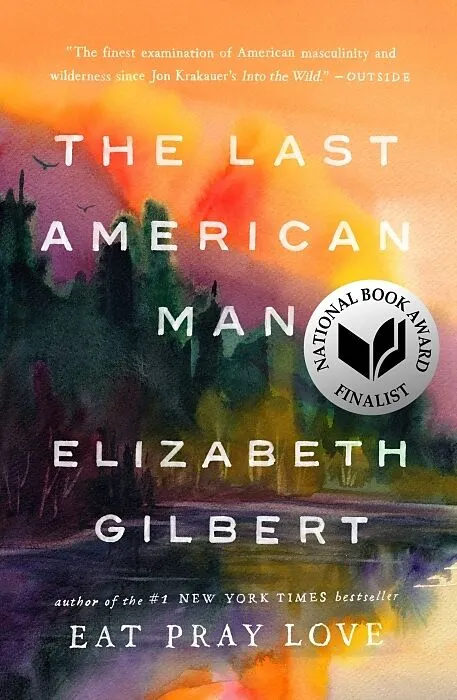
The Last American Man
Beschreibung
Zusatztext "The finest examination of American masculinity and wilderness since Jon Krakauer's Into the Wild ." Outside "Wickedly well-written...Without compromising her obvious admiration! Ms. Gilbert presents a warts-and-all portrait of Mr. Conway and a soph...Format auswählen
- Poche format BCHF 24.00
Wird oft zusammen gekauft
Andere Kunden kauften auch
Beschreibung
Zusatztext "The finest examination of American masculinity and wilderness since Jon Krakauer's Into the Wild ." Outside "Wickedly well-written...Without compromising her obvious admiration! Ms. Gilbert presents a warts-and-all portrait of Mr. Conway and a sophisticated understanding of why those warts are only natural.... A vigorous! engaging book." The New York Times Book Review "Gilbert artfully taps into this unique life to create a fascinating! deeply thought-out and anthralling narrative." Los Angeles Times "A vivid! nuanced portrait of an endlessly complicated man." San Francisco Chronicle " The Last American Man relates the riveting story of Conway's odyssey from a child of affluent parents! to mountain man! to the owner of 1!000 acres of woods and fields in western North Carolina. Gilbert sees in Conway's life a parable for our time! a way of capturing how our culture is sapping us of all that is vital." Chicago Tribune "There are so many reasons to read this book. Read it for the portrait of a man who isn't divorced from the land below and the sky above. Read it to watch his youthful ambitions fade into tired gasps. Read it to see how Gilbert gets at her subject without ever stabbing him in the back." Entertainment Weekly "Conway is a character almost too goofd to believe...In Gilbert! he may have found the perfect writer to tell his story...from Conway's life! Gilbert takes off on delightful tangents about the nature of manhood! the appeal of utopian communities! the history of the frontier and the lingering myth of the frontiersman. The subject becomes much broader than one man's life. It's about what has been lost with progress! and what can be reclaimed." The Atlanta Journal-Constitution "An important book! and well-wrought to boot...Gilbert just plain catches him: It is hard to imagine a deeper! more insightful portrait...her book is wise and knowing." Men's Journal Informationen zum Autor Elizabeth Gilbert is the #1 New York Times bestselling author of Big Magic , Eat Pray Love , and The Signature of All Things , as well as several other internationally bestselling books of fiction and nonfiction. She has been a finalist for the National Book Award, the National Book Critics Circle Award, and the PEN/Hemingway Award. Her latest novel, City of Girls , comes out in June, 2019. Klappentext Finalist for the National Book Award From the New York Times bestselling author of Eat Pray Love , Big Magic and City of Girls comes a riveting exploration of manhood and all its complicated meanings through the portrait of an American Mountain Man. In this rousing examination of contemporary American male identity, acclaimed author and journalist Elizabeth Gilbert explores the fascinating true story of Eustace Conway. In 1977, at the age of seventeen, Conway left his family's comfortable suburban home to move to the Appalachian Mountains. For more than two decades he has lived there, making fire with sticks, wearing skins from animals he has trapped, and trying to convince Americans to give up their materialistic lifestyles and return with him back to nature. To Gilbert, Conway's mythical character challenges all our assumptions about what it is to be a modern man in America; he is a symbol of much we feel how our men should be, but rarely are. CHAPTER ONE What a wild life! What a fresh kind of existence! -Henry Wadsworth Longfellow, considering the possibility of writing an epic poem about the American explorer John Fremont By the time Eustace Conway was seven years old, he could throw a knife accurately enough to nail a chipmunk to a tree. By the time he was ten, he could hit a running squirrel at fifty feet with a bow and arrow. When he...
Autorentext
Elizabeth Gilbert is the #1 New York Times bestselling author of Big Magic, Eat Pray Love, and The Signature of All Things, **as well as several other internationally bestselling books of fiction and nonfiction. She has been a finalist for the National Book Award, the National Book Critics Circle Award, and the PEN/Hemingway Award. Her latest novel, City of Girls, comes out in June, 2019.
Klappentext
**Finalist for the National Book Award
From the New York Times bestselling author of Eat Pray Love, Big Magic and City of Girls comes a riveting exploration of manhood and all its complicated meanings through the portrait of an American Mountain Man.
**In this rousing examination of contemporary American male identity, acclaimed author and journalist Elizabeth Gilbert explores the fascinating true story of Eustace Conway. In 1977, at the age of seventeen, Conway left his family's comfortable suburban home to move to the Appalachian Mountains. For more than two decades he has lived there, making fire with sticks, wearing skins from animals he has trapped, and trying to convince Americans to give up their materialistic lifestyles and return with him back to nature. To Gilbert, Conway's mythical character challenges all our assumptions about what it is to be a modern man in America; he is a symbol of much we feel how our men should be, but rarely are.
Leseprobe
CHAPTER ONE
What a wild life! What a fresh kind of existence!
-Henry Wadsworth Longfellow, considering the possibility of writing an epic poem about the American explorer John Fremont
By the time Eustace Conway was seven years old, he could throw a knife accurately enough to nail a chipmunk to a tree. By the time he was ten, he could hit a running squirrel at fifty feet with a bow and arrow. When he turned twelve, he went out into the woods, alone and empty-handed, built himself a shelter, and survived off the land for a week. When he turned seventeen, he moved out of his family's home altogether and headed into the mountains, where he lived in a teepee of his own design, made fire by rubbing two sticks together, bathed in icy streams, and dressed in the skins of the animals he had hunted and eaten.
This move occurred in 1977, by the way. Which was the same year the film Star Wars was released.
The following year, when he was eighteen, Eustace Conway traveled the Mississippi River in a handmade wooden canoe, battling eddies so fierce, they could suck down a forty-foot tree and not release it to the surface again until a mile downriver. The next year, he set off on the two-thousand-mile Appalachian Trail, walking from Maine to Georgia and surviving almost exclusively on what he hunted and gathered along the way. And in the years that followed, Eustace hiked across the German Alps (in sneakers), kayaked across Alaska, scaled cliffs in New Zealand, and lived with the Navajo of New Mexico. When he was in his mid-twenties, he decided to study a primitive culture more closely in order to learn even more ancient skills. So he flew to Guatemala, got off the plane, and basically started asking, "Where are the primitive people at?" He was pointed toward the jungle, where he hiked for days and days until he found the remotest village of Mayan Indians, many of whom had never before seen a white person. He lived with the Maya for about five months, learning the language, studying the religion, perfecting his weaving skills. But his coolest adventure was probably in 1995, when Eustace got the notion to ride his horse across America. His younger brother, Judson, and a close family friend went with him. It was a mad act of whim. Eustace wasn't sure if it was possible or even legal to ride a horse across America. He just ate a big Christmas dinner with his family, strapped on his gun, hauled out an eighty-year-old U.S. Cavalry saddle (rubbed so thin in places that he could feel the heat of the animal between his legs as he rode), mounted his horse, and headed out. He reckoned that he and his partners could make it to the Pacific by Easter, although everyone he told this to laughed in his face.
The three riders galloped along, burning away nearly fifty miles a day. They ate roadkill deer …