
IHR WARENKORB IST AKTUELL LEER.
Haben Sie noch nichts passendes gefunden? Stöbern Sie durch unser komplettes Sortiment.
Oder melden Sie sich an bzw. registrieren Sie sich.
- Kostenlose Lieferung
- Kauf auf Rechnung
- Ex Libris Tiefpreis
- Filiallieferung und 650+ Abholorte
- Rabatt-Bons als Club-Mitglied
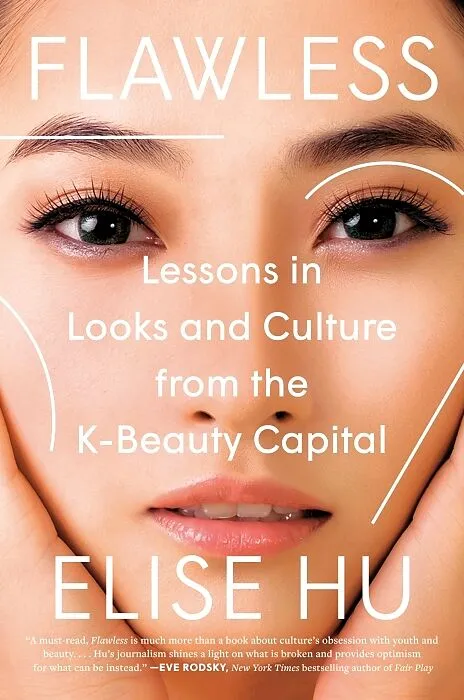
Flawless
Beschreibung
Informationen zum Autor Elise Hu is a correspondent and host-at-large for NPR, the American news network, and since April 2020, the inaugural host of TED Talks Daily , the daily podcast from TED that's downloaded a million times a day in all countries of the w...Format auswählen
- Fester EinbandCHF 34.60

Wird oft zusammen gekauft
Andere Kunden kauften auch
Beschreibung
Informationen zum Autor Elise Hu is a correspondent and host-at-large for NPR, the American news network, and since April 2020, the inaugural host of TED Talks Daily , the daily podcast from TED that's downloaded a million times a day in all countries of the world. For nearly four years, she was the NPR bureau chief responsible for coverage of North Korea, South Korea, and Japan. Her work has earned the national DuPont Columbia, Edward R. Murrow, and Gracie awards, along with a Gannett Foundation Award for Innovation in Watchdog Journalism. She lives in Los Angeles with her three daughters. Klappentext One of Porchlight's Business Books of the Year | One of Vox 's Best Books of 2023 | An NPR Book of the Day | Required Reading from New York Post | One of Nylon 's 13 May Books to Add to Your Reading List | One of PureWow's 14 Books to Read for AAPI Heritage Month | One of W Magazine 's 14 Books to Dive Into This Summer | One of Betches' Best Summer Reads of 2023 An audacious journalistic exploration of the present and future of beauty through the lens of South Korea's booming "K-beauty" industry and the culture it promotes, by Elise Hu, NPR host-at-large and the host of TED Talks Daily K-beauty has captured imaginations worldwide by promising a kind of mesmerizing perfection. Its skincare and makeup productscreams packaged to look like milkshakes or pandas, and snail mucus face masks, to name a fewwork together to fascinate us, champion consumerism, and invite us to indulge. In the four years Elise spent in Seoul as NPR's bureau chief, the global K-beauty industry quadrupled. Today it's worth $10 billion and is only getting bigger as it rides the Hallyu wave around the globe. And fun as self-care consumerism may be, Elise turns her veteran eye to the darker questions lurking beneath the surface of this story. When technology makes it easy to quantify and optimize ourselvesfrom banishing blemishes, to whittling our waistlines, even to shaving down our jawswhere do we draw the line? What are the dangers for a society where a flawless face and body are promoted and possible? What are the real financial, physical, and emotional costs of beauty work in a culture that valorizes endless self-improvement and codes it as empowerment? With rich historical context and deep reporting, including hours of interviews with South Korean women, this is a complex, provocative look at the ways hustle culture has reached into the sinews of our bodies. It raises complicated questions about gender disparity, consumerism, the beauty imperative of an appearance obsessed society, and the undeniable political, economic, and social capital of good looks worldwide. And it points the way toward an alternative vision, one that's more affirming and inclusive than a beauty culture led by industry. Leseprobe Chapter 1 Beauty Is a Beast Our new Seoul home spread across half the thirty-fifth floor of one of the tallest high-rises north of the Han River, which famously bisects the city. We never got a key to the place because every unit was fitted with an electronic keypad for entry. The door played a trill or a five-note ditty, depending on whether it was unlocking or locking. The first week, I padded around in my socks on gleaming white heated marble tiles that were warmed underneath by Korea's traditional ondol floor heating. My feet never once went cold in that apartment. I learned you could un-press the elevator buttons to deselect destination floors, which saved me many times when my then two-year-old Eva would get trigger happy with all the buttons. I marveled at the central vacuum system, in which every room had a conduit to plug in our vacuum hose, so we'd never be bothered to push around a vacuum cleaner from room to room. Down in the underground parking garage, maintenance workers waxed...
Klappentext
**One of Porchlight's Business Books of the Year | One of Vox's Best Books of 2023 | An NPR Book of the Day | Required Reading from New York Post | One of Nylon's 13 May Books to Add to Your Reading List | One of PureWow's 14 Books to Read for AAPI Heritage Month | One of W Magazine's 14 Books to Dive Into This Summer | One of Betches' Best Summer Reads of 2023
An audacious journalistic exploration of the present and future of beauty through the lens of South Korea's booming "K-beauty" industry and the culture it promotes, by Elise Hu, NPR host-at-large and the host of TED Talks Daily
K-beauty has captured imaginations worldwide by promising a kind of mesmerizing perfection. Its skincare and makeup products—creams packaged to look like milkshakes or pandas, and snail mucus face masks, to name a few—work together to fascinate us, champion consumerism, and invite us to indulge. In the four years Elise spent in Seoul as NPR’s bureau chief, the global K-beauty industry quadrupled. Today it's worth $10 billion and is only getting bigger as it rides the Hallyu wave around the globe.
And fun as self-care consumerism may be, Elise turns her veteran eye to the darker questions lurking beneath the surface of this story. When technology makes it easy to quantify and optimize ourselves—from banishing blemishes, to whittling our waistlines, even to shaving down our jaws—where do we draw the line? What are the dangers for a society where a flawless face and body are promoted and possible? What are the real financial, physical, and emotional costs of beauty work in a culture that valorizes endless self-improvement and codes it as empowerment?
With rich historical context and deep reporting, including hours of interviews with South Korean women, this is a complex, provocative look at the ways hustle culture has reached into the sinews of our bodies. It raises complicated questions about gender disparity, consumerism, the beauty imperative of an appearance obsessed society, and the undeniable political, economic, and social capital of good looks worldwide. And it points the way toward an alternative vision, one that's more affirming and inclusive than a beauty culture led by industry.
Zusammenfassung
An audacious journalistic exploration of the present and future of beauty through the lens of South Korea's booming "K-beauty" industry and the culture it promotes, by Elise Hu, NPR host-at-large and the host of TED Talks Daily
K-beauty has captured imaginations worldwide by promising a kind of mesmerizing perfection. Its skincare and makeup products—creams packaged to look like milkshakes or pandas, and snail mucus face masks, to name a few—work together to fascinate us, champion consumerism, and invite us to indulge. In the four years Elise spent in Seoul as NPR’s bureau chief, the global K-beauty industry quadrupled. Today it's worth $10 billion and is only getting bigger as it rides the Hallyu wave around the globe.
And fun as self-care consumerism may be, Elise turns her veteran eye to the darker questions lurking beneath the surface of this story. When technology makes it easy to quantify and optimize ourselves—from banishing blemishes, to whittling our waistlines, even to shaving down our jaws—where do we draw the line? What are the dangers for a society where a flawless face and body are promoted and possible? What are the real financial, physical, and emotional costs of beauty work in a culture that valorizes endless self-improvement and codes it as empowerment?
With rich historical context and deep reporting, including hours of interviews with South Korean women, this is a complex, provocative look at the ways hustle culture has reached into the sinews of our bodies. It raises complicated questions about gender disparity, consumerism, the beauty imperative of an appearance obsessed society, and the undeniable political, economic, and social capital of good looks worldwide. And it points the way toward an alternative …