Beschreibung
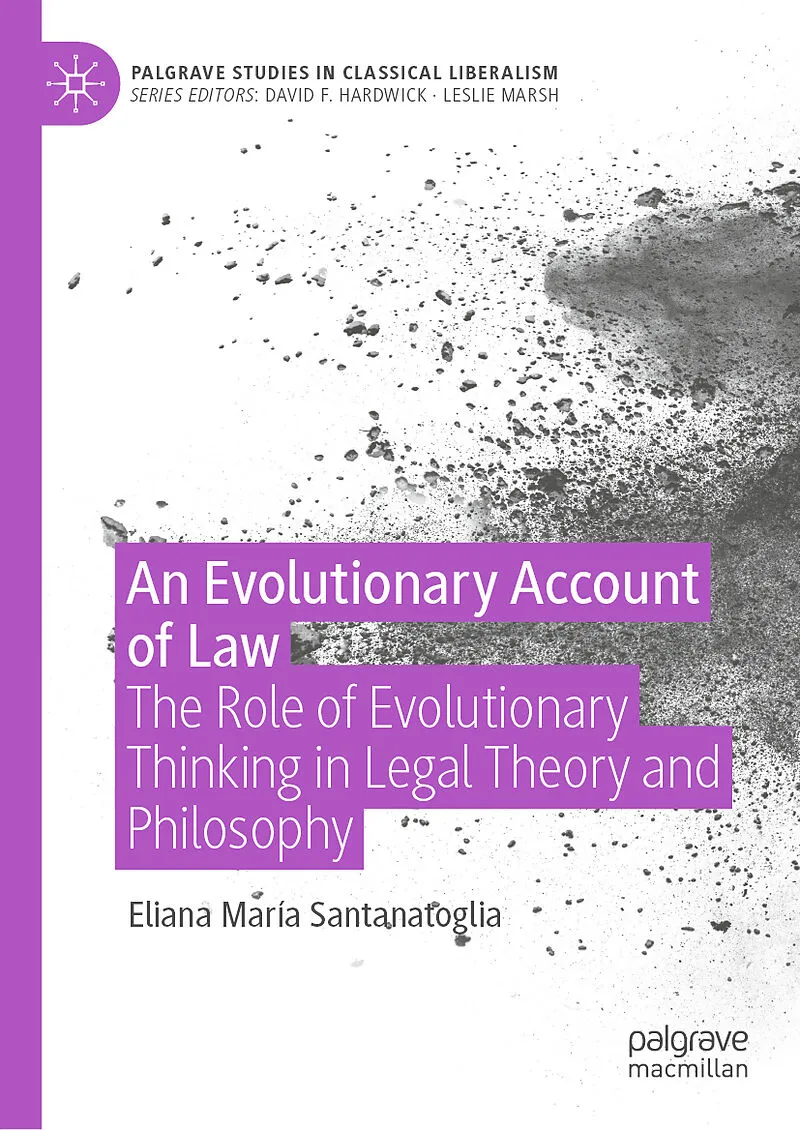
This book offers a comprehensive, modern understanding of legal philosophy through an evolutionary lens. Taking a highly interdisciplinary approach throughout, the book first explores the history of 'classic evolutionism', regarding theories of law and justic...This book offers a comprehensive, modern understanding of legal philosophy through an evolutionary lens. Taking a highly interdisciplinary approach throughout, the book first explores the history of 'classic evolutionism', regarding theories of law and justice from the authors of the Scottish Enlightenment to Hayek. The second part of the book analyses the contributions of new schools of thought, including evolutionary psychology, evolutionary game theory and co-evolutionist theories. The final part of the book builds a fresh argument for a modern evolutionary account of law, considering key methodological debates and the evolution at its three levels biological, social and individual to explain the emergence, stabilization and change of legal rules.
This book is a timely addition to the growing interest in evolutionary thinking across the sciences, and will be of interest to a wide range of scholars including historians and philosophers of law as those interested in the intersection of law and psychology, law and economics, and the classical liberal tradition.
Charts a link from classical evolutionary ideas to modern day evolutionary approaches across the social sciences Demonstrates the relevance of interdisciplinary evolutionary thinking to legal theory Discusses the strengths of an evolutionary account of rules and institutions versus other dominant legal theories
Autorentext
Eliana M. Santanatoglia is a Professor in the Department of Philosophy of Law at the University of Buenos Aires, Argentina, and the co-founder and Executive Director of the David Hume Institute Foundation Centre for Research in Normative and Institutional Evolution. Her main areas of research are legal theory, constitutional law, moral and political philosophy, the philosophy of social sciences and the interrelationship between these disciplines, with special interest in the evolutionary view of rules and institutions.
Klappentext
An Evolutionary Account of Law is a landmark contribution bridging classical evolutionary thought and cutting-edge social science. Santanatoglia masterfully integrates insights from the Scottish Enlightenment and Hayek with evolutionary game theory and cognitive science, presenting legal rules as stable strategies emerging from individual interactions rather than top-down constructs. This genuinely novel framework is essential reading for anyone seeking to understand how normative orders emerge, stabilize, and change.
Jason McKenzie Alexander , Professor of Philosophy, London School of Economics and Political Science, UK
This very well argued book offers firstly a complete examination of the theories of justice of classical philosophers, as David Hume, Adam Smith and Friedrich von Hayek. Secondly, and more important, brings a thought provoking examination of the often neglected thesis about the influence of evolution in the sphere of law. A mandatory book for everyone interested in legal and political philosophy.
Martín Diego Farrell , Professor Emeritus, Law School of the University of Buenos Aires, Argentina
This book offers a comprehensive, modern understanding of legal philosophy through an evolutionary lens. Taking a highly interdisciplinary approach throughout, the book first explores the history of 'classic evolutionism', regarding theories of law and justice from the authors of the Scottish Enlightenment to Hayek. The second part of the book analyses the contributions of new schools of thought, including evolutionary psychology, evolutionary game theory and co-evolutionist theories. The final part of the book builds a fresh argument for a modern evolutionary account of law, considering key methodological debates and the evolution at its three levels biological, social and individual to explain the emergence, stabilization and change of legal rules.
This book is a timely addition to the growing interest in evolutionary thinking across the sciences, and will be of interest to a wide range of scholars including historians and philosophers of law as those interested in the intersection of law and psychology, law and economics, and the classical liberal tradition.
Eliana M. Santanatoglia is a Professor in the Department of Philosophy of Law at the University of Buenos Aires, Argentina, and the co-founder and Executive Director of the David Hume Institute Foundation Centre for Research in Normative and Institutional Evolution.
Inhalt
General Introduction.- PART I Classic Evoluntionism.- Chapter 1 Justice and Law for the Eighteen-Century Scottish Enlightenment.- Chapter 2 Law for Friedrich A. Hayek.- Chapter 3 Main Contributions of Classic Evolutionism to the Study of Law.- PART II New Evolutionary Perspectives in Social Sciences.- Chapter 4 Panorama of New Evolutionary Perspectives in Social Sciences.- Chapter 5 The Biological View.- Chapter 6 Cultural Evolutionism Evolutionary Game Theory.- Chapter 7 Co-Evolutionism.- PART III Evolutionary Account of Law.- Chapter 8 The Bricks of an Evolutionary Account of Law.- Chapter 9 More Bricks to an Evolutionary Account of Law Rationality and Levels of Evolution.- Chapter 10 Law as the Outcome of a Permanent Process of Emergence, Stability and Change of Rules and Institutions.