
IHR WARENKORB IST AKTUELL LEER.
Haben Sie noch nichts passendes gefunden? Stöbern Sie durch unser komplettes Sortiment.
Oder melden Sie sich an bzw. registrieren Sie sich.
- Kostenlose Lieferung
- Kauf auf Rechnung
- Ex Libris Tiefpreis
- Filiallieferung und 650+ Abholorte
- Rabatt-Bons als Club-Mitglied
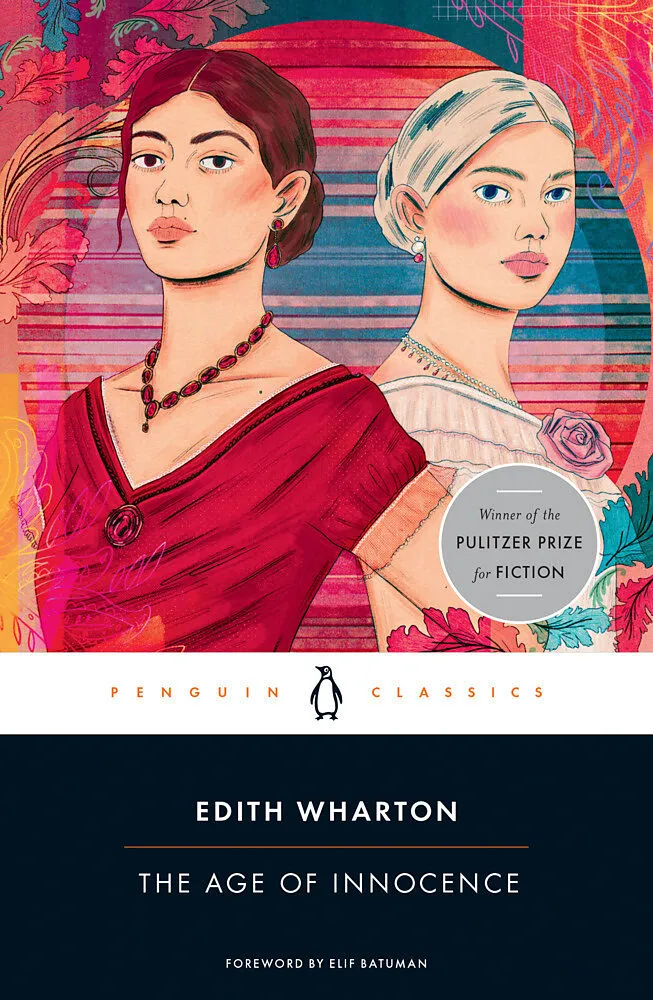
The Age of Innocence
Beschreibung
The return of the beautiful Countess Olenska into the conventional society of New York sends reverberations throughout the upper reaches of society. Newland Archer, an eligible young man of the establishment is about to announce his engagement to May Welland, ...Format auswählen
- Kartonierter EinbandCHF 14.60
- Fester EinbandCHF 31.10
- Kartonierter EinbandCHF 13.15
- E-Book (epub)CHF 9.00

Wird oft zusammen gekauft
Andere Kunden kauften auch
Beschreibung
The return of the beautiful Countess Olenska into the conventional society of New York sends reverberations throughout the upper reaches of society. Newland Archer, an eligible young man of the establishment is about to announce his engagement to May Welland, a pretty ingenue, when May's cousin, Countess Olenska, is introduced into their circle.
Zusatztext Wharton is not generally viewed as one of literature's great optimists! and yet! by the last chapter of The Age of Innocence ! people are a little less hypocritical! a little more willing to see and accept the world. ... A larger life and more tolerant views : that's the greatest promise the novel holds out to us! and it's as necessary now as it was when Edith Wharton put it into words. Elif Batuman! author of The Idiot ! from the foreword Will writers ever recover that peculiar blend of security and alertness which characterizes Mrs. Wharton and her tradition? E. M. Forster Informationen zum Autor Edith Wharton was born into a wealthy New York family in 1862, during the American Civil War. She married at twenty-three, and subsequently divided her time between homes in New York, Rhode Island and Massachusetts. The House of Mirth , perhaps her most famous work, appeared in 1905, and was followed by Ethan Frome , The Custom of the Country , Summer and The Age of Innocence . Wharton was the first woman to win the Pulitzer Prize for Fiction. She died in 1937. Klappentext Edith Wharton's Pulitzer Prize-winning novel of love, duty, and half-known truths in Gilded Age New York society, with a foreword by bestselling author Elif Batuman Dutiful Newland Archer, an eligible young man from New York high society, is about to announce his engagement to May Welland, a suitable match from a good family, when May's cousin, the beautiful and exotic Countess Ellen Olenska, is introduced into their circle. The Countess brings with her an aura of European sophistication and a hint of perceived scandal, having left her husband and claimed her independence. Her worldliness, disregard for society's rules, and air of unapproachability attract the sensitive Newland, despite his enthusiasm about a marriage to May and the societal advantages it would bring. Almost against their will, Newland and Ellen develop a passionate bond, and a classic love triangle takes shape as the three young people find themselves drawn into a poignant and bitter conflict between love and duty. Written in 1920, Edith Wharton's Pulitzer Prize-winning novel about a time and place long gone by1870s New York Citybeautifully captures the complexities of passion, independence, and fulfillment, and how painfully hard it can be for individuals to truly see one another and their place in the world. Penguin Classics is the leading publisher of classic literature in the English-speaking world, representing a global bookshelf of the best works throughout history and across genres and disciplines. Readers trust the series to provide authoritative texts enhanced by introductions and notes by distinguished scholars and contemporary authors, as well as up-to-date translations by award-winning translators. Chapter One ON A January evening of the early seventies, Christine Nilsson was singing in "Faust" at the Academy of Music in New York. Though there was already talk of the erection, in remote metropolitan distances "above the Forties," of a new Opera House which should compete in costliness and splendour with those of the great European capitals, the world of fashion was still content to reassemble every winter in the shabby red and gold boxes of the sociable old Academy. Conservatives cherished it for being small and inconvenient, and thus keeping out the "new people" whom New York was beginning to dread and yet be drawn to; and the sentimental clung to it for its historic associations, and the musical for its excellent acoustics, always so problematic a quality in halls built for the hearing of music. It was Madame Nilsson's first appearance that winter, and what the daily press had already learned to describe as "an exceptionally brilliant audience" had gathered to hear her, transported through t...
“Wharton is not generally viewed as one of literature’s great optimists, and yet, by the last chapter of The Age of Innocence, people are a little less hypocritical, a little more willing to see and accept the world. ... A larger life and more tolerant views: that’s the greatest promise the novel holds out to us, and it’s as necessary now as it was when Edith Wharton put it into words.”
—Elif Batuman, author of The Idiot, from the foreword
“Will writers ever recover that peculiar blend of security and alertness which characterizes Mrs. Wharton and her tradition?”
—E. M. Forster
Autorentext
Edith Wharton was born into a wealthy New York family in 1862, during the American Civil War. She married at twenty-three, and subsequently divided her time between homes in New York, Rhode Island and Massachusetts. The House of Mirth, perhaps her most famous work, appeared in 1905, and was followed by Ethan Frome, The Custom of the Country, Summer and The Age of Innocence. Wharton was the first woman to win the Pulitzer Prize for Fiction. She died in 1937.
Klappentext
Edith Wharton’s Pulitzer Prize-winning novel of love, duty, and half-known truths in Gilded Age New York society, with a foreword by bestselling author Elif Batuman
Dutiful Newland Archer, an eligible young man from New York high society, is about to announce his engagement to May Welland, a suitable match from a good family, when May’s cousin, the beautiful and exotic Countess Ellen Olenska, is introduced into their circle. The Countess brings with her an aura of European sophistication and a hint of perceived scandal, having left her husband and claimed her independence. Her worldliness, disregard for society’s rules, and air of unapproachability attract the sensitive Newland, despite his enthusiasm about a marriage to May and the societal advantages it would bring. Almost against their will, Newland and Ellen develop a passionate bond, and a classic love triangle takes shape as the three young people find themselves drawn into a poignant and bitter conflict between love and duty. Written in 1920, Edith Wharton’s Pulitzer Prize-winning novel about a time and place long gone by—1870s New York City—beautifully captures the complexities of passion, independence, and fulfillment, and how painfully hard it can be for individuals to truly see one another and their place in the world.
Penguin Classics is the leading publisher of classic literature in the English-speaking world, representing a global bookshelf of the best works throughout history and across genres and disciplines. Readers trust the series to provide authoritative texts enhanced by introductions and notes by distinguished scholars and contemporary authors, as well as up-to-date translations by award-winning translators.
Leseprobe
*Chapter One
*
ON A January evening of the early seventies, Christine Nilsson was singing in "Faust" at the Academy of Music in New York.
Though there was already talk of the erection, in remote metropolitan distances "above the Forties," of a new Opera House which should compete in costliness and splendour with those of the great European capitals, the world of fashion was still content to reassemble every winter in the shabby red and gold boxes of the sociable old Academy. Conservatives cherished it for being small and inconvenient, and thus keeping out the "new people" whom New York was beginning to dread and yet be drawn to; and the sentimental clung to it for its historic associations, and the musical for its excellent acoustics, always so problematic a quality in halls built for the hearing of music.
It was Madame Nilss…