
IHR WARENKORB IST AKTUELL LEER.
Haben Sie noch nichts passendes gefunden? Stöbern Sie durch unser komplettes Sortiment.
Oder melden Sie sich an bzw. registrieren Sie sich.
- Kostenlose Lieferung
- Kauf auf Rechnung
- Ex Libris Tiefpreis
- Filiallieferung und 650+ Abholorte
- Rabatt-Bons als Club-Mitglied
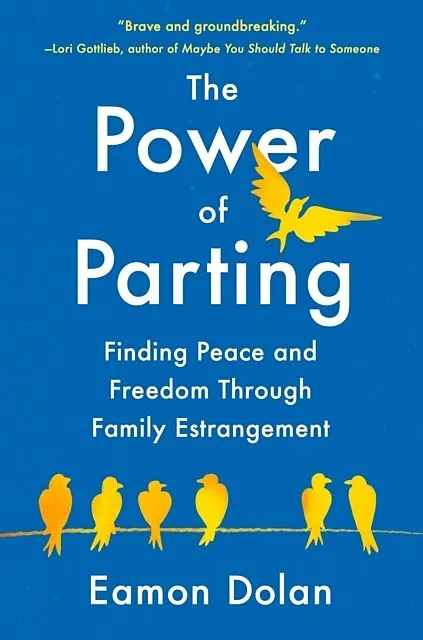
The Power of Parting
Beschreibung
A myth-shattering, inspiring book that combines research, reportage, and memoir to explore the growing phenomenon of estrangement from toxic relatives--showing it not as a tragedy, but as an empowering and;effective;solution to the heartbreak of family abuse. ...Format auswählen
- Fester EinbandCHF 33.20

Wird oft zusammen gekauft
Andere Kunden kauften auch
Beschreibung
A myth-shattering, inspiring book that combines research, reportage, and memoir to explore the growing phenomenon of estrangement from toxic relatives--showing it not as a tragedy, but as an empowering and;effective;solution to the heartbreak of family abuse. After decades of enduring his mother’s physical and psychological torment, after years of trying in vain to set boundaries, Eamon Dolan took a radical step: he cut his mother out of his life. No more phone calls, no more visits, no more contact. Parting with his abuser gave him immediate relief and set him on a path toward freedom, confidence, and joy like none he had ever felt before. In Drawing on his own suffering and healing, as well as experts’ advice and the testimony of other courageous survivors, Dolan first explains why abuse is much different and more prevalent than we may think, how it harms us in childhood and beyond, and why limiting or eliminating contact might be our best possible choice. Then, he walks readers through the steps of a successful, positive estrangement: how to take crucial time for yourself; how to make sure no one can gaslight you into minimizing or forgetting; how to set rules for your abuser and--if they can’t or won’t respect your limits--how to end a toxic relationship. He also offers valuable counsel on how to ease the guilt and grief that often accompany parting, and how to break the cycle of abuse that was likely passed down to you through many generations. With a convincing blend of clarity and empathy, Dolan encourages others to do what he ultimately did for himself: determine whether the people in your life treat you with the care and concern you deserve--and part ways with them if they don’t....
Autorentext
Eamon Dolan has worked as an editor at HarperCollins, Houghton Mifflin Harcourt, and Penguin Press. He is currently Vice President & Executive Editor at Simon & Schuster. He’s also a professional photographer whose work has been shown at the International Center of Photography and elsewhere. He lives in Brooklyn, New York.
Klappentext
"In The Power of Parting, Dolan has written the book he wishes he'd had when he was struggling to free himself from his mother's abuse. In the process, he discovered how widespread estrangement really is: at least 27 percent of Americans are estranged from a parent, sibling, or other family member. He also learned why so much stigma surrounds this common--and often lifesaving--phenomenon. Even among therapists--the professionals who would seem most attuned to the pain relatives can inflict--there's a bias toward reconciliation, when millions of their patients need instead to escape their abusers' grip. Estrangement, Dolan realized, should be understood and embraced, not shrouded in shame. shame"--
Zusammenfassung
The author recounts his journey of estrangement from his abusive mother, offering guidance on recognizing abuse, setting boundaries and navigating the process of parting from toxic relationships, while addressing the stigma, emotional challenges and generational cycles tied to familial estrangement.
Leseprobe
Chapter 1
Society: The Root of Abuse
When Oscar's mom and I were expecting him, bellies swelled everywhere we looked. When he was born, the world became awash in babies and their paraphernalia. Of course, the birth rate hadn't suddenly skyrocketed. Rather, we had become more alert to others in our situation, and we all gravitated toward each other.
Something similar happened when I started talking about my estrangement and this book. Many friends and colleagues who had never mentioned their struggles began to reveal them to me. If someone had grown up without the tensions that can produce estrangement, they were rarely more than one degree of separation from them-maybe an old friend or their spouse's family. As we saw earlier, the chances are at least one in four that anyone you meet will be estranged from a family member. It was astounding and comforting to find such a large community of fellow travelers-and heartbreaking to think that I'd been denied that comfort for five decades.
Conspiracies of Silence
What denies us that comfort is silence. What causes this silence is an intricate web of ignorance, avoidance, and shame that permeates our society. It begins where the abuse itself begins-at home. Children lack knowledge of the world at large that might tell them their home life is aberrant. They think that however they live is normal, and whatever they get is what they deserve. Those who get love believe they deserve it, and those who get beaten, harassed, raped, or neglected believe they deserve it. Until my late teens, it didn't occur to me that multiple beatings per week were unusual. When I learned that they were, it took me a couple more decades to realize that they weren't my fault.
At first, the sense that everything at home was normal ensured my silence, then the sense that I was abnormal shamed me into silence.
The communities in which we grow up almost always shirk their responsibility for preventing abuse. When I was young, the institutions that could have protected me from abuse-church, family, and school-enabled it instead. The educational system failed to teach us what maltreatment was, and it didn't address visible signs of abuse and neglect like the welts on my arms or the clothes I wore several days in a row. Nowadays, most states require teachers, doctors, social workers, and others who deal regularly with children to tell authorities when they spot such signs-an improvement over the schools of my youth. Some states even expand the ranks of "mandated reporters" to include hairdressers and photographers. But most maltreatment leaves no bruises or scars, except permanent internal ones.
Beneath this inattention is a host of traditions and memes that we rarely examine critically. Take "Spare the rod and spoil the child." I heard that motto hundreds of times in my youth, and I never questioned it. Its roots reach back to the Old Testament, which commands the faithful: "Do not withhold discipline from a child; if you punish them with the rod they will not die. Punish them with the rod and save them from death."
Even those who blanch at that command would endorse advice against "airing your dirty laundry in public"-that is, sharing your private business with outsiders. This has the patina of reason to it; outsiders can't understand all the nuances of our family, team, company, or faith, so how can they judge us fairly? But it's really no more rational-or ethical-than the Mafia's omertà or Hollywood's infamous nondisclosure agreements. All these codes of silence are essentially the same. They prevent victims and other would-be truth-tellers from speaking out, they protect toxic power structures, and they guarantee that abuse will be passed down through generations.
Judith Herman, MD, a pioneer in the study of trauma, points out that, for victims, "the complicity and silence of bystanders-friends, relatives, and neighbors, not to mention officials of the law-feel like a profound betrayal, for this is what isolates them and abandons them to their fates." My own family was full of bystanders. My father was the eldest of eleven children, and my mother was the second eldest of five, so we had a bevy of aunts and uncles and more cousins than we could count. None of them warned us that my uncle Sean was a violent alcoholic, but his short fuse and the beer cans filling the back of his car hinted that we should steer clear.
One time, he and my aunt Mary arrived late to a family gathering. Another of my relatives, spotting the fresh cast on her arm, joked, "Ah, Mary! Did Sean do that to you?"
Aunt Mary's mute glance made clear the answer was no joke. After a few suspenseful seconds, everyone in the room picked up the conversations that had been …