Beschreibung
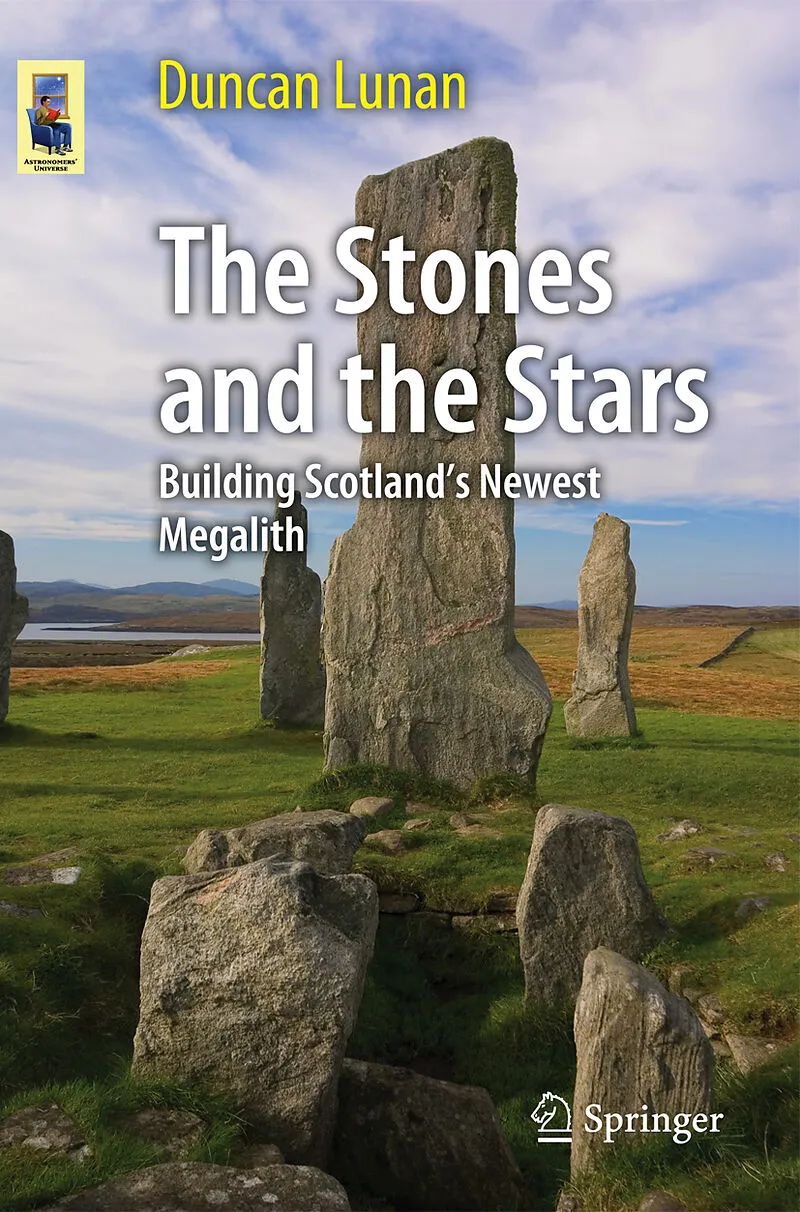
In a fascinating and unique account of the construction of Britain's first stone circle for 3000 years, the project's director describes how the astronomically aligned grouping of megaliths came to be Scotland's 49th, and latest, circle of stand...In a fascinating and unique account of the construction of Britain's first stone circle for 3000 years, the project's director describes how the astronomically aligned grouping of megaliths came to be Scotland's 49th, and latest, circle of standing stones.
There are at least 48 identified prehistoric stone circles in Scotland. In truth, very little is known about the people who erected them, and ultimately about what the stone circles were for. Most stone circles are astronomically aligned, which has led to the modern debate about why the alignment was significant. The megaliths certainly represented an enormous co-operative effort, would at the very least have demonstrated power and wealth, and being set away from any dwellings probably served a ceremonial, or perhaps religious, purpose.
Observations at the site of the stone circles, of solar, lunar, and stellar events, have already cast light on some of the questions about the construction and use of ancient megalithic observatories.
In his capacity as manager of the Parks Department Astronomy Project, author Duncan Lunan designed and built the first astronomically aligned stone circle in Britain in over 3,000 years. 'The Stones and the Stars' examines the case for astronomical alignments of stone circles, and charts the development of a fascinating project with a strong scientific and historical background. The work was documented in detail by the artist and photographer Gavin Roberts, and this archive has been added to since - so an appropriate selection of illustrations will bring the project vividly to life.
Provides a unique account of the construction of Britain's first stone circle for over 3000 years by its builder Charts the development of the Parks Department Astronomy Project with a fascinating look into its historical background Includes enough background for a new reader with specific interest in archaeoastronomy to become engaged Illustrates ancient history and astronomy by giving a firsthand account of a megalith construction
Autorentext
Duncan Lunan is a graduate of Glasgow University in Scotland, an M.A. with Honors in English and Philosophy plus Physics, Astronomy and French, and has a postgraduate Diploma in Education. A full-time author and speaker with emphasis on astronomy, spaceflight and science fiction, his books to date are "Man and the Stars", "New Worlds for Old", "Man and the Planets", "Starfield" (edited), "With Time Comes Concord" and "Children from the Sky". "The Stones and the Stars, Building Scotland's Newest Megalith" was published by Springer in November 2012. He has contributed to 24 other books and published over 930 articles and 33 short stories. As Manager of the Glasgow Parks Dept. Astronomy Project, 1978-79, he designed and built the first astronomically aligned stone circle in Britain for over 3000 years, described in "The Stones and the Stars". Lunan was a Curator of Airdrie Public Observatory for 18 years, and in 2006-2009 he ran an educational outreach project from the Observatory to schools, funded by the National Lottery. His other interests include ancient and mediaeval history, jazz, folk music and hillwalking. After 30 years in Glasgow he recently returned to his home town of Troon, Ayrshire, where he lives with his wife Linda.
Klappentext
There are at least 48 identified prehistoric stone circles in Scotland. In truth, very little is known about the people who erected them, and ultimately about what the stone circles were for. Most stone circles are astronomically aligned, which has led to the modern debate over the significance of the alignments. The megaliths certainly represented an enormous cooperative effort, would at the very least have demonstrated power and wealth, and being set away from any dwellings probably served a ceremonial, or perhaps religious, purpose.
Observations at the site of the stone circles, of solar, lunar, and stellar events, have already cast light on some of the questions about the construction and use of ancient megalithic observatories.
In his capacity as manager of the Glasgow Parks Department Astronomy Project, author Duncan Lunan designed and built in the late 1970s Sighthill, the first astronomically aligned stone circle in Britain in over 3,000 years. The Stones and the Stars examines the case for astronomical alignments of stone circles and charts the development of a fascinating project with a strong scientific and historical flavor. The work was documented in detail by artist and photographer Gavin Roberts, and the book contains a large selection of illustrations that bring the project vividly to life.
Inhalt
Preface.- Part I: Background to the Controversy.- Chapter 1: Archaeologists vs. Astronomers.- Chapter 2: Now You See It, Now You Don't.- Chapter 3: Ancient Astronomy Around the World.- Chapter 4: Archaeoastronomy in the British Isles.- Part II: A Stone Circle for Glasgow.- Chapter 5: Layout and Location.- Chapter 6: Selecting the Stones.- Chapter 7: Operation Megalithic Lift.- Chapter 8: Events on Site.- Chapter 9: Archaeoastronomy from the Air.- Chapter 10: The Circle, Present, and Future.- Glossary.- Index.