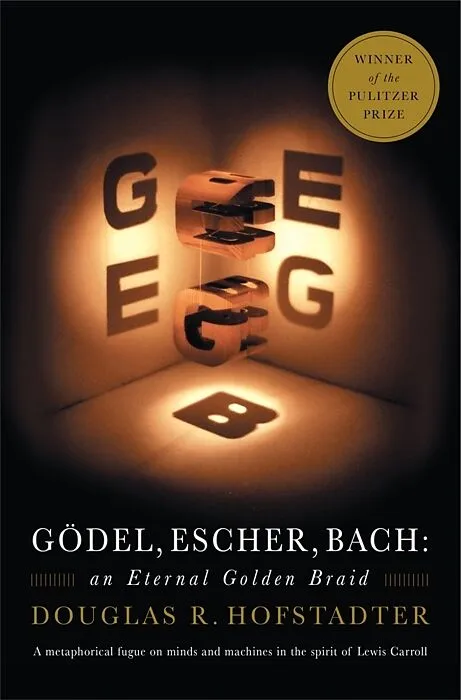
Gödel, Escher, Bach
Beschreibung
Hofstadter entwickelt aus den Bereichen Logik, Molekularbiologie, Kunst, Computertechnik, Teilchenphysik und Philosophie ein gigantisches Mosaik, einen virtuos arrangierten Blick auf die Welt unter dem Winkel der mathematischen Logik. Dabei besticht er durch s...Format auswählen
- Kartonierter EinbandCHF 30.80

Wird oft zusammen gekauft
Andere Kunden kauften auch
Beschreibung
Hofstadter entwickelt aus den Bereichen Logik, Molekularbiologie, Kunst, Computertechnik, Teilchenphysik und Philosophie ein gigantisches Mosaik, einen virtuos arrangierten Blick auf die Welt unter dem Winkel der mathematischen Logik. Dabei besticht er durch seine sachliche klare Darstellung, gepaart mit Amüsement und Witz. Trotz des schwierigen Themas sind keine Vorkenntnisse gefordert, die einzige Voraussetzung ist waches und geduldiges Interesse.
Informationen zum Autor Douglas R. Hofstadter is College of Arts and Sciences Distinguished Professor of Cognitive Science and Comparative Literature at Indiana University, Bloomington. He is the author of Metamagical Themas; Fluid Concepts and Creative Analogies; Le Ton beau de Marot; I Am a Strange Loop; Translator, Trader; and most recently, Ambigrammia: Between Creation and Discovery. He translated Alexander Pushkin's novel-in-verse Eugene Onegin from Russian verse into English verse, and has also translated books from several other languages into English. Klappentext Winner of the Pulitzer Prize A metaphorical fugue on minds and machines in the spirit of Lewis Carroll Every few decades an unknown author brings out a book of such depth, charity, range, wit, beauty, and originality that it is recognized at once as a major literary event. This is such a work. Scientific American GEB is a unique insight into the nature of I, self, soul, and consciousness, centered on a notion that its youthful author dubbed strange loop, inspired by the twisty self-referential construction invented by logician Kurt Gödel, whereby a sentence asserts its own unprovability. The book's chapters alternate with Bach-like contrapuntal dialogues between whimsical characters (especially Achilles and the Tortoise), and each dialogue's intricate structure exemplifies the notion being discussed in it, thus creating indirect self-reference (a fact unsuspected by the characters). The book, filled with analogies, wordplay, humor, and mind-twisting prints by M. C. Escher, has inspired generations of bright students to study cognitive science and the philosophy of mind. Vorwort A metaphorical fugue on minds and machines in the spirit of Lewis Carroll Zusammenfassung A metaphorical fugue on minds and machines in the spirit of Lewis Carroll
Vorwort
A metaphorical fugue on minds and machines in the spirit of Lewis Carroll
Autorentext
Douglas R. Hofstadter is College of Arts and Sciences Distinguished Professor of Cognitive Science and Comparative Literature at Indiana University, Bloomington. He is the author of* Metamagical Themas*; Fluid Concepts and Creative Analogies; Le Ton beau de Marot; I Am a Strange Loop; “Translator, Trader”; and most recently, Ambigrammia: Between Creation and Discovery. He translated Alexander Pushkin’s novel-in-verse Eugene Onegin from Russian verse into English verse, and has also translated books from several other languages into English.
Klappentext
**Winner of the Pulitzer Prize
A metaphorical fugue on minds and machines in the spirit of Lewis Carroll
“Every few decades an unknown author brings out a book of such depth, charity, range, wit, beauty, and originality that it is recognized at once as a major literary event. This is such a work.” —Scientific American**
*GEB *is a unique insight into the nature of “I,” self, soul, and consciousness, centered on a notion that its youthful author dubbed “strange loop,” inspired by the twisty self-referential construction invented by logician Kurt Gödel, whereby a sentence asserts its own unprovability. The book’s chapters alternate with Bach-like contrapuntal dialogues between whimsical characters (especially Achilles and the Tortoise), and each dialogue’s intricate structure exemplifies the notion being discussed in it, thus creating indirect self-reference (a fact unsuspected by the characters). The book, filled with analogies, wordplay, humor, and mind-twisting prints by M. C. Escher, has inspired generations of bright students to study cognitive science and the philosophy of mind.
Zusammenfassung
A metaphorical fugue on minds and machines in the spirit of Lewis Carroll