
IHR WARENKORB IST AKTUELL LEER.
Haben Sie noch nichts passendes gefunden? Stöbern Sie durch unser komplettes Sortiment.
Oder melden Sie sich an bzw. registrieren Sie sich.
- Kostenlose Lieferung
- Kauf auf Rechnung
- Ex Libris Tiefpreis
- Filiallieferung und 650+ Abholorte
- Rabatt-Bons als Club-Mitglied
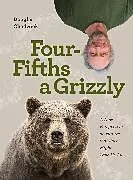
Four Fifths a Grizzly
Beschreibung
font color="#000000" face="Calibri">"Combining the eye of a naturalist, the ear of a storyteller, and the heart of one who cares deeply for the fate of the wild — and the wild lurking within each of us— Chadwick demonstrates the biological trut...Format auswählen
- Fester EinbandCHF 37.20

Wird oft zusammen gekauft
Andere Kunden kauften auch
Beschreibung
font color="#000000" face="Calibri">"Combining the eye of a naturalist, the ear of a storyteller, and the heart of one who cares deeply for the fate of the wild — and the wild lurking within each of us— Chadwick demonstrates the biological truth that the fate of all life on Earth is intertwined." -- Big Sky Journal
Autorentext
Douglas H. Chadwick is a wildlife biologist who carried out research on mountain goat ecology and social behavior atop the Rockies for years and has assisted other scientists studying harlequin ducks, wolverines, grizzly bears, and whales. He is also a natural history journalist who has produced 14 popular books and hundreds of magazine stories. Many of his articles have been for the National Geographic Society on subjects from snow leopards high in the Himalayas to lowland rainforests and the underwater kingdoms of coral. A founding Board member of the Vital Ground Foundation, a conservation land trust (www.vitalground.org), Chadwick serves as well on the Board of the Liz Claiborne Art Ortenberg Foundation, which supports wildlife research and community-based conservation programs throughout the world (www.LCAOF.org.). He lives in Whitefish, Montana.
Klappentext
What do you think of when you think of Nature? Prolific author and National Geographic writer Doug Chadwick’s fresh look at human’s place in the natural world. In his accessible and engaging style, Chadwick approaches the subject from a scientific angle, with the underlying message that from the perspective of DNA humans are not all that different from any other creature. He begins by showing the surprisingly close relationship between human DNA and that of grizzly bears, with whom we share 80 percent of our DNA. We are 60 percent similar to a salmon, 40 percent the same as many insects, and 24 percent of our genes match those of a wine grape. He reflects on the value of exposure to nature on human biochemistry and mentality, that we are not that far removed from our ancestors who lived closer to nature. He highlights examples of animals using “human” traits, such as tools and play. He ends the book with two examples of the healing benefits of turning closer to nature: island biogeography and the Yellowstone to Yukon Conservation Initiative. This book is a reflection on man’s rightful place in the ecological universe. Using personal stories, recounting how he came to love and depend on the Great Outdoors and how he learned his place in the system of Nature, Chadwick challenges anyone to consider whether they are separate from or part of nature. The answer is obvious, that we are an indivisible from all elements of a system that is greater than ourselves and should never be neglected, taken advantage of, or exploited. This is a fresh and engaging take on man’s relationship to nature by a respected and experienced author.
Zusammenfassung
What do you think of when you think of Nature? Prolific author and National Geographic writer Doug Chadwick's fresh look at human's place in the natural world. In his accessible and engaging style, Chadwick approaches the subject from a scientific angle, with the underlying message that from the perspective of DNA humans are not all that different from any other creature. He begins by showing the surprisingly close relationship between human DNA and that of grizzly bears, with whom we share 80 percent of our DNA. We are 60 percent similar to a salmon, 40 percent the same as many insects, and 24 percent of our genes match those of a wine grape. He reflects on the value of exposure to nature on human biochemistry and mentality, that we are not that far removed from our ancestors who lived closer to nature. He highlights examples of animals using human traits, such as tools and play. He ends the book with two examples of the healing benefits of turning closer to nature: island biogeography and the Yellowstone to Yukon Conservation Initiative. This book is a reflection on man's rightful place in the ecological universe. Using personal stories, recounting how he came to love and depend on the Great Outdoors and how he learned his place in the system of Nature, Chadwick challenges anyone to consider whether they are separate from or part of nature. The answer is obvious, that we are an indivisible from all elements of a system that is greater than ourselves and should never be neglected, taken advantage of, or exploited. This is a fresh and engaging take on man's relationship to nature by a respected and experienced author.
Leseprobe
Prologue Everything in a natural system is connected. This isn't a platitude. It is the principle that explains how a mineral orb wheeling through the vacuum of space became wrapped in creaturesbecame a biosphere with mushrooms that glow in the dark, kaleidoscopic dancing spiders, puppies and kittens, six-foot-long salamanders that both bark and mewl, naturally cloned komodo dragons, jellyfish capable of reversing the aging process and existing forever, chimpanzees with 98 percent of the same genes we own making tools in an African woodland, and so many microbes that they outnumber the stars in the known universe. That's life. Microbes (short for micro-organisms, most of which consist of a single cell) produce a critical share of the Earth's oxygen. They permeate the planet's seas. They make weather: wafting through the skies overhead in unseen hordes that seed the formation of clouds. Billions pulse in each handful of the soil under your feet, manufacturing fertility. Trillions flourish in your gut and mouth and on your skin. You host trillions more in the form of ancient bacteria that evolved to become permanent residents inside each of your cells (and those of all other animals and plants), where they generate the chemical energy that powers everything we dogrow, move, feel, learn. • • • On the top floor of his three-story family home, a boy sits at a desk in the light from a dormer window. As the eldest child, he was moved upstairs when younger children filled the second-floor bedrooms nearest their parents. At nine years of agemaybe ten nowhe is old enough to have kissed a girl's mouth on a dare, yet not so old that, alone in his loft on a windy, creaky night, he can completely ignore the possibility of monsters in the crawl spaces of the eaves. The boy pitches for the local Little League baseball team. He mows neighborhood lawns and shovels sidewalks for pocket money. He hangs out with buddies in a garage loft clubhouse, joins them in exploring the steep bluffs on the edge of town, loves to blow stuff up with firecrackers, and gets into the occasional bloody-nosed scrap. For the most part, he's a regular, rowdy kid. Yet, as he is doing now, he also spends hours by himself peering through a microscope. It is not from a Junior Scientist kit. This is an old, professional K&E (Kueffel & Esser) model with precisely calibrated lenses encased in finely machined brass. His father, a mining geologist, had used the instrument to examine mineral structures and passed it along as a gift. Each time the boy takes the microscope from its wooden carrying case and sets it out on the dormer desk, where the metal gives off a glow of reflected light, he feels a connection to scientists past and present, the Big League of curiosity experts. There are three eyepieces of different magnifying power to choose from for placing atop the viewing tube. On a revolving turret at the tube's base are four objective lenses of different strength that multiply the power of the eyepieces. The boy had peered through strong hand-held magnifying glasses before, marveling at the oddity of familiar objects like newsprint or the whorls of grooves and ridges on his own fingertips. But he had no inkling of what something would look like enlarged to 40, 100, or even 400 times normal size. He does no…