Beschreibung
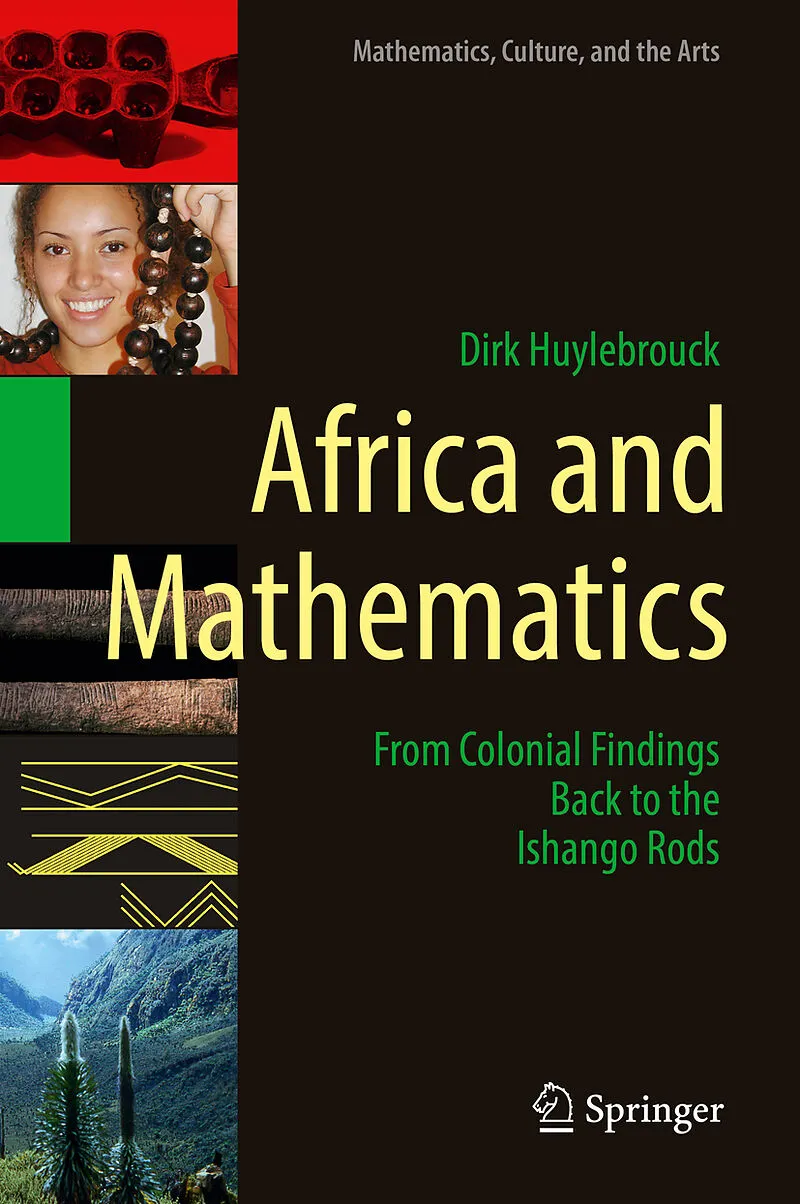
This volume on ethnomathematics in Central Africa fills a gap in the current literature, focusing on a region rarely explored by other publications. It highlights the discovery of the Ishango rod, which was found to be the oldest mathematical tool in humanity'...This volume on ethnomathematics in Central Africa fills a gap in the current literature, focusing on a region rarely explored by other publications. It highlights the discovery of the Ishango rod, which was found to be the oldest mathematical tool in humanity's history, thereby shifting the origin of mathematics to the heart of Africa, and explores the different scientific hypotheses that emerged as a result. While it contains some high-level mathematics, the non-mathematical reader can easily skip these portions and enjoy the book's survey of African history, culture, and art.
Fills a gap in current literature on African ethnomathematics Explores the discovery of the Ishango rod and the different scientific hypotheses with respect to it Features a foreword by Vladimir Pletser
Autorentext
Dirk Huylebrouck holds a PhD in mathematics from the University of Gent, Belgium. He worked at universities in the Congo for about eight years until a diplomatic incident between Belgium and Congo interrupted his stay. He went to the University of Aveiro, Portugal, and the European Division of Maryland University, until the majority of his American (military) students were sent to Iraq. He returned to Africa, to Burundi, but for only three years, because of the genocide in neighboring Rwanda. From 1996 until his retirement in 2022 he taught mathematics at the Faculty of Architecture of the KU Leuven (Belgium). In 2002 he won the American Mathematical association's Lester Ford Award for best mathematical paper. From 1997 until 2017 he edited the column "The Mathematical Tourist" in the journal The Mathematical Intelligencer. From 2017 to 2020 he had a weekly column called "Professor Pi", in Belgium's largest newspaper. His book Mathematics + Africa was his first in English(it appeared first in French and in Dutch). He wrote seven other books, in Dutch: The Codes of da Vinci, Bach, pi and Co, Belgium + mathematics, Mathart, Translation of Luca Pacioli's Divine Proportion, The Columns of Professor Pi, Lugubrious Mathematics and Mathematical Coloring Book (translated in Chinese as well). He may soon flee abroad again having become (in) famous for his work in popularizing errors in, for example, the work of Leonardo da Vinci, the Belgian Atomium, a Brussels Airport runway, the interpretation of The Mystic Lamb, Francis Attard's Fibonacci artwork, etc.
Inhalt
Foreword.- Introduction.- Part I: Mathematics in the Heart of Africa.- 1. Rationale and Sources.- 2. Storytelling and Music.- 3. Creative Counting.- 4. Drawings.- 5. Reasoning Without Writing.- 6. Multiplication in the Yoruba and "Ethiopian" Way.- Part II: The Ishango Rod(s).- 7. The Ishango Site.- 8. Mathematical Carvings.- 9. Missing Link.- 10. Not Out of Africa.- 11. A Second Rod.- Part III: Epilogue.- 12. Museum Visit, Teaching, Research.- References.