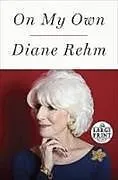
On My Own
Beschreibung
Zusatztext Praise for Diane Rehm's ON MY OWN "Importantpoignant" Miami Herald "A deeply felt and thoughtfully written account...Rehm writes candidly about her husband's decision to die when Parkinson's disease had deprived him of the ability to 'in any way car...Format auswählen
- Kartonierter EinbandCHF 27.60

Wird oft zusammen gekauft
Andere Kunden kauften auch
Beschreibung
Zusatztext Praise for Diane Rehm's ON MY OWN "Importantpoignant" Miami Herald "A deeply felt and thoughtfully written account...Rehm writes candidly about her husband's decision to die when Parkinson's disease had deprived him of the ability to 'in any way care for himself on his own'...Clear! moving and completely honestDiane Rehm has again found her voice! and! as she has always done! she speaks passionately and courageously about issues that concern us all." Reeve Lindberg! Washington Post "Rehm walks readers through the most recent year of her life! struggling with living alone and figuring out a new identity." Philadelphia Inquirer "About her late husband's battle with Parkinson's disease and how she rebuilt her life without him after 54 years of marriage. She writes about the practical challenges! emotional pain and her involvement in the right-to-die movement." Leonard Lopate! WNYC Informationen zum Autor DIANE REHM has hosted The Diane Rehm Show on WAMU 88.5 FM in Washington! D.C.distributed by NPRsince 1979; the show has a weekly listening audience of two and a half million. Currently! it is broadcast on nearly two hundred stations and Sirius Satellite Radio across the country! as well as internationally by Armed Forces Radio Network. She lives in Washington! D.C. www.thedianerehmshow.org Zusammenfassung In a deeply personal and moving book! the beloved NPR radio host speaks out about the long drawn-out death (from Parkinson's) of her husband of fifty-four years! and of her struggle to reconstruct her life without him. With John gone! Diane was indeed on her own! coping with the inevitable practical issues and! more important! with the profoundly emotional ones. What to do! how to react! reaching out again into the worldstruggling to create a new reality for herself while clinging to memories of the past. Her focus is on her own roller-coaster experiences! but she has also solicited the moving stories of such recently widowed friends as Roger Mudd and Susan Stamberg! which work to expose the reader to a remarkable range of reactions to the death of a spouse. John's unnecessarily extended deathhe begged to be helped to dieculminated in his taking matters into his own hands! simply refusing to take water! food! and medication. His heroic actions spurred Diane into becoming a kind of poster person for the right to die movement that is all too slowly taking shape in our country. With the brave determination that has characterized her whole life! she is finding a meaningful new way to contribute to the world. Her bookas practical as it is inspiringwill be a help and a comfort to the recently bereaved! and a beacon of hope about the possibilities that remain to us as we deal with our own approaching mortality. ...
Praise for Diane Rehm’s
ON MY OWN
"Important…poignant"
*—Miami Herald*
"A deeply felt and thoughtfully written account...Rehm writes candidly about her husband’s decision to die when Parkinson’s disease had deprived him of the ability to 'in any way care for himself on his own'...Clear, moving and completely honest…Diane Rehm has again found her voice, and, as she has always done, she speaks passionately and courageously about issues that concern us all."
—Reeve Lindberg, Washington Post
"Rehm walks readers through the most recent year of her life, struggling with living alone and figuring out a new identity."
—Philadelphia Inquirer
"About her late husband’s battle with Parkinson’s disease and how she rebuilt her life without him after 54 years of marriage. She writes about the practical challenges, emotional pain and her involvement in the right-to-die movement."
—Leonard Lopate, WNYC
Autorentext
DIANE REHM has hosted The Diane Rehm Show on WAMU 88.5 FM in Washington, D.C.—distributed by NPR—since 1979; the show has a weekly listening audience of two and a half million. Currently, it is broadcast on nearly two hundred stations and Sirius Satellite Radio across the country, as well as internationally by Armed Forces Radio Network. She lives in Washington, D.C.
Zusammenfassung
In a deeply personal and moving book, the beloved NPR radio host speaks out about the long drawn-out death (from Parkinson’s) of her husband of fifty-four years, and of her struggle to reconstruct her life without him.
With John gone, Diane was indeed “on her own,” coping with the inevitable practical issues and, more important, with the profoundly emotional ones. What to do, how to react, reaching out again into the world—struggling to create a new reality for herself while clinging to memories of the past. Her focus is on her own roller-coaster experiences, but she has also solicited the moving stories of such recently widowed friends as Roger Mudd and Susan Stamberg, which work to expose the reader to a remarkable range of reactions to the death of a spouse.
John’s unnecessarily extended death—he begged to be helped to die—culminated in his taking matters into his own hands, simply refusing to take water, food, and medication. His heroic actions spurred Diane into becoming a kind of poster person for the “right to die” movement that is all too slowly taking shape in our country. With the brave determination that has characterized her whole life, she is finding a meaningful new way to contribute to the world.
Her book—as practical as it is inspiring—will be a help and a comfort to the recently bereaved, and a beacon of hope about the possibilities that remain to us as we deal with our own approaching mortality.
Leseprobe
On June 14, 2014, my husband, John Rehm—age eighty-three—began his withdrawal from life. The aides at Brighton Gardens were instructed to stop bringing medications, menus, or water. His decision to die came after a long and difficult conversation the day before with Dr. Roy Fried, his primary physician; our son, David; our daughter, Jennifer, who was on the phone from Boston; and me.
John declared to Dr. Fried that because Parkinson’s disease had so affected him that he no longer had the use of his hands, arms, or legs, because he could no longer stand, walk, eat, bathe, or in any way care for himself on his own, he was now ready to die. He said that he understood the disease was progressing, taking him further and further into incapacity, with no hope of improvement. Therefore, he wanted to end his life.
Clearly, his expectation—and his misunderstanding—was that, now that he had made his decision, he could simply be “put to sleep” immediately, with medication. When Dr. Fried explained that he was unable to carry out John’s wishes, that he was prohibited from committing such an act in the state of Maryland, John became very angry. He said, “I feel betrayed.” Tears came into his eyes, tears of frustration and disappointment. Here was a man who had lived his life able, for the most part, to take charge of events, to be certain that his well-considered decisions would be carried out. And now he was making the ultimate decision, and having it thwarted.
It was then that Dr. Fried explained that the only alternative John had, if he truly wished to die, was to stop eating, drinking fluids, or taking medications. In other words, he could bring his life to an end through those means, but no one could do it for him. Dr. Fried added that he hoped John would not make the decision to end his life, but that, if he did so, as his physician he would honor it.
My husband had moved into assisted living at Brighton Gardens in Chevy Chase, Maryland, in November 2012, because he could no longer stand or walk without falling…