
IHR WARENKORB IST AKTUELL LEER.
Haben Sie noch nichts passendes gefunden? Stöbern Sie durch unser komplettes Sortiment.
Oder melden Sie sich an bzw. registrieren Sie sich.
- Kostenlose Lieferung
- Kauf auf Rechnung
- Ex Libris Tiefpreis
- Filiallieferung und 650+ Abholorte
- Rabatt-Bons als Club-Mitglied
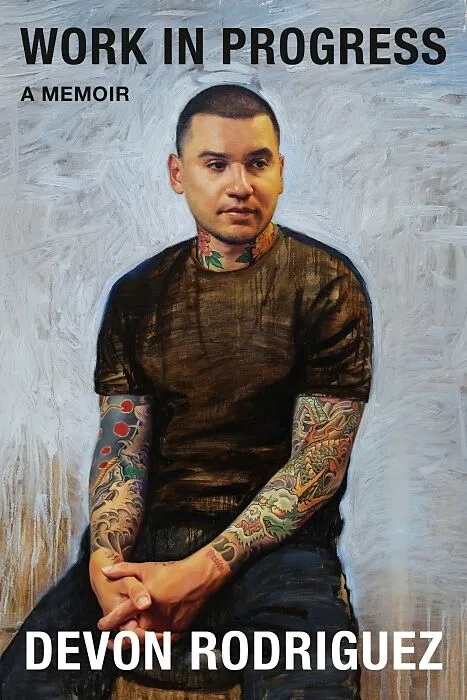
Work in Progress
Beschreibung
The inspiring true story of the self-made, Bronx-born portraitist who overcame all odds to become the most followed artist on social media worldwide--featuring 20 original black-and-white ink drawings of the people, places,;and things that made him who he is. ...Format auswählen
- Fester EinbandCHF 33.50

Wird oft zusammen gekauft
Andere Kunden kauften auch
Beschreibung
The inspiring true story of the self-made, Bronx-born portraitist who overcame all odds to become the most followed artist on social media worldwide--featuring 20 original black-and-white ink drawings of the people, places,;and things that made him who he is. Devon Rodriguez talks to strangers: his subway sketches and person-on-the-street interviews have earned him millions of followers.;His hyperrealistic work demonstrates the power of portraiture to help us see ourselves and each other. He’s a new-school influencer with old-school talent. Now, the celebrated Bronx-born artist turns his perspective inward. When Rodriguez was a child, art became an escape from devastating abuse and poverty. It was also a currency that helped him stay out of trouble. This fascinating memoir is a twenty-first-century fable about a young man with a pencil, a phone, and a relentless drive to succeed. Instead of following the conventional route to art world prestige, he saw opportunity online, sharing his work in bite-sized TikTok;videos that after many experiments went viral, making him one of the top influencers of his generation. An entrepreneur who makes art accessible to everyday people,;he’s;succeeded without gallery representation or a Yale degree.; Devon has now sketched over a thousand people. With this book, he delivers his most precise and moving portrait yet: of himself. Frank, profound,;and occasionally hilarious, it''s motivational magic for the digital age.
Autorentext
Devon Rodriguez is a Bronx-born portrait artist of Puerto Rican and Honduran descent. He rose to notoriety for drawing realistic portraits of commuters on the New York City subway system. He has also portrayed such luminaries as former President Biden, Oprah, and more. The most-followed visual artist on TikTok, he was a finalist in the Outwin Boochever Portrait Competition. His work has been featured in The New Yorker and The New York Times. He was named a 2025 Time100 Creator and a Forbes Top Creator the same year. He lives in New York City.
Leseprobe
Chapter One
I always knew my dream in life.
When anyone would ask me what I wanted to be when I grew up, I didn’t waver: “I’m going to be an artist.” In my head, that was guaranteed. I knew that this is who I was and who I was going to be.
I didn’t grow up around professional fine artists and I didn’t go to galleries, but my first memory is of arranging sheets of copy paper on the floor, stretching from one wall to the other, and then drawing on them until my mom told me to stop because she had to mop. I was around four years old. And art was all around me, from the graffiti I was mesmerized by to the man who loomed largest in my life: my father, a gifted tattooer named Carlos Rodriguez who was a legend in the South Bronx.
He made me feel like becoming an artist was not just a dream but my destiny. I remember the three times my mom took me to visit when he was working at Needles, a tattoo shop in Spanish Harlem owned by a friend of his named Chino; he started working there right after I was born. I saw him doing two koi fish on Chino’s calf, and I have a specific sense memory of that place that lingered long after he moved to Miami: the lavender aroma of the green soap he used. I can still smell it now.
When you do a tattoo you’re constantly cleaning and wiping the area with this antiseptic liquid soap, and it has a sweet, comforting smell that is forever linked in my mind to my good-looking, strong father who did the most precise, beautiful work on people. Everyone celebrated him at the shop. He was the man there. His work was so respected that his Japanese-style flash design samples—pre-drawn tattoos that artists create and display for clients to choose from—hung on the wall. That made an impression on me. When a tattoo shop features someone’s flash designs, it means their work is strong and worth advertising.
After my father moved away there were still so many reminders of him: My mom had several tattoos he had done, including an orange butterfly across her belly with his name in script. She showed me his tattoos in magazines and I would think, Wow, my father is famous. But where is he?
When I walked around Mott Haven with her, we bumped into her friends and they showed me the tattoos he did for them. People on the block would say, “Yo, you’re Carlos’s son, he did this tat on me,” and they’d roll up their sleeves to show me irezumi, dragons, koi, and other figures from Japanese folklore swooping around their arms and legs. It was like the neighborhood was a gallery of his work. After they’d show me the tattoos, I would always ask them, “Do you know where he is?” My mom didn’t like that. “Stop asking, he’s a deadbeat,” she’d say.
Growing up I didn’t know a lot of people who had stable jobs, so I always held on to this memory of his artistry and competence. How he spoke to clients, how they trusted him to do this minor surgery on their bodies, and how seriously he took that: the precision, the tools, the meticulousness of how he made sure everything was sanitary and safe.
Art has always been romanticized, however it’s rarely respected as a career. But the image I held of my father gave me a different definition. When I used the word artist to describe my future, I’d never heard the term starving artist. To me, being an artist was being a professional, someone who was both skilled and responsible.
In other words, being an artist was the exact opposite of what I witnessed as a kid. From a very young age, I knew what I didn’t want to become because I saw it every day: I refused to grow up to be like the adult who was raising me. I wanted to be like the one who had left.
When I was little, my family moved around a lot, mostly in the South Bronx, but wherever we were, my home life was unstable: There were always suspicious people coming in and out of our place. I never felt safe there. My mother had started beating me when I was four years old, something she bragged about. I learned early how easily violence could happen to you, how quickly things could turn.
She coached me and my siblings to stay quiet about what was happening in the house: whatever illegal activity was going on at the time, the fact that we didn’t have food, the fact that she hit us. No snitching, to anyone, anytime. She spent more time teaching us to lie about our circumstances than improving them.
During my childhood, there were just a few places where I felt free: my grandmother’s house (we call her Abuela), which was clean, safe, and full of love; my school, which felt like a sanctuary; and eventually, the New York City subway.
I started riding the subway to school by myself when I was eleven years old, after we moved from the South Bronx to a place much farther north, past the zoo. I was so small, with a black drawstring book bag, and my green free student MetroCard in my pocket. The trains pretty much raised me. Sometimes people commented, “You’re a little young to be riding alone.” But most of the time, they’d ignore me.
I took three trains to get to my middle school: I caught the 2 at Gun Hill Road to 149th Street and 3rd Ave, then I transferred to the 5 to 125th Street in Manhattan, then to the 6 train uptown two stops to Brook Ave. I had to leave the Bronx to return to the Bronx. It was an hour-long trip each way, and even though my commute wasn’t always relaxed—when the trains were crowded, fights could break out if somebody stepped on somebody else’s sneakers—it became one of the constants of my chaotic life.
I studied the subway map, and through it I felt like…