Beschreibung
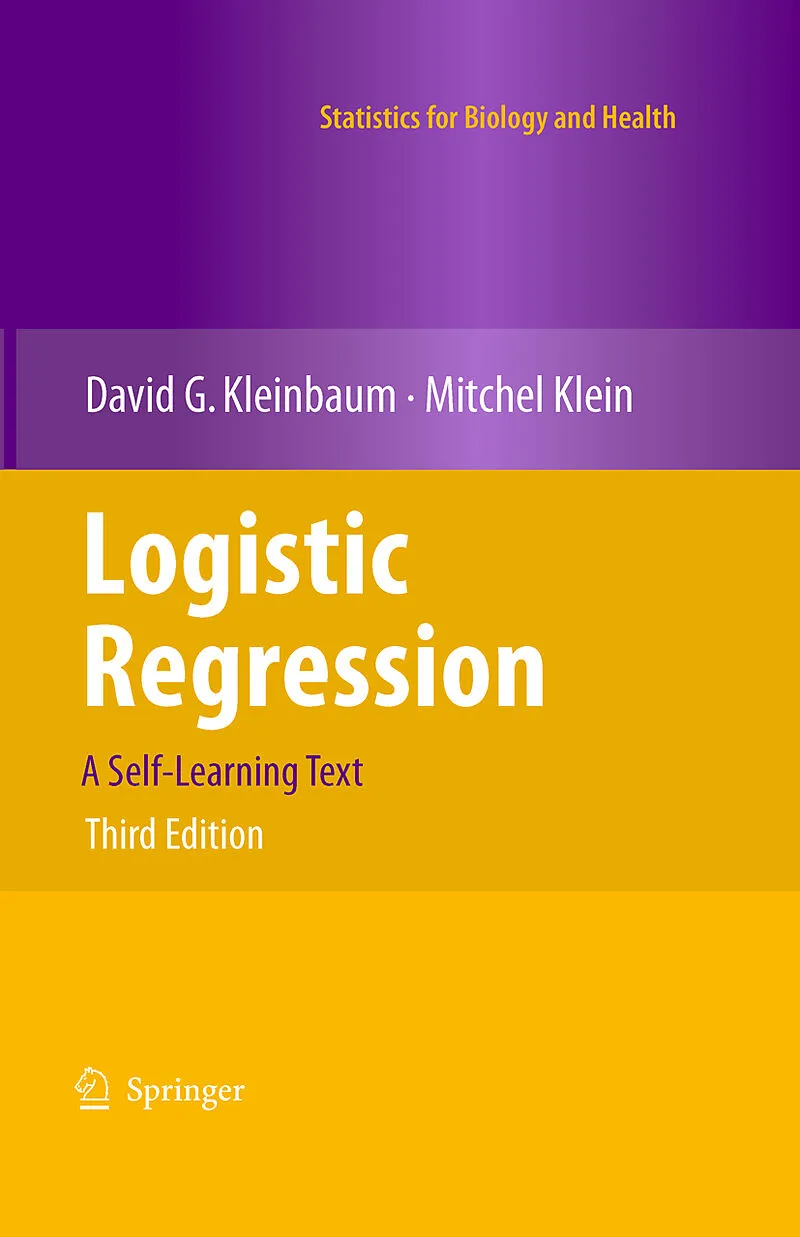
This highly readable book describes fundamental and advanced concepts and methods of logistic regression. The 3rd edition includes three new chapters, an updated computer appendix, and an expanded section on modeling guidelines that consider causal diagrams. T...This highly readable book describes fundamental and advanced concepts and methods of logistic regression. The 3rd edition includes three new chapters, an updated computer appendix, and an expanded section on modeling guidelines that consider causal diagrams.
This is the third edition of this text on logistic regression methods, originally published in 1994, with its second e- tion published in 2002. As in the first two editions, each chapter contains a pres- tation of its topic in lecture?book format together with objectives, an outline, key formulae, practice exercises, and a test. The lecture book has a sequence of illust- tions, formulae, or summary statements in the left column of each page and a script (i. e. , text) in the right column. This format allows you to read the script in conjunction with the illustrations and formulae that highlight the main points, formulae, or examples being presented. This third edition has expanded the second edition by adding three new chapters and a modified computer appendix. We have also expanded our overview of mod- ing strategy guidelines in Chap. 6 to consider causal d- grams. The three new chapters are as follows: Chapter 8: Additional Modeling Strategy Issues Chapter 9: Assessing Goodness of Fit for Logistic Regression Chapter 10: Assessing Discriminatory Performance of a Binary Logistic Model: ROC Curves In adding these three chapters, we have moved Chaps. 8 through 13 from the second edition to follow the new chapters, so that these previous chapters have been ren- bered as Chaps. 1116 in this third edition.
Includes supplementary material: sn.pub/extras
Autorentext
David Kleinbaum is Professor of Epidemiology at the Rollins School of Public Health at Emory University, Atlanta, Georgia. Dr. Kleinbaum is internationally known for innovative textbooks and teaching on epidemiological methods, multiple linear regression, logistic regression, and survival analysis. He has provided extensive worldwide short-course training in over 150 short courses on statistical and epidemiological methods. He is also the author of ActivEpi (2002), an interactive computer-based instructional text on fundamentals of epidemiology, which has been used in a variety of educational environments including distance learning. Mitchel Klein is Research Assistant Professor with a joint appointment in the Department of Environmental and Occupational Health (EOH) and the Department of Epidemiology, also at the Rollins School of Public Health at Emory University. Dr. Klein is also co-author with Dr. Kleinbaum of the second edition of Logistic Regression- A Self-Learning Text (2002). He has regularly taught epidemiologic methods courses at Emory to graduate students in public health and in clinical medicine. He is responsible for the epidemiologic methods training of physicians enrolled in Emory's Master of Science in Clinical Research Program, and has collaborated with Dr. Kleinbaum both nationally and internationally in teaching several short courses on various topics in epidemiologic methods.
Klappentext
This very popular textbook is now in its third edition. Whether students or working professionals, readers appreciate its unique "lecture book" format. They often say the book reads like they are listening to an outstanding lecturer. This edition includes three new chapters, an updated computer appendix, and an expanded section about modeling guidelines that consider causal diagrams.
Like previous editions, this textbook provides a highly readable description of fundamental and more advanced concepts and methods of logistic regression. It is suitable for researchers and statisticians in medical and other life sciences as well as academicians teaching second-level regression methods courses.
The new chapters are:
• Additional Modeling Strategy Issues, including strategy with several exposures, screening variables, collinearity, influential observations and multiple-testing
• Assessing Goodness to Fit for Logistic Regression
• Assessing Discriminatory Performance of a Binary Logistic Model: ROC Curves
The Computer Appendix provides step-by-step instructions for using STATA (version 10.0), SAS (version 9.2), and SPSS (version 16) for procedures described in the main text.
David Kleinbaum is Professor of Epidemiology at Emory University Rollins School of Public Health in Atlanta, Georgia. Dr. Kleinbaum is internationally known for his innovative textbooks and teaching on epidemiological methods, multiple linear regression, logistic regression, and survival analysis. He has taught more than 200 courses worldwide. The recipient of numerous teaching awards, he received the first Association of Schools of Public Health Pfizer Award for Distinguished Career Teaching in 2005.
Mitchel Klein is Research Assistant Professor with a joint appointment in the Environmental and Occupational Health Department and the Epidemiology Department at Emory University Rollins School of Public Health. He has successfullydesigned and taught epidemiologic methods physicians at Emory's Master of Science in Clinical Research Program. Dr. Klein is co-author with Dr. Kleinbaum of the second edition of Survival Analysis-A Self-Learning Text.
Inhalt
to Logistic Regression.- Important Special Cases of the Logistic Model.- Computing the Odds Ratio in Logistic Regression.- Maximum Likelihood Techniques: An Overview.- Statistical Inferences Using Maximum Likelihood Techniques.- Modeling Strategy Guidelines.- Modeling Strategy for Assessing Interaction and Confounding.- Additional Modeling Strategy Issues.- Assessing Goodness of Fit for Logistic Regression.- Assessing Discriminatory Performance of a Binary Logistic Model: ROC Curves.- Analysis of Matched Data Using Logistic Regression.- Polytomous Logistic Regression.- Ordinal Logistic Regression.- Logistic Regression for Correlated Data: GEE.- GEE Examples.- Other Approaches for Analysis of Correlated Data.
10%