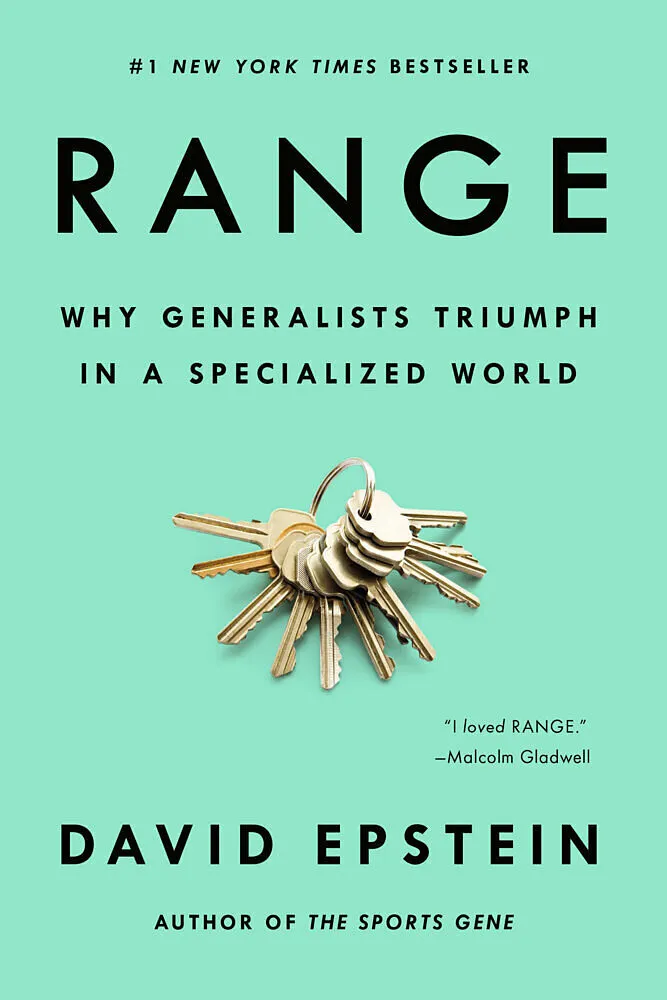
Range
Beschreibung
Zusatztext A well-supported and smoothly written case on behalf of breadth and late starts. . . . as David Epstein shows us, cultivating range prepares us for the wickedly unanticipated. Wall Street Journal I love this idea [ Range ], because I think of myself...Format auswählen
- Kartonierter Einband (Kt)CHF 21.10
- Fester EinbandCHF 31.60

Wird oft zusammen gekauft
Andere Kunden kauften auch
Beschreibung
Zusatztext A well-supported and smoothly written case on behalf of breadth and late starts. . . . as David Epstein shows us, cultivating range prepares us for the wickedly unanticipated. Wall Street Journal I love this idea [ Range ], because I think of myself as a jack of all trades. Fareed Zakaria, CNN The storytelling is so dramatic, the wielding of data so deft and the lessons so strikingly framed that it's never less than a pleasure to read. . . . a wealth of thought-provoking material. New York Times Book Review Range is a convincing, engaging survey of research and anecdotes that confirm a thoughtful, collaborative world is also a better and more innovative one. NPR For reasons I cannot explain, David Epstein manages to make me thoroughly enjoy the experience of being told that everything I thought about something was wrong. I loved Range . Malcolm Gladwell, author of Outliers and The Tipping Point It's a joy to spend hours in the company of a writer as gifted as David Epstein. And the joy is all the greater when that writer shares so much crucial and revelatory information about performance, success, and education. Susan Cain, author of Quiet For too long, we've believed in a single path to excellence. Start early, specialize soon, narrow your focus, aim for efficiency. But in this groundbreaking book, David Epstein shows that in most domains, the way to excel is something altogether different. Sample widely, gain a breadth of experiences, take detours, and experiment relentlessly. Epstein is a deft writer, equally nimble at telling a great story and unpacking complicated science. And Range is an urgent and important book, an essential read for bosses, parents, coaches, and anyone who cares about improving performance. Daniel H. Pink, author of When, Drive, and A Whole New Mind In a world that's increasingly obsessed with specialization, star science writer David Epstein is here to convince you that the future may belong to generalists. It's a captivating read that will leave you questioning the next steps in your careerand the way you raise your children. Adam Grant, author of Give and Take and Originals Range is a blueprint for a more thoughtful, collaborative world and it's also really fun to read. NPR, Best Books of 2019 I want to give Range to any kid who is being forced to take violin lessonsbut really wants to learn the drums; to any programmer who secretly dreams of becoming a psychologist; to everyone who wants humans to thrive in an age of robots. Range is full of surprises and hope, a 21st century survival guide. Amanda Ripley, author of The Smartest Kids in the World. An assiduously researched and accessible argument for being a jack of all trades. O Magazine , Best Nonfiction Books Coming in 2019 Range elevates Epstein to one of the very best science writers at work today. The scope of the bookand the implicationsare breathtaking. I find myself applying what I've learned to almost every aspect of my life. Sebastian Junger, author of Tribe, War, and The Perfect Storm A goldmine of surprising insights. Makes you smarter with every page. James Clear, New York Times best-selling author of Atomic Habits Range will force you to rethink the nature of learning, thinking, and being, and reconsider what you thought you knew about optimal education and career pathsand how and why the most successful people in the world do what they do. It's one of the most thought-provoking and enlightening books I've read. Maria Konnikova, author of Mastermind and The Confidence Game, professional poker player A fresh, brisk look...
Autorentext
David Epstein
Klappentext
The #1 New York Times bestseller that has all America talking, from the author of the highly anticipated Inside the Box: How Constraints Make Us Better.
“The most important business—and parenting—book of the year.” —Forbes
“Urgent and important. . . an essential read for bosses, parents, coaches, and anyone who cares about improving performance.” —Daniel H. Pink
Shortlisted for the Financial Times/McKinsey Business Book of the Year Award
Plenty of experts argue that anyone who wants to develop a skill, play an instrument, or lead their field should start early, focus intensely, and rack up as many hours of deliberate practice as possible. If you dabble or delay, you’ll never catch up to the people who got a head start. But a closer look at research on the world’s top performers, from professional athletes to Nobel laureates, shows that early specialization is the exception, not the rule.
David Epstein examined the world’s most successful athletes, artists, musicians, inventors, forecasters and scientists. He discovered that in most fields—especially those that are complex and unpredictable—generalists, not specialists, are primed to excel. Generalists often find their path late, and they juggle many interests rather than focusing on one. They’re also more creative, more agile, and able to make connections their more specialized peers can’t see.
Provocative, rigorous, and engrossing, Range makes a compelling case for actively cultivating inefficiency. Failing a test is the best way to learn. Frequent quitters end up with the most fulfilling careers. The most impactful inventors cross domains rather than deepening their knowledge in a single area. As experts silo themselves further while AI threatens the jobs once reserved for highly focused humans, people who think broadly and embrace diverse experiences and perspectives will increasingly thrive.
Leseprobe
Chapter 1
The Cult of the Head Start
One year and four days after World War II in Europe ended in unconditional surrender, Laszlo Polgar was born in a small town in Hungary-the seed of a new family. He had no grandmothers, no grandfathers, and no cousins; all had been wiped out in the Holocaust, along with his father's first wife and five children. Laszlo grew up determined to have a family, and a special one.
He prepped for fatherhood in college by poring over biographies of legendary thinkers, from Socrates to Einstein. He decided that traditional education was broken, and that he could make his own children into geniuses, if he just gave them the right head start. By doing so, he would prove something far greater: that any child can be molded for eminence in any discipline. He just needed a wife who would go along with the plan.
Laszlo's mother had a friend, and the friend had a daughter, Klara. In 1965, Klara traveled to Budapest, where she met Laszlo in person. Laszlo didn't play hard to get; he spent the first visit telling Klara that he planned to have six children and that he would nurture them to brilliance. Klara returned home to her parents with a lukewarm review: she had "met a very interesting person," but could not imagine marrying him.
They continued to exchange letters. They were both teachers and agreed that the school system was frustratingly one-size-fits-all, made for producing "the gray average mass," as Laszlo put it. A year and a half of letters later, Klara realized she had a very special pen pal. Laszlo finally wrote a love letter, and proposed at the end. They married, moved to Budapest, and got to work. Susan was born in early 1969, and the experiment was on.
For his first genius, Laszlo picked chess. In 1972, the year before Susan started training, American Bobby Fischer defeated Russian Boris Spassky in the "Match of the Century." It was considered a Cold War proxy in both hemispheres, and chess was suddenly pop culture. Plus, according to Klara, the game had a distinct benefit: "Chess is very objective and easy to measure." Win, lose, or draw, and a point system measures skill against the rest of the chess world. His daughter, Laszlo decided, would become a chess champion.
Laszlo was pati…