
IHR WARENKORB IST AKTUELL LEER.
Haben Sie noch nichts passendes gefunden? Stöbern Sie durch unser komplettes Sortiment.
Oder melden Sie sich an bzw. registrieren Sie sich.
- Kostenlose Lieferung
- Kauf auf Rechnung
- Ex Libris Tiefpreis
- Filiallieferung und 650+ Abholorte
- Rabatt-Bons als Club-Mitglied
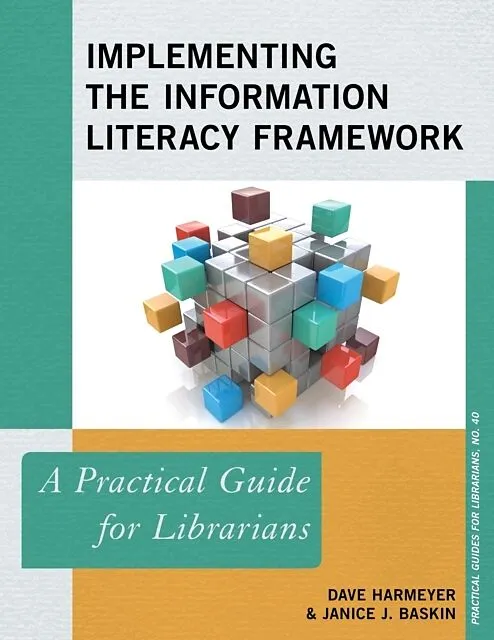
Implementing the Information Literacy Framework
Beschreibung
Informationen zum Autor Dave Harmeyer is professor and associate dean of Azusa Pacific University Libraries in California and chairs the campus information literacy committee. He has written more than a dozen articles for his reference interview column in the ...Format auswählen
- Kartonierter Einband (Kt)CHF 98.80

Wird oft zusammen gekauft
Andere Kunden kauften auch
Beschreibung
Informationen zum Autor Dave Harmeyer is professor and associate dean of Azusa Pacific University Libraries in California and chairs the campus information literacy committee. He has written more than a dozen articles for his reference interview column in the Reference Librarian and wrote The Reference Interview Today: Negotiating and Answering Questions Face to Face, on the Phone, and Virtually (Rowman & Littlefield, 2014). He has also coauthored articles with classroom faculty on such topics as constructivist-based teaching in Second Life and enhancing student learning in online courses using Twitter #hashtags. Janice J. Baskin is a retired professor of English and communications and taught English composition for fourteen years, which included instruction in research and information literacy.As a faculty in the Azusa Pacific University Libraries, she was a member of the information literacy committee and served as chair of the Undergraduate Studies Council, where she worked to implement information literacy instruction across the curriculum. She works as an academic editor. Klappentext This book and its website address the implementation of the The Framework of Information Literacy in Higher Education. It gives the tools and strategies to implement Framework-based information literacy experiences for students and faculty, creating a campus culture that understands, and integrates, information literacy in its educational mission. Zusammenfassung This book and its website address the implementation of the The Framework of Information Literacy in Higher Education. It gives the tools and strategies to implement Framework-based information literacy experiences for students and faculty! creating a campus culture that understands! and integrates! information literacy in its educational mission. Inhaltsverzeichnis Chapter 1. At the Crossroads: Reframing Information Literacy Instruction Chapter 2. From Standards to Framework: The Difference and Why It Matters Chapter 3. Pre-Framework Ideas to Do This Year Chapter 4. The Culture in the Classroom Chapter 5. Joining the Information Literacy Conversation in Education Chapter 6. Tips for Creating a Framework Campus Culture Chapter 7. Practical Framework Inroads Chapter 8. Teaching Information Literacy: First Three Frames of the Framework Chapter 9. Teaching Information Literacy: Last Three Frames of the Framework Chapter 10. Moving Forward in Creating Framework-based Information Literacy Instruction Appendix A. What Is Information Literacy? A Short Guide for Faculty and Librarians Appendix B. Flashcards for the Six FramesAppendix C. Thematic Coding of the 2000 Standards as Found in the 2015 Framework Appendix D. Bookmarks ...
Autorentext
Dave Harmeyer is professor and associate dean of Azusa Pacific University Libraries in California and chairs the campus information literacy committee. He has written more than a dozen articles for his reference interview column in the Reference Librarian and wrote The Reference Interview Today: Negotiating and Answering Questions Face to Face, on the Phone, and Virtually (Rowman & Littlefield, 2014). He has also coauthored articles with classroom faculty on such topics as constructivist-based teaching in Second Life and enhancing student learning in online courses using Twitter #hashtags.
Janice J. Baskin is a retired professor of English and communications and taught English composition for fourteen years, which included instruction in research and information literacy.As a faculty in the Azusa Pacific University Libraries, she was a member of the information literacy committee and served as chair of the Undergraduate Studies Council, where she worked to implement information literacy instruction across the curriculum. She works as an academic editor.Trudi Jacobson is the Head of the Information Literacy Department at the University at Albany, and holds the rank of Distinguished Librarian. She has been deeply involved with information literacy throughout her career, and thrives on finding new and engaging ways to teach students, both within courses and through less formal means. She has worked closely with Thomas Mackey for many years. Together, they originated the metaliteracy framework to emphasize the metacognitive learner as producer and participant in dynamic information environments. They co-authored the first article to define this model with Reframing Information Literacy as a Metaliteracy (C & RL, 2011) and followed that piece with their book Metaliteracy: Reinventing Information Literacy to Empower Learners (Neal-Schuman, 2014). They co-authored the essay Proposing a Metaliteracy Model to Redefine Information Literacy (2013) and co-edited their most recent book for ALA/Neal-Schuman entitled Metaliteracy in Practice (2016). She has also written extensively on other topics. She co-chaired the Association of College & Research Libraries Task Force that created the Information Literacy Framework for Higher Education. Trudi is a member of the Editorial Board of Communications in Information Literacy. She freelances as the acquisitions editor for Rowman & Littlefield's Innovations in Information Literacy series. Trudi was the 2009 recipient of the Miriam Dudley Instruction Librarian Award. You can contact her at tjacobson@albany.edu
Klappentext
This book and its website address the implementation of the The Framework of Information Literacy in Higher Education. It gives the tools and strategies to implement Framework-based information literacy experiences for students and faculty, creating a campus culture that understands, and integrates, information literacy in its educational mission.
Inhalt
Chapter 1. At the Crossroads: Reframing Information Literacy Instruction
Chapter 2. From Standards to Framework: The Difference and Why It Matters
Chapter 3. Pre-Framework Ideas to Do This Year
Chapter 4. The Culture in the Classroom
Chapter 5. Joining the Information Literacy Conversation in Education
Chapter 6. Tips for Creating a Framework Campus Culture
Chapter 7. Practical Framework Inroads
Chapter 8. Teaching Information Literacy: First Three Frames of the Framework
Chapter 9. Teaching Information Literacy: Last Three Frames of the Framework
Chapter 10. Moving Forward in Creating Framework-based Information Literacy Instruction
Appendix A. What Is Information Literacy? A Short Guide for Faculty and Librarians
Appendix B. Flashcards for the Six FramesAppendix C. Thematic Coding of the 2000 Standards as Found in the 2015 Framework
Appendix D. Bookmarks