
IHR WARENKORB IST AKTUELL LEER.
Haben Sie noch nichts passendes gefunden? Stöbern Sie durch unser komplettes Sortiment.
Oder melden Sie sich an bzw. registrieren Sie sich.
- Kostenlose Lieferung
- Kauf auf Rechnung
- Ex Libris Tiefpreis
- Filiallieferung und 650+ Abholorte
- Rabatt-Bons als Club-Mitglied
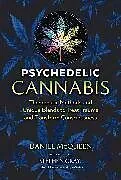
Psychedelic Cannabis
Beschreibung
“Daniel and his much-needed Medicinal Mindfulness program use cannabis to heighten emotional and spiritual healing and awakening to provide an urgently needed user-support system. Cannabis nurtures honesty, insight, peace of mind, and emotional healing, ...Format auswählen
- Kartonierter EinbandCHF 18.00

Wird oft zusammen gekauft
Andere Kunden kauften auch
Beschreibung
“Daniel and his much-needed Medicinal Mindfulness program use cannabis to heighten emotional and spiritual healing and awakening to provide an urgently needed user-support system. Cannabis nurtures honesty, insight, peace of mind, and emotional healing, and Psychedelic Cannabis provides expert professional guidance in encouraging these uplifting experiences while high.”
Autorentext
Daniel McQueen, MA, is a professional psychedelic therapist and executive director of the Center for Medicinal Mindfulness, a psychedelic harm-reduction program and international psychedelic therapy training program focusing on Cannabis-Assisted Psychedelic Therapy and Cannabis-Assisted Psychotherapy. He holds a master’s in transpersonal counseling psychology and lives in Boulder, Colorado.
Klappentext
A step-by-step guide to using cannabis as a psychedelic therapy
• Explains how cannabis can be used to treat trauma and emotional pain, as a profound problem-solving tool, and as a potent catalyst for self-transformation and ongoing healing work
• Shares methods to minimize the unwanted effects, such as intensified anxiety and paranoia, and direct the experience to produce deep physical relaxation and, when needed, elevated healing states
• Details how to blend cannabis strains for specific kinds of psychedelic experiences and how to prepare for your sessions to ensure success
Despite the recent resurgence of interest in the therapeutic potential of psychedelics, Cannabis sativa as a psychedelic therapy has been completely overlooked. Yet, as psychedelic specialist Daniel McQueen reveals, when used skillfully and with intention, cannabis can be used to treat trauma and other mental health concerns just as psilocybin mushrooms and MDMA can. It can also be used as a problem-solving tool and as a potent catalyst for self-actualization and ongoing healing work.
Presenting a step-by-step guide, McQueen explores how to transform cannabis into a reliable and safe psychedelic medicine. Drawing on his years of experience working with clients to release traumas and emotional pain and step into their full potential, he explains the importance of proper dose, set, setting, and intention and details how to prepare for your psychedelic cannabis sessions to ensure success. He shares methods to use cannabis in a specialized and mindful way to minimize unwanted effects, such as intensified anxiety and paranoia, and direct the experience to produce vivid psychedelic states, deep physical relaxation, and healing.
Looking at the unique qualities of di erent cannabis strains, the author explores the art of making a psychedelic cannabis blend, the possibilities and hidden potentials of each strain, and how to blend strains for specific medicine experiences, ranging in similarity to MDMA, psilocybin, and even ayahuasca.
Unveiling new depth to this ancient spiritual and medicinal ally, McQueen shows how consciously using cannabis as a psychedelic can help transform your trauma into resilience and shift your mindset from surviving to thriving.
Zusammenfassung
A step-by-step guide to using cannabis as a psychedelic therapy
Leseprobe
**From Chapter 1. Characteristics of Psychedelic Cannabis
**
This book isn’t a primer on cannabis. Those have been written. You don’t need to know the details to use it as a psychedelic medicine. But I do want to share some context for those who might not have used it in a while. If you’re doubting whether it’s possible for cannabis to create a psychedelic experience, consider when you last smoked it--a year, a decade, or a generation ago?
Simply stated, according to recent studies, the tetrahydrocannabinol (THC) in cannabis is three times stronger than it was twenty years ago. In addition, the percentage of the cannabinoid cannabidiol (CBD), also found in the plant as a natural antidote to THC, is decreasing in most strains through selective breeding. This means the subjective effects of the THC are felt even more strongly. We are literally witnessing firsthand the evolution of an entire species by human engineering and genetic manipulation.
The new scientific exploration of the relationship between cannabinoids and terpenes, called the entourage effect, has amplified the diverse qualities of cannabis through breeding subtle changes in chemical composition. Because of this new understanding, it’s very safe to say cannabis today is nothing like it was two decades ago, let alone during the psychedelic 1960s. I am sure there were some incredible exceptions to this trend, as there have always been wonderful growers of this amazing plant, but on average, exceptional cannabis wasn’t the experience of the vast majority of users. Maybe it’s time to reconsider this humble and unusual smelling flower. Those smells are the terpenes, and they’re like little engines of transformation.
Despite the strength of modern strains, cannabis is still honored in the healing community for its therapeutic nature. Because psychedelic cannabis sessions are shorter and recovery time is minimal, integration is easier than it is for other psychedelic medicines, which makes it ideal for those who have busy careers and family responsibilities. Psychedelic cannabis is also much safer for older people to use because it not only causes less stress on the body but is actually neuroregenerative in nature. Imbibing cannabis with intention is a natural harm-reduction tool, as well, with regular users reporting that when they transitioned to intentional use and actually began to turn toward what needed healing, their overall cannabis consumption and other drug use decreased significantly and without much effort or clinical intervention. As an addiction treatment, cannabis is a much safer alternative to addictive drugs in the initial stages of treatment, and cannabis protocols and breathwork techniques can be used as tools to heal the underlying causes of addictive behavior. Except for a few easy-to-assess contraindications, there are few reasons not to promote this medicine for personal healing.
Cannabis is much safer, psychologically and physically speaking, than any other psychedelic medicine, and it has a shorter duration than most psychedelics, making it easier to integrate and recover from the experience. It can be used effectively in smaller doses, or as a way to step into working with other psychedelics. This is something we call testing the waters. If you have never tried a psychedelic, maybe there are a few steps to take before going to Peru for a legal ayahuasca experience.
Unlike other psychedelics and MDMA, which require significant time between sessions for integration and physical wellbeing, cannabis can be used safely and on an ongoing basis for healing purposes, even weekly within the appropriate context. This book describes what that container could look like for a solo practitioner. In addition to safe ongoing use, as people become more skillful, they can gather together for community events. We regularly host more than twenty-five people in our circles. I’m not saying start with that, but community really is part of the medicine.
Subjectively, when used skillfully, psychedelic cannabis experiences are not that different from MDMA-assisted psychotherapy. The healing effects are sometimes indistinguishable from that of MDMA and other psychedelics, including the intensity of somatic release and physical shaking, emotional intensity, and even traumatic memory recall in a safe and accepting state of being. From my experience, psychedelic cannabis experiences often begin like MDMA sessions, then morph into something akin to a psilocybin mushroom experience with significant body sensations and vivid inner visuals. A very significant number of clients also state they expe…