
IHR WARENKORB IST AKTUELL LEER.
Haben Sie noch nichts passendes gefunden? Stöbern Sie durch unser komplettes Sortiment.
Oder melden Sie sich an bzw. registrieren Sie sich.
- Kostenlose Lieferung
- Kauf auf Rechnung
- Ex Libris Tiefpreis
- Filiallieferung und 650+ Abholorte
- Rabatt-Bons als Club-Mitglied
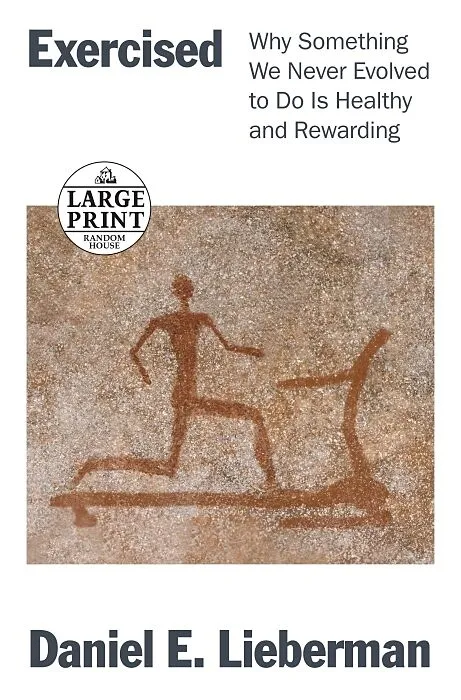
Exercised
Beschreibung
Zusatztext "Lieberman's inquisitiveness as both a researcher and a fitful fitness adherent allows him a distinct vantage on the subject... Drawing on his expertise and knowledge of the way evolutionary forces work, [Lieberman] takes ideas that have been spun a...Format auswählen
- Kartonierter EinbandCHF 35.10

Wird oft zusammen gekauft
Andere Kunden kauften auch
Beschreibung
Zusatztext "Lieberman's inquisitiveness as both a researcher and a fitful fitness adherent allows him a distinct vantage on the subject... Drawing on his expertise and knowledge of the way evolutionary forces work, [Lieberman] takes ideas that have been spun and spun again, often based on shaky information, and cracks them open... In addition to exorcising myths and detailing what kinds of exercise we're good at, as well as why these particular activities matter for our physical well-being, Lieberman also gives us permission to be kind to ourselves if we'd rather not bother... Most important, Lieberman doesn't judge those who find exercising difficult, even after knowing that they should be doing it, because exercise still isn't all that fun." The New York Times " Exercised makes important progress in the research topic for which Mr. Lieberman himself has become best knownthe physiology of human running... my favorite passage of the book concerns dancing. Dance in many societies is a physical activity connected to ritual, a highly social activity with deep symbolic meaning to its participants. It reminds us that beauty, joy and rites of passage are central to human life, and that physical activity can be exuberant and ecstatic... I find Mr. Lieberman's voice of moderation to be welcome in a world where barefoot running and paleo diets have become fads... Instead of looking to a mythological view of our evolutionary past, we should be looking around us at a broader array of real humans, all of them movinghappilythrough their lives. Getting Exercised is a start." The Wall Street Journal "Riveting... Highly appealing... Lieberman begins a process of myth-busting about exercise... An irresistible aspect of Exercised is Lieberman's firm stance that no shame or stigma be attached to those who find it challenging to sustain an exercise program... Another exceptionally informative part of the book discusses the damage-and-repair cycle brought on by exercise. Lieberman explains more clearly than I've ever read what exercise does to the body, and how the body then begins to repair itself afterwards... Lieberman makes a superb guide for anyone wishing to understand why it can be hard to commit to exercising, and why we should do it anyway." NPR "Lieberman's clarity never wavers... His answers to physiological questions... inspire... The science beneath his arguments is revelatory, with thrilling implications for evolutionary biology. Written in a brisk prose, with ample graphs, Exercised is an excellent compendium on the broad medical advantages of exercise and a roadmap out of our pandemic to better health." The Boston Globe "Entertaining and informative...The book is full of helpful tips... conveyed in a humorous and sympathetic style." The Guardian Persuasive... Refreshing... [Lieberman's] illuminating and frequently humorous work will delight fitness mavens and make those pesky workout sessions more rewarding for everyone else." Publishers Weekly "Brilliant...This makes for captivating reading." Booklist [starred review] "A good choice for those seeking a macro view of the history of movement... In appealing, accessible language, the author tells interesting stories." Kirkus "Lieberman writes in a clear, approachable style, even when explaining complex research and concepts. " Library Journal Endlessly fascinating and full of surprises. Daniel Lieberman strikes a perfect balance of scholarship, wit, and enthusiasm for his subject. This is easily one of my favorite books of the year. Bill Bryson, New York Times best-selling author of A Walk in the Woods and The Body Mythbusting, illuminating, brilliant Daniel Lieberman will...
Autorentext
DANIEL E. LIEBERMAN is Edwin M. Lerner Professor of Biological Sciences and professor of human evolutionary biology at Harvard University. He is the author of the national best seller The Story of the Human Body: Evolution, Health, and Disease and *Exercised: Why Something We Never Evolved to Do Is Healthy and Rearding. *He lives in Cambridge, Massachusetts.
Klappentext
If exercise is healthy (so good for you!), why do many people dislike or avoid it? If we are born to walk and run, why do most of us take it easy whenever possible? And how do we make sense of the conflicting, anxiety-inducing information about rest, physical activity, and exercise with which we are bombarded? Is sitting really the new smoking? Can you lose weight by walking?
Does running ruin your knees? Should we do weights, cardio, or high-intensity training? In this myth-busting book, Daniel Lieberman, professor of human evolutionary biology at Harvard University and a pioneering researcher on the evolution of human physical activity, tells the story of how we never evolved to exercise-to do voluntary physical activity for the sake of health. Using his own research and experiences throughout the world, Lieberman recounts without jargon how and why humans evolved to walk, run, dig, and do other necessary and rewarding physical activities while avoiding needless exertion. His engaging stories and explanations will revolutionize the way you think about exercising-not to mention sitting, sleeping, sprinting, weight lifting, playing, fighting, walking, jogging, and even dancing.
Exercised is entertaining and enlightening but also constructive. As our increasingly sedentary lifestyles have contributed to skyrocketing rates of obesity and diseases such as diabetes, Lieberman audaciously argues that to become more active we need to do more than medicalize and commodify exercise. Drawing on insights from evolutionary biology and anthropology, Lieberman suggests how we can make exercise more enjoyable, rather than shaming and blaming people for avoiding it. He also tackles the question of whether you can exercise too much, even as he explains why exercise can reduce our vulnerability to the diseases mostly likely to make us sick and kill us.
Leseprobe
From Chapter One: Are We Born to Rest or Run?
**Are “Normal” Humans Couch Potatoes?
**
Imagine you have been asked to conduct a scientific study on how much, when, and why “normal” people exercise. Because we tend to think of ourselves and our societies as normal, you’d probably collect data on the exercise habits of people like you and me. This approach is the norm in many fields of inquiry. For example, because most psychologists live and work in the United States and Europe, about 96 percent of the subjects in psychological studies are also from the United States and Europe.8 Such a narrow perspective is appropriate if we are interested only in contemporary Westerners, but people in Western industrialized countries aren’t necessarily representative of the other 88 percent of the world’s population. Moreover, today’s world is profoundly different from that of the past, calling into question who among us is “normal” by historical or evolutionary standards. Imagine trying to explain cell phones and Facebook to your great-great- great- grandparents. If we really want to know what ordinary humans do and think about exercise, we need to sample everyday people from a variety of cultures instead of focusing solely on contemporary Americans and Europeans who are, comparatively speaking, WEIRD (Western, educated, industrialized, rich, and democratic).9
To go a step further, until a few hundred generations ago, all human beings were hunter-gatherers, and until about eighty thousand years ago everyone’s ancestors lived in Africa. So if we genuinely want to know about the exercise habits of evolutionarily “normal” humans, it behooves us to learn about hunter-gatherers, especially those who live in arid, tropical Africa.
Studying hunter-gatherers, however, is easier said than done because their way of life has almost entirely…