
IHR WARENKORB IST AKTUELL LEER.
Haben Sie noch nichts passendes gefunden? Stöbern Sie durch unser komplettes Sortiment.
Oder melden Sie sich an bzw. registrieren Sie sich.
- Kostenlose Lieferung
- Kauf auf Rechnung
- Ex Libris Tiefpreis
- Filiallieferung und 650+ Abholorte
- Rabatt-Bons als Club-Mitglied
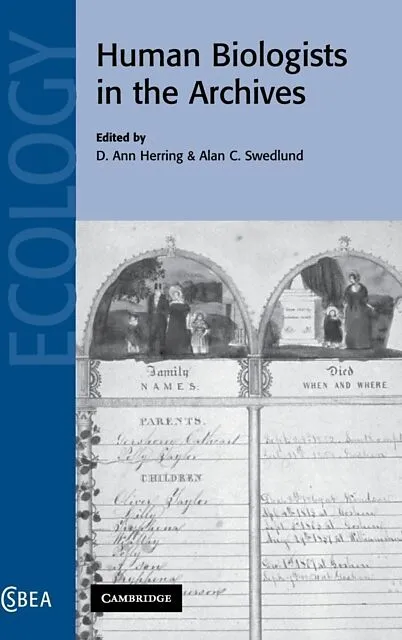
Human Biologists in the Archives
Beschreibung
Informationen zum Autor D. Ann Herring is Associate Professor of Anthropology at McMaster University, Ontario. Alan C. Swedlund is Professor of Anthropology at the University of Massachusetts, Amherst. Klappentext This book describes how archival data inform a...Format auswählen
- Fester EinbandCHF 255.20

Wird oft zusammen gekauft
Andere Kunden kauften auch
Beschreibung
Informationen zum Autor D. Ann Herring is Associate Professor of Anthropology at McMaster University, Ontario. Alan C. Swedlund is Professor of Anthropology at the University of Massachusetts, Amherst. Klappentext This book describes how archival data inform anthropological questions about human biology and health. The authors present a diverse array of human biological evidence from a variety of sources including the archaeological record! medical collections! church records! contemporary health and growth data! and genetic information from the descendants of historical populations. The contributions demonstrate how the analysis of historical documents expands the horizons of research in human biology! extends the longitudinal analysis of microevolutionary and social processes into the present! and enhances the understanding of the human condition. Zusammenfassung In this book! the 'field' is not an exotic locale but the sometimes dusty back rooms of libraries! archives and museums. These largely untapped resources however reveal how the study of human biology through historical documents can expand the horizons of anthropological research. Inhaltsverzeichnis Foreword S. Silverman and M. A. Little; 1. Human biology in the archives A. Swedlund and D. A. Herring; 2. The use of archives in the study of microevolution: changing demography and epidemiology of Esxazú, Costa Rica L. Madrigal; 3. Anthropometric data and population history J. H. Relethford; 4. For everything there is a season: Chumash Indian births, marriages and deaths at the Alta California missions P. L. Walker and J. R. Johnson; 5. Children of the poor: infant mortality in the Erie County Almshouse during the mid-nineteenth century R. L. Higgins; 6. Worked to the bone: the biomechanical consequences of 'labour therapy' at a nineteenth century asylum S. Phillips; 7. Monitored growth: anthropometrics and health history records at a private New England middle school, 1935-60 L. Leidy Sievert; 8. Scarlet Fever epidemics of the nineteenth century; a case of evolved pathogenic virulence? A. Swedlund and A. Donta; 9. The ecology of a health crisis: Gibraltar and the 1965 cholera epidemic L. A. Sawchuck and S. D. A. Burke; 10. War and population composition in Åland, Finland J. H. Mielke; 11. Infectious diseases in the historical archives: a modelling approach L. Sattenspiel; 12. Where were the women? A. Grauer; 13. Malnutrition among northern peoples of Canada in the 1940s: an ecological and economic disaster D. A. Herring, S. Abonyi and R. D. Hoppa; 14. Archival research in physical anthropology M. T. Smith; Index....
Autorentext
D. Ann Herring is Associate Professor of Anthropology at McMaster University, Ontario.
Alan C. Swedlund is Professor of Anthropology at the University of Massachusetts, Amherst.
Klappentext
This book describes how archival data inform anthropological questions about human biology and health. The authors present a diverse array of human biological evidence from a variety of sources including the archaeological record, medical collections, church records, contemporary health and growth data, and genetic information from the descendants of historical populations. The contributions demonstrate how the analysis of historical documents expands the horizons of research in human biology, extends the longitudinal analysis of microevolutionary and social processes into the present, and enhances the understanding of the human condition.
Zusammenfassung
In this book, the 'field' is not an exotic locale but the sometimes dusty back rooms of libraries, archives and museums. These largely untapped resources however reveal how the study of human biology through historical documents can expand the horizons of anthropological research.
Inhalt
Foreword S. Silverman and M. A. Little; 1. Human biology in the archives A. Swedlund and D. A. Herring; 2. The use of archives in the study of microevolution: changing demography and epidemiology of Esxazú, Costa Rica L. Madrigal; 3. Anthropometric data and population history J. H. Relethford; 4. For everything there is a season: Chumash Indian births, marriages and deaths at the Alta California missions P. L. Walker and J. R. Johnson; 5. Children of the poor: infant mortality in the Erie County Almshouse during the mid-nineteenth century R. L. Higgins; 6. Worked to the bone: the biomechanical consequences of 'labour therapy' at a nineteenth century asylum S. Phillips; 7. Monitored growth: anthropometrics and health history records at a private New England middle school, 1935-60 L. Leidy Sievert; 8. Scarlet Fever epidemics of the nineteenth century; a case of evolved pathogenic virulence? A. Swedlund and A. Donta; 9. The ecology of a health crisis: Gibraltar and the 1965 cholera epidemic L. A. Sawchuck and S. D. A. Burke; 10. War and population composition in Åland, Finland J. H. Mielke; 11. Infectious diseases in the historical archives: a modelling approach L. Sattenspiel; 12. Where were the women? A. Grauer; 13. Malnutrition among northern peoples of Canada in the 1940s: an ecological and economic disaster D. A. Herring, S. Abonyi and R. D. Hoppa; 14. Archival research in physical anthropology M. T. Smith; Index.