
IHR WARENKORB IST AKTUELL LEER.
Haben Sie noch nichts passendes gefunden? Stöbern Sie durch unser komplettes Sortiment.
Oder melden Sie sich an bzw. registrieren Sie sich.
- Kostenlose Lieferung
- Kauf auf Rechnung
- Ex Libris Tiefpreis
- Filiallieferung und 650+ Abholorte
- Rabatt-Bons als Club-Mitglied
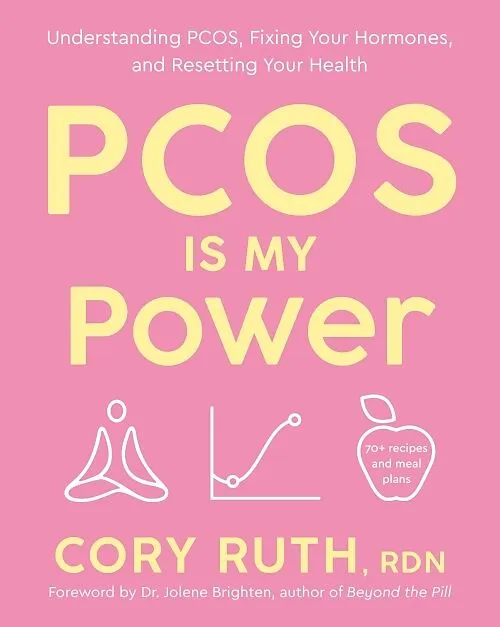
PCOS Is My Power
Beschreibung
The first complete guide to thriving with Polycystic Ovary Syndrome (PCOS), offering a science-backed, holistic path to managing symptoms, plus meal plans and 68 recipes One in ten women experience Polycystic Ovary Syndrome, an endocrine disorder that''s the l...Format auswählen
- Kartonierter Einband (Kt)CHF 22.00

Wird oft zusammen gekauft
Andere Kunden kauften auch
Beschreibung
The first complete guide to thriving with Polycystic Ovary Syndrome (PCOS), offering a science-backed, holistic path to managing symptoms, plus meal plans and 68 recipes One in ten women experience Polycystic Ovary Syndrome, an endocrine disorder that''s the leading cause of infertility, weight gain, and irregular periods. Yet it''s still a poorly understood and underserved condition.;As a registered dietitian who also has PCOS, Cory Ruth is here to tell you that PCOS is a condition that you can thrive with.; The medical community typically prescribes the birth control pill to reduce unwanted symptoms, but to see lasting changes in symptoms, women need to get to the root of the condition. The path to true healing is in making lifestyle shifts, including nutrition, stress management, and exercise. Ruth has helped thousands of fellow women with PCOS regulate their periods, lose weight, have healthy babies, heal their hormones, and live balanced lives with PCOS. And in Carrot Cake Breakfast Cookies , Sriracha Cauliflower Chickpea Sheet Bake , and Peanut Tofu Bowl . Unlike traditional approaches that rely only on medication,
Autorentext
Cory Ruth is a registered dietitian nutritionist and women’s health expert who specializes in PCOS and nutrition therapy for infertility and assisted reproductive technology. She is the founder and principal of The Women’s Dietitian.
Klappentext
The first complete guide to thriving with PCOS (aka PMOS), offering a science-backed, holistic path to managing symptoms, plus 68 recipes and 6 meal plans
Rapid weight gain at puberty, a dodgy period that you’d almost rather not show up, or cystic acne that you were told was just your hormones. Maybe you went on the Pill to “fix” your hormones, only to discover years later that there was more to the acne and irregular periods than you realized.
Sound familiar? You may be among the one in ten women who experience Polyendocrine Metabolic Ovarian Syndrome, an endocrine disorder that’s a leading cause of infertility, weight gain, and irregular periods. As a registered dietitian who also has PMOS, Cory Ruth is here to tell you that it’s a condition that you can thrive with.
Cory has helped thousands of women regulate their periods, lose weight, have healthy babies, and heal their hormones. The medical community typically prescribes the birth control pill to reduce unwanted symptoms, but in order to see lasting changes you’ll need to get to the root of the condition. The path to true healing lies with making shifts in nutrition, stress management, and exercise. In PCOS Is My Power, Cory walks you through the science and stories before offering a treatment protocol that includes lifestyle and supplement recommendations, meal plans, and recipes like Carrot Cake Breakfast Cookies, Sriracha Cauliflower Chickpea Sheet Bake, and Peanut Tofu Bowl.
It’s time for you to balance your hormones, feel more in control, and live your healthiest and happiest life.
Leseprobe
1
The Not-So-Basic Basics
What We All Should Know About PCOS
Case Study
Hello . . . Rapid Weight Gain?
At twenty-five, Jordan was rapidly gaining weight.
Twenty-five pounds over three months, to be exact. To her knowledge, nothing—nada—about Jordan’s lifestyle had changed. Not her diet, exercise, or stress levels. Except for the fact that her boyfriend of a few months abruptly left her after the twentieth pound crept in around her waist. That didn’t feel too good.
The breakup plus the randomness of the weight gain overwhelmed Jordan. Day after day, she struggled to fit into the stretchiest pants she could find on Amazon. Even XXL wasn’t enough. Also, weirdly, her period randomly vanished. Everything was off. And Jordan had no idea why.
Her body, it seemed, had taken on a life of its own, and she felt like a foreigner in her own skin. After a few months, the ballooning of her hips continued. Jordan was slumped, defeated, and swallowed in sadness. Her self-confidence had never been so low.
Finally, totally at a loss, Jordan made an appointment with her primary care doctor (who was slammed with patients that day). When she walked in, her doctor just glanced at her chart. When it was finally time for Jordan to ask some questions, she stuttered, “But what could cause this?”
Her doctor didn’t look up. “Just give up carbs and eat veggies and fish for dinner. You’ll be fine. There’s nothing really wrong with you.”
Then, Jordan’s doctor promptly scooted her out the door, and that was that. She got an iced coffee with caramel to cheer herself up and then, at the coffee shop, Jordan started to scroll Instagram.
A reel popped up. It was from a registered PCOS dietitian making a dessert recipe: a cinnamon-roasted peach with Greek yogurt. Then, the dietitian started talking about a condition Jordan had never heard of before–a hormonal condition called PCOS.
Huh? Jordan said to herself. WTF is that?
This Instagram lady started to explain what PCOS was and that some of the symptoms could include rapid weight gain and an unpredictable period.
What? Now that got Jordan’s attention. The more Jordan thought about it, her period had been missing for, like, at least four months (and she for sure wasn’t pregnant). And it had been missing since this whole weight gain thing started.
A little idea ballooned in Jordan’s head. Maybe, just maybe, she had PCOS, whatever that was. She clicked Follow for the dietitian’s page. After scrolling through recipes, workouts, and information about PCOS—like which medical labs someone should have to be diagnosed properly—a strange and awful thought popped up: Was she sick?
Racked with fear and guilt that she somehow gave herself PCOS and her body was just irreparably broken, Jordan booked another doctor’s appointment. This time, she brought her phone and showed her doctor the medical lab Instagram reel. At the appointment, Jordan requested those labs. This time, the doctor agreed and ordered a full hormone test and a pelvic ultrasound.
The ultrasound was fast, and it revealed something Jordan had never seen before: a string of pearl-like cysts on her ovaries (a telltale sign of PCOS).
Sh*t.
Then, a week later, the rest of the results were in. The doctor called Jordan and explained she had a high androgen count. This hormonal abnormality, paired with the string of pearls on her ovaries, qualified Jordan for PCOS through the Rotterdam criteria.
(The Rotterdam criteria are the three pieces of evidence the medical community requires for a diagnosis of PCOS. The three Rotterdam criteria are: (1) missing or irregular periods, (2) pearl-like cysts on your ovaries, and (3) high androgens, aka male sex hormones, or the physical signs of high androgens like acne or facial hair. This is important if you want to receive a clinical diagnosis for this condition.)
“Now what?” Jordan whispered to her doctor on the phone, fear sinking in.
The doctor replied, “Just quit sugar, try to lose some weight, and I’ll give you a prescription for the Pill. That will regulate your period. Come back when you’re interested in conceiving, because that might be nearly impossible. Have a good day!”
And he hung up.
Jordan was stunned. She didn’t have a clue what to do next and wasn’t particularly interested in birth control. She grabbed her phone and immediately started scrolling through that dietitian’s Instagram for more information. (That page she’s on? That’s me: Cory Ruth, your PCOS dietitian.)
Jordan binged my content for two weeks before deciding enough was enough. She hired me to be…