
IHR WARENKORB IST AKTUELL LEER.
Haben Sie noch nichts passendes gefunden? Stöbern Sie durch unser komplettes Sortiment.
Oder melden Sie sich an bzw. registrieren Sie sich.
- Kostenlose Lieferung
- Kauf auf Rechnung
- Ex Libris Tiefpreis
- Filiallieferung und 650+ Abholorte
- Rabatt-Bons als Club-Mitglied
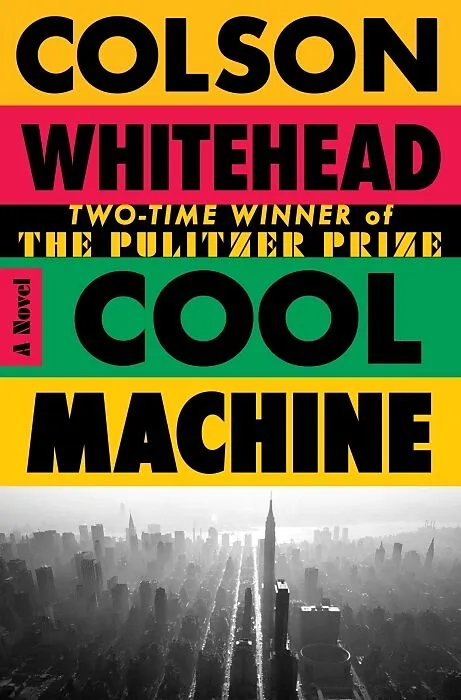
Cool Machine
Beschreibung
From #1 1981. New York City is beginning to emerge from financial ruin and;decline, energized by rampant real estate development and a Wall;Street unchained by Reagan-era predatory capitalism.;Up in Harlem, successful business owner/master fence Ray Carney has...Format auswählen
- Kartonierter EinbandCHF 23.50
- Fester EinbandCHF 33.20
- TaschenbuchCHF 35.90

Wird oft zusammen gekauft
Andere Kunden kauften auch
Beschreibung
From #1 1981. New York City is beginning to emerge from financial ruin and;decline, energized by rampant real estate development and a Wall;Street unchained by Reagan-era predatory capitalism.;Up in Harlem, successful business owner/master fence Ray Carney has just been named Sterling Furniture’s Dealer of the Month. When the banks won’t give his beloved wife Elizabeth a loan for her new travel agency, however, Carney gambles on one last heist, and finds himself entangled with a legendary criminal mastermind. 1983. To some, Carney’s friend and partner in crime Pepper is a stone-cold sociopath. To others, a top thief with questionable people skills. Either way, he’s feeling his;age in his troubled gut and his aching bones. When he takes on a bodyguard gig as a favor to Elizabeth, he’s plunged into the alien territory of the East Village art and club scene. Luckily for him, whether you’re uptown or down, everyone speaks the same language of violence--Pepper is a native speaker. 1986. Carney has always been haunted by his inability to save his cousin Freddie. Now, twenty years after Freddie’s death, he has a chance to rescue Freddie’s son from the violent forces of the city. But coming out of retirement and teaming up with Pepper again will mean risking the safety and security he’s spent decades building for his family, with only one shot to get it right. With his usual pitch-perfect prose Whitehead paints a portrait of a city in transition,;where shimmering skyscrapers rise to the heavens as displaced people huddle in;abandoned tunnels below. In a dazzling display of;protean imagination, <Cool Machine< roves all over the city, from Windows on the World to the Meadowlands, to show;that in New York, and in the lives of Whitehead’s vivid characters, it’s what’s below the surface;that reveals the truth....
Autorentext
COLSON WHITEHEAD is the #1 New York Times bestselling author of twelve works of fiction and nonfiction, and is a two-time winner of the Pulitzer Prize, for The Nickel Boys and The Underground Railroad, which also won the National Book Award. A recipient of MacArthur and Guggenheim fellowships, he lives in New York City.
Klappentext
NEW YORK TIMES BESTSELLER • From #1 New York Times bestselling author and two-time Pulitzer winner Colson Whitehead, an exuberantly entertaining novel that brings to life 1980s New York in the magnificent final volume of his Harlem Trilogy
New York City is beginning to emerge from financial ruin and decline, energized by rampant real estate development and a Wall Street unchained by Reagan-era predatory capitalism. Up in Harlem, successful business owner/master fence Ray Carney has just been named Sterling Furniture’s Dealer of the Month. When the banks won’t give his beloved wife Elizabeth a loan for her new travel agency, however, Carney gambles on one last heist, and finds himself entangled with a legendary criminal mastermind.
To some, Carney’s friend and partner in crime, Pepper, is a stone-cold sociopath. To others, a top thief with questionable people skills. Either way, he’s feeling his age in his troubled gut and his aching bones. When he takes on a bodyguard gig as a favor to Elizabeth, he’s plunged into the alien territory of the East Village art and club scene. Luckily for him, whether you’re uptown or down, everyone speaks the same language of violence—Pepper is a native speaker.
Carney has always been haunted by his inability to save his cousin Freddie. Now, twenty years after Freddie’s death, he has a chance to rescue Freddie’s son from the violent forces of the city. But coming out of retirement and teaming up with Pepper again will mean risking the safety and security he’s spent decades building for his family, with only one shot to get it right.
With his usual pitch-perfect prose, Whitehead paints a portrait of a city in transition, where shimmering skyscrapers rise to the heavens as displaced people huddle in abandoned tunnels below. In a dazzling display of protean imagination, Cool Machine roves all over the city, from Windows on the World to the Meadowlands, to show that in New York, and in the lives of Whitehead’s vivid characters, it’s what’s below the surface that reveals the truth.
Leseprobe
ONE
In all of Ray Carney’s years as a fence—he had been a reluctant fence and a ruthless fence, at times imperiled by his choices and at others the embodiment of crooked intelligence—there was only one occasion when he participated in the theft itself, and that was in the summer of 1981 when Uncle Rich came back to town. That bad-news time.
The city that year was true to its personality, as malformed across the centuries—a monstrous entity powered by innate miseries, operated by brute will, and held together by pluck, fury, and rebar. It had been flat broke, and now clambered from the crater of debt one mucky handhold at a time. Crime in its ingenuity devised new permutations daily, making every citizen a victim or a witness. New arrivals poured in hourly, as if there were room, multiplying the local varieties of sadness and perseverance, and outnumbering those who had scurried to the suburbs or fled their last humiliation. It was dirty, and sick, and plainspoken in its threats. “How am I doin’?” the mayor asked on his rounds, barking like one of the mangy seals installed at the decrepit and neglected Central Park Zoo (a real dump). It was his trademark. Everybody needs a gimmick: “How am I doin’?” The same as everyone else: tired, banged-up, but staggering forth somehow.
As for Ray Carney, he was a son of his city, enduring his ration of misfortunes and managing to engineer a few reversals. The day the Uncle Rich mess came to a head, Tuesday the 16th of June, was already out of the ordinary in that Carney had a notable appointment—an interview with Sterling Quality, the monthly magazine of the Sterling Furniture Co. Carney had sold their products since he first opened his doors, to budget-conscious Harlemites of contemporary sensibility and taste, to bright-eyed couples who strained cheerfully under the monthly payments, to geezers who set themselves adrift in living rooms on new recliners. Now the company had chosen him as Northeast Regional Dealer of the Month (August).
Carney jumped up and almost knocked over his coffee when he got the call. Across a lifetime, a man cultivates a number of secret wishes that he dare not share with the world, precious things too delicate to exist outside the safe pastures of his mind. To see his name flow and curl in the dignified typeface of the Sterling Furniture house magazine—it was a dream he’d kept close for decades. He and Elizabeth celebrated with a dinner at this French joint off Lex, where too-tiny portions coiled on the big plates in insolent triumph.
Sterling saluted five dealers a month, from the Northeast, Southeast, Midwest, Northwest, and Southwest, according to sales numbers, length of service as a Certified Dealer, and overall fidelity to the other, undisclosed attributes that gave the magazine its name. Each month Sterling Quality featured one of those five; Dealer of the Year, in turn, was drawn from that pool of twelve subjects. Carney didn’t have any illusions about being DOY, but was pretty sure he was the first Afro American Dealer of the Month, except maybe for Lou Edminson (March 1973), who was most likely passing, what with that wavy hair of his, criminy. Carney knew something about maintaining a false front and appreciated the complexities.
Carney’s introductory conversati…