
IHR WARENKORB IST AKTUELL LEER.
Haben Sie noch nichts passendes gefunden? Stöbern Sie durch unser komplettes Sortiment.
Oder melden Sie sich an bzw. registrieren Sie sich.
- Kostenlose Lieferung
- Kauf auf Rechnung
- Ex Libris Tiefpreis
- Filiallieferung und 650+ Abholorte
- Rabatt-Bons als Club-Mitglied
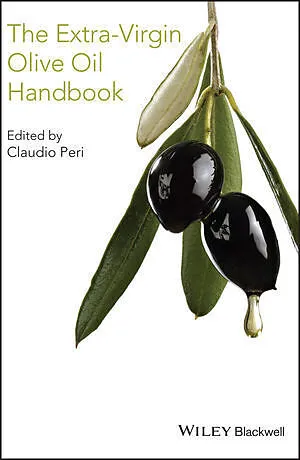
The Extra-Virgin Olive Oil Handbook
Beschreibung
According to European legislation, extra virgin is the top grade of olive oils. It has a superior level of health properties and flavour compared to virgin and refined olive oils. Mediterranean countries still produce more than 85% of olive oil globally, but t...Format auswählen
- Fester EinbandCHF 243.35

Wird oft zusammen gekauft
Andere Kunden kauften auch
Beschreibung
According to European legislation, extra virgin is the top grade of olive oils. It has a superior level of health properties and flavour compared to virgin and refined olive oils. Mediterranean countries still produce more than 85% of olive oil globally, but the constant increase of demand for extra virgin olive oil has led to new cultivation and production in other areas of the world, including California, Australia, China, South Africa and South America. At the same time, olive oil's sensory properties and health benefits are increasingly attracting the attention and interest of nutritionists, food processors, manufacturers and food services. Progress and innovation in olive cultivation, harvesting and milling technologies as well as in oil handling, storage and selling conditions make it possible to achieve even higher quality levels than those stipulated for extra virgin oils. As a consequence, a new segment - excellent extra virgin olive oils - is increasingly attracting the attention of the market and earning consumers' preference.
The Extra-Virgin Olive Oil Handbook provides a complete account of olive oil's composition, health properties, quality, and the legal standards surrounding its production. The book is divided into convenient sections focusing on extra virgin olive oil as a product, the process by which it is made, and the process control system through which its quality is assured. An appendix presents a series of tables and graphs with useful data, including conversion factors, and the chemical and physical characteristics of olive oil.
This book is aimed at people involved in the industrial production as well as in the marketing and use of extra virgin olive oil who are looking for practical information, which avoids overly academic language, but which is still scientifically and technically sound. The main purpose of the handbook is to guide operators involved in the extra virgin olive oil chain in making the most appropriate decisions about product quality and operating conditions in the production and distribution processes. To these groups, the most important questions are practical ones of why, how, how often, how much will it cost, and so on. The Extra-Virgin Olive Oil Handbook will provide the right answers to these key practical considerations, in a simple, clear yet precise and up-to-date way.
Autorentext
About the Editor Claudio Peri is Professor Emeritus in Food Science and Technology at the University of Milan, Italy, and President of the Centre for Quality Studies of the Academy of Georgofili, Florence, Italy.
Klappentext
The Extra-Virgin Olive Oil Handbook Edited by Claudio Peri According to European legislation, extra-virgin is the top grade of olive oils. It has superior health properties and flavour compared to virgin and refined olive oils. Mediterranean countries still produce more than 85% of the world's olive oil, but the constant increase of demand for extra-virgin olive oil has led to new cultivation and production in other areas of the world, including California, Australia, China, South Africa and South America. At the same time, olive oil's sensory properties and health benefits are increasingly attracting the attention and interest of nutritionists, food processors, manufacturers and food services. Progress and innovation in olive cultivation, harvesting and milling technologies as well as in oil handling, storage and selling conditions make it possible to achieve even higher quality levels than those stipulated for extra-virgin oils. As a consequence, a new segment ? excellent extra-virgin olive oils ? is increasingly attracting the attention of the market and earning consumers' preference. The Extra-Virgin Olive Oil Handbook provides a complete account of olive oil's composition, health properties, quality, and the legal standards surrounding its production. The book is divided into convenientm sections focusing on extra-virgin olive oil as a product, the process by which it is made and the process control system through which its quality is assured. An appendix presents a series of tables and graphs with useful data, including conversion factors, and the chemical and physical characteristics of olive oil. This book is aimed at people involved in the industrial production as well as in the marketing and use of extra-virgin olive oil who are looking for practical information that avoids overly academic language but which is still scientifically and technically sound. The main purpose of the handbook is to guide operators involved in the extra-virgin olive oil chain in making the most appropriate decisions about product quality and operating conditions in the production and distribution processes. To these groups, the most important questions are practical ones of why, how, how often, how much will it cost, and so on. The Extra-Virgin Olive Oil Handbook will provide the right answers to these key practical considerations in a simple, clear yet precise and up-to-date way.
Inhalt
List of Contributors xi
Acknowledgements xiii
Introduction 1
Part I The product 3
1 The extra-virgin olive oil chain 5
Claudio Peri
1.1 The legal classification and denomination of olive oils 5
1.2 The subject of this handbook 7
1.3 The extra-virgin olive oil chain 7
1.4 Yield and quality 8
Reference 10
**2 Virgin olive oil: definition and standards 11
**Manuela Mariotti
2.1 The legal definition of virgin olive oil 11
2.2 Quality standards of virgin olive oil 12
2.3 Authenticity standards of virgin olive oil 19
Reference 19
**3 The composition and nutritional properties of extra-virgin olive oil 21
**Manuela Mariotti and Claudio Peri
3.1 Triglycerides and fatty acids 21
3.2 The nutritional role of olive oil triglycerides and fatty acids 26
3.3 Minor components and antioxidants in extra-virgin olive oil 28
3.4 The colour and odour components of extra-virgin olive oil 31
3.5 Conclusion 32
References 33
**4 The sensory quality of extra-virgin olive oil 35
**Mario Bertuccioli and Erminio Monteleone
4.1 Introduction 35
4.2 The official evaluation of defects and positive sensory attributes 36
4.3 The sensory profile 41
4.4 Sensory performance of extra-virgin olive oil-food pairing 49
Annex 4.1: The method for evaluating extra-virgin olive oil sensory profiles 53
References 56
**5 Olive tree cultivars 59
**Luana Ilarioni and Primo Proietti
5.1 Introduction 59
5.2 Cultivars 59
5.3 The cultivar's relationship to productivity 60
5.4 The cultivar's relationship to oil quality 64
5.5 Common-sense recommendations 65
References 67
**6 The role of oxygen and water in the extra-virgin olive oil process 69
**Bruno Zanoni
6.1 The conflicting roles of oxygen 69
6.2 The role of water in the transformation of phenolic compounds 71
References 74
Further reading 74
**7 Extra-virgin olive oil contaminants 75
**Cristina Alamprese
7.1 Introduction 75
7.2 Contaminants of virgin olive oil 78
References 84
Part II The process 87
**8 Olive harvesting 89
**Luigi Nasini and Primo Proietti
8.1 Introduction 89
8.2 Olive ripening 90
8.3 Harvesting systems 91
Annex 8.1: Methods for olive maturity assessment 101
References 105
**9 Olive handling, storage and transportation 107
**Primo Proietti
9.1 The autocatalytic nature of olives and oil degradation 107
9.2 Avoid mechanical damage to the olives 107
9.3 Control the time-temperature relationship 109
9.4 Management of the harvesting-milling link 112
References 112
**10 Olive cleaning 113
**Claudio Peri
10.1 Introduction 113
10.2 The separation section 113
10.3 The washing section 114
10.4 Control points 115
**11 Olive milling and pitting 117
**Alessandro Leone
11.1 Introduction 117
11.2 Milling machines 119
11.3 Pitting machines 124
References 126
**…