
IHR WARENKORB IST AKTUELL LEER.
Haben Sie noch nichts passendes gefunden? Stöbern Sie durch unser komplettes Sortiment.
Oder melden Sie sich an bzw. registrieren Sie sich.
- Kostenlose Lieferung
- Kauf auf Rechnung
- Ex Libris Tiefpreis
- Filiallieferung und 650+ Abholorte
- Rabatt-Bons als Club-Mitglied
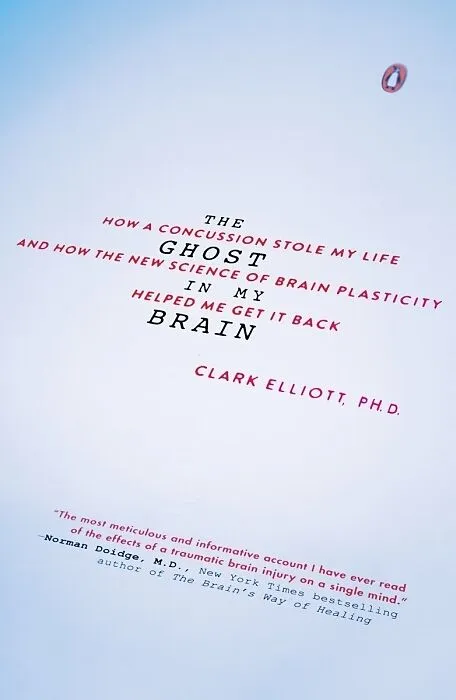
The Ghost in My Brain
Beschreibung
Zusatztext 90859430 Informationen zum Autor Clark Elliott , PhD, is an associate professor of artificial intelligence at DePaul University. He holds three teaching certificates for music, the B.M., M.M. (music), and M.S. (computer science) degrees, and a PhD f...Format auswählen
- BroschiertCHF 27.90
- E-Book (epub)CHF 10.90

Wird oft zusammen gekauft
Andere Kunden kauften auch
Beschreibung
Zusatztext 90859430 Informationen zum Autor Clark Elliott , PhD, is an associate professor of artificial intelligence at DePaul University. He holds three teaching certificates for music, the B.M., M.M. (music), and M.S. (computer science) degrees, and a PhD from Northwestern's Institute for the Learning Sciences with an emphasis on artificial intelligence. He lives in Evanston, Illinois. Klappentext The dramatic story of one man's recovery offers new hope to those suffering from concussions and other brain traumas In 1999, Clark Elliott suffered a concussion when his car was rear-ended. Overnight his life changed from that of a rising professor with a research career in artificial intelligence to a humbled man struggling to get through a single day. At times he couldn't walk across a room, or even name his five children. Doctors told him he would never fully recover. After eight years, the cognitive demands of his job, and of being a single parent, finally became more than he could manage. As a result of one final effort to recover, he crossed paths with two brilliant Chicago-area research-clinicians-one an optometrist emphasizing neurodevelopmental techniques, the other a cognitive psychologist-working on the leading edge of brain plasticity. Within weeks the ghost of who he had been started to re-emerge. Remarkably, Elliott kept detailed notes throughout his experience, from the moment of impact to the final stages of his recovery, astounding documentation that is the basis of this fascinating book. The Ghost in My Brain gives hope to the millions who suffer from head injuries each year, and provides a unique and informative window into the world's most complex computational device: the human brain. FOREWORD Clark Elliott was a mystery to me when we first met. Observing him through my glass front door, I saw that it took him two minutes just to find the doorknob with his hand. When I gave him the simplest of my assessment testscopying a geometric line drawinghis body went into bizarre contortions as he struggled to complete it. It hurt me to watch this brilliant man put so much effort into such a trivial task. In my decades-long practice in clinically applied neuroscience (CAN), this case was striking. During the two-hour evaluation session, I kept asking myself, What could have happened in the car accident eight years ago that all of these top medical doctors have missed? In thinking over my plan for rewiring his brain, I realized that most of Clark's cognitive and motor behaviors were likely tied to stress on his visual systems, and I wanted him to work in parallel with my highly esteemed colleague the optometrist Deborah Zelinsky, whom he went to see the following week. Clark was an ideal client. He understood the complexity of the brain and the relationship between sensory input and behavior. And he was compliant, faithfully completing the rigorous cognitive exercises that I created for himthe brain puzzles he was to solve on a daily basis. Most important, he carefully documented his behavioral changes so that I could move him quickly through the exercises that would allow him to regain control of his personal and professional life. Clark's story is remarkable. Through his scrupulously documented recovery, he gives a voice and provides hope to millions of people, referred to as the walking wounded , with mild to moderate traumatic brain injury. The plasticity of the human brain is both its power and its weakness. Although the life-sustaining parts of the human brain are hardwired, the cognitive parts (located in the neocortex) are not. The part of the brain that allows people to think, to plan, to hope, to dream, to understand language and math, and to recognize themselves and others, is highly malleable. This plasticity allows people to change their minds and to control their behavior, but it is also this part ...
“This is a remarkable document, by a remarkable person, the most meticulous and informative account I have ever read of the effects of a traumatic brain injury on a single mind. It should be mined for years to come by all who care about the subject, and is filled with almost Proustian detail about how the brain and mind and heart respond to injury. It would have been just another tragedy, but instead, it turns into an exciting triumph, because of the tireless, ingenious, and utterly creative work of Clark Elliott and his healers—one inspired by the work of the Israeli pioneer, Reuven Feurstein, the other by a little known tradition of neuro-optometric rehabilitation, which can literally use light shone into the eyes, to treat and rewire the brain.”—**Norman Doidge, M.D., New York Times bestselling author of The Brain That Changes Itself and The Brain’s Way of Healing
“For anyone who has struggled to explain cognition or to understand what it feels like to suffer from traumatic brain injury, Clark Elliott’s fascinating account of his injury, diagnosis and then painstaking determination to heal himself reads like a how-to manual of how our brains work . . . His story gives hope to everyone out there and shines a light on the neuroplastic possibilities that exist for us all in the future."—Bob Woodruff, ABC-TV News correspondent and Lee Woodruff, authors of *In an Instant
***"A remarkably informative discussion of brain injury.”—Newsday
"Elliott brings the words 'traumatic brain injury' to dizzying life."—Chicago Tribune
"Elliott's transformative tale will be invaluable for patients with traumatic brain injury, families, and caregivers."—**Publishers Weekly
**"Up-close view of living with the harrowing effects of a concussion... With concussions from sports injuries making the news, Elliott's easy-to-read account of his experiences is a valuable contribution to a better understanding of the condition."—***Kirkus
***
“It is not often that one can gain some genuine insight into the soul-destroying and debilitating experiential world of victims of Mild Traumatic Brain Injury (MTBI). But through the brilliant descriptions that Clark Elliott provides, we can at least begin to grasp its devastating perceptual, cognitive, and behavioral consequences—its profound disruption of every aspect of normal daily life, of thinking and deciding, feeling and wanting, seeing and hearing, moving, and of our very sense of who we are. This is an extraordinary book about the brain and the mind—a book that is hard to stop reading.”—Andrew Ortony, Ph.D., Professor Emeritus of Psychology, Computer Science, and Education, Northwestern University
“Inspiring . . . Read it, first weep, then smile broadly!”—Daniel Federman, Dean Emeritus, Harvard School of Medical Education, and past president of the American College of Physicians
“A must-read for anyone in emergency medicine, trauma care, neurology, and primary care, as well as concussion sufferers and their families.”—Ted C. Shieh, clinical instructor in emergency medicine, RUSH Medical College; chairman of emergency medicine and immediate care, DuPage Medical Group
“I have diagnosed more than six hundred mild traumatic brain injury (MTBI) cases over thirty years of practice and know firsthand the devastating effects they can have on virtually any family. Dr. Clark Elliott’s comprehensive and creative analysis of this pathological epidemic is uniquely insightful, accurate, scary—and most importantly encouraging—for those who are afflicted with this disorder.”—Michael P. Szatalowicz, D.C., A.O., whiplash trauma specialist
Autorentext
Clark Elliott, PhD, is an associate professor of artificial intelligence at DePaul University. He holds three teaching certificates for music, the B…