Beschreibung
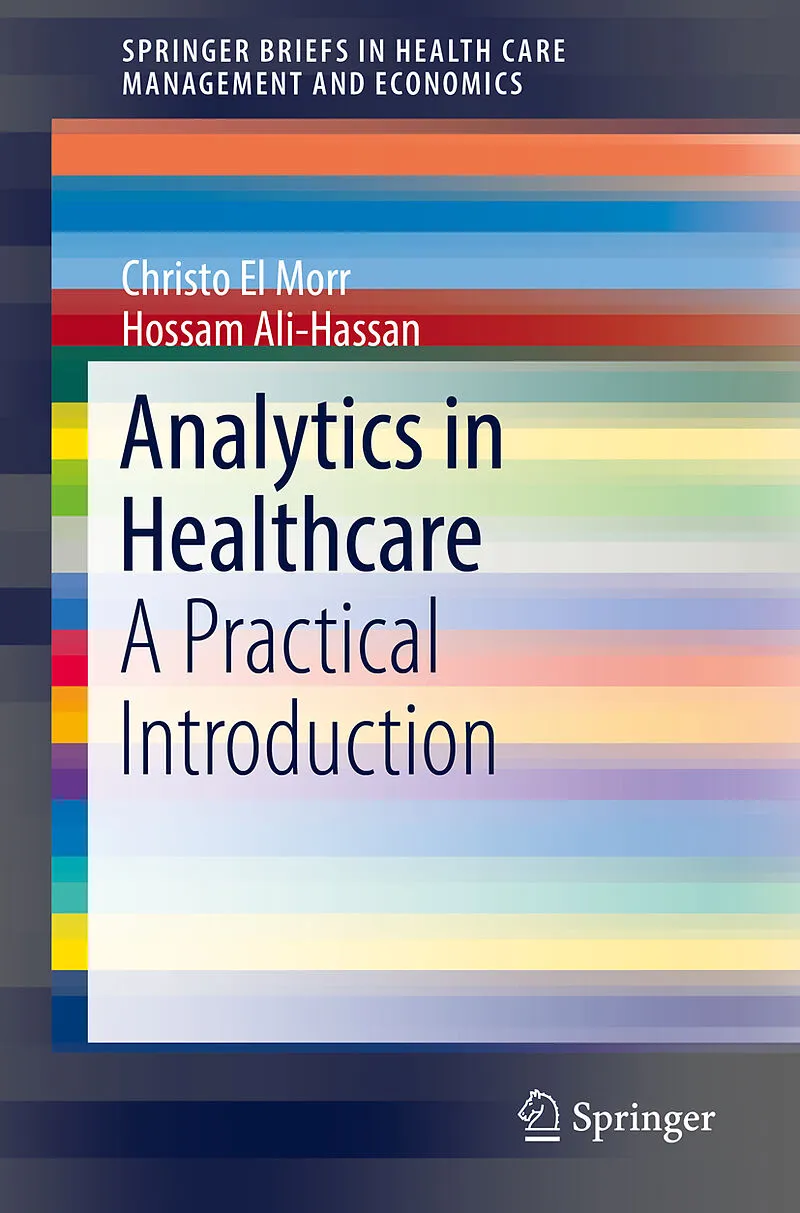
This book offers a practical introduction to healthcare analytics that does not require a background in data science or statistics. It presents the basics of data, analytics and tools and includes multiple examples of their applications in the field. The book ...This book offers a practical introduction to healthcare analytics that does not require a background in data science or statistics. It presents the basics of data, analytics and tools and includes multiple examples of their applications in the field. The book also identifies practical challenges that fuel the need for analytics in healthcare as well as the solutions to address these problems. In the healthcare field, professionals have access to vast amount of data in the form of staff records, electronic patient record, clinical findings, diagnosis, prescription drug, medical imaging procedure, mobile health, resources available, etc. Managing the data and analyzing it to properly understand it and use it to make well-informed decisions can be a challenge for managers and health care professionals. A new generation of applications, sometimes referred to as end-user analytics or self-serve analytics, are specifically designed for non-technical users such as managers and business professionals. The ability to use these increasingly accessible tools with the abundant data requires a basic understanding of the core concepts of data, analytics, and interpretation of outcomes. This book is a resource for such individuals to demystify and learn the basics of data management and analytics for healthcare, while also looking towards future directions in the field.
Offers an introduction to analytics in healthcare for readers from multiple disciplines Covers the basics of data management and analytics with examples and applications in healthcare Matches specific healthcare objectives with specific types of analytics in order to offer solutions
Autorentext
Christo El Morr, PhD is an Associate Professor of Health Informatics at the School of Health Policy and Management, York University, Canada. He is also a Research Scientist at North York General Hospital, Toronto, Canada. His research subscribes to an Equity Informatics perspective; it covers Patient-Centered Virtual Care (e.g., chronic disease management, mental health), Global Health Promotion for equity (e.g., equity health promotion), Human Rights Monitoring (e.g., disability rights, Gender-Based Violence), and Equity AI (e.g., patient readmission, disability advocacy). Manar Jammal, PhD is an Assistant Professor at the School of Information Technology, York University, Canada. Her work focuses on developing cutting-edge data analytics techniques and innovative machine learning models in the areas of networking, 5G systems, IoT, and cloud computing. Her research interests include machine learning, software engineering and modeling, distributed systems, cloud computing, network function virtualization, 5G systems, IoT, data analytics, high availability, and software-defined networks. Hossam Ali-Hassan, PhD is an Associate Professor of Information Systems and Chair of International Studies at York University, Glendon campus, Toronto, Canada. Prior to his academic career, he worked for many years as a network specialist and information technology consultant. He currently teaches a variety of courses at York University such as information systems, business analytics, and supply chain management technology. His research interests include business analytics, data literacy, data visualization, experiential learning, social media, social capital, and job performance. Walid El-Hallak, BSc Hons is a Lead Developer at Ontario Health, Canada. With 16 years of healthcare consulting experience in the public and private sectors, he is specialized in integrating clinical systems using healthcare standards such as HL7, IHE and DICOM. He has implementedcomplex province-wide eHealth projects such as the Diagnostic Imaging Network for Northern and Eastern Ontario. Holding a BSc Hons in computer science specialisation Bioinformatics. He has also developed statistical models for biological motif sequence discovery.
Inhalt
Chapter 1. Healthcare and Business Intelligence.- Chapter 2. Analytics: The Building Blocks.- Chapter 3. Descriptive, Predictive and Prescriptive Analytics.- Chapter 4. Healthcare Analytics Applications.- Chapter 5. Data Visualization.- Chapter 6. Future Directions.- Appendix A: Which Analytics to Choose: A Guideline.