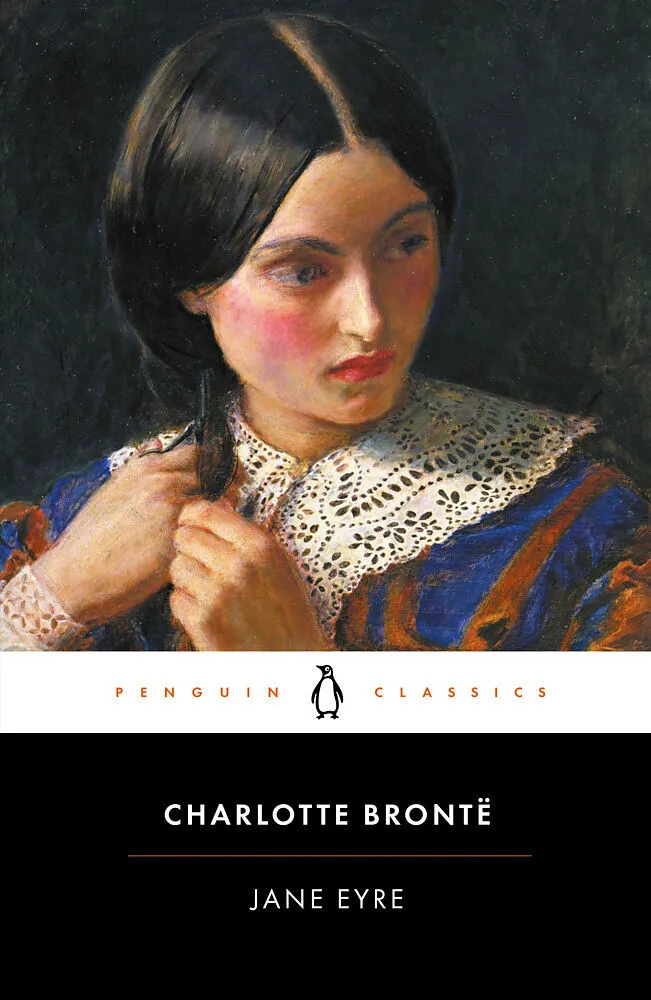
Jane Eyre
Beschreibung
Zusatztext "At the end we are steeped through and through with the genius! the vehemence! the indignation of Charlotte Brontë." --Virginia Woolf Informationen zum Autor Charlotte Brontë was born in Yorkshire in 1816. As a child, she was sent to boarding school...Format auswählen
- Kartonierter EinbandCHF 14.60
- Fester EinbandCHF 29.20
- E-Book (epub)CHF 6.00
- Kartonierter EinbandCHF 24.80

Wird oft zusammen gekauft
Andere Kunden kauften auch
Beschreibung
Zusatztext "At the end we are steeped through and through with the genius! the vehemence! the indignation of Charlotte Brontë." --Virginia Woolf Informationen zum Autor Charlotte Brontë was born in Yorkshire in 1816. As a child, she was sent to boarding school, where two of her sisters died; she was subsequently educated at home with her younger siblings, Emily, Branwell and Anne. As an adult, Charlotte worked as a governess and taught in a school in Brussels. Jane Eyre was first published in 1847 under the pen-name Currer Bell, and was followed by Shirley (1848), Villette (1853) and The Professor (posthumously published in 1857). In 1854 Charlotte married her father's curate, Arthur Bell Nicholls. She died in March of the following year. Klappentext 'The masterwork of a great genius' William Makepeace Thackeray A novel of intense emotional power, heightened atmosphere and fierce intelligence, Jane Eyre dazzled and shocked readers with its passionate depiction of a woman's search for equality and freedom on her own terms. Its heroine Jane endures loneliness and cruelty in the home of her heartless aunt and the cold charity of Lowood School. Her natural independence and spirit prove necessary when she takes a position as governess at Thornfield Hall. But when she finds love with her sardonic employer, Rochester, the discovery of a shameful secret forces her to make a terrible choice. Edited with an Introduction and notes by STEVIE DAVIES Chapter One There was no possibility of taking a walk that day. We had been wandering, indeed, in the leafless shrubbery an hour in the morning; but since dinner (Mrs. Reed, when there was no company, dined early) the cold winter wind had brought with it clouds so sombre, and a rain so penetrating, that further outdoor exercise was now out of the question. I was glad of it; I never liked long walks, especially on chilly afternoons: dreadful to me was the coming home in the raw twilight, with nipped fingers and toes, and a heart saddened by the chidings of Bessie, the nurse, and humbled by the consciousness of my physical inferiority to Eliza, John, and Georgiana Reed. The said Eliza, John, and Georgiana were now clustered round their mamma in the drawing-room: she lay reclined on a sofa by the fireside, and with her darlings about her (for the time neither quarrelling nor crying) looked perfectly happy. Me, she had dispensed from joining the group, saying, "She regretted to be under the necessity of keeping me at a distance; but that until she heard from Bessie, and could discover by her own observation that I was endeavouring in good earnest to acquire a more sociable and childlike disposition, a more attractive and sprightly manner--something lighter, franker, more natural, as it were--she really must exclude me from privileges intended only for contented, happy little children." "What does Bessie say I have done?" I asked. "Jane, I don't like cavillers or questioners; besides, there is something truly forbidding in a child taking up her elders in that manner. Be seated somewhere; and until you can speak pleasantly, remain silent." A small breakfast-room adjoined the drawing-room, I slipped in there. It contained a bookcase; I soon possessed myself of a volume, taking care that it should be one stored with pictures. I mounted into the window-seat: gathering up my feet, I sat crosslegged, like a Turk; and, having drawn the red moreen curtain nearly close, I was shrined in double retirement. Folds of scarlet drapery shut in my view to the right hand; to the left were the clear panes of glass, protecting, but not separating me from the drear November day. At intervals, while turning over the leaves in my book, I studied the aspect of that winter afternoon. Afar, it offered a pale blank of mist and cloud; near, a scene of wet...
"At the end we are steeped through and through with the genius, the vehemence, the indignation of Charlotte Brontë."
--Virginia Woolf
Autorentext
Charlotte Brontë was born in Yorkshire in 1816. As a child, she was sent to boarding school, where two of her sisters died; she was subsequently educated at home with her younger siblings, Emily, Branwell and Anne. As an adult, Charlotte worked as a governess and taught in a school in Brussels. Jane Eyre was first published in 1847 under the pen-name Currer Bell, and was followed by Shirley (1848), Villette (1853) and The Professor (posthumously published in 1857). In 1854 Charlotte married her father's curate, Arthur Bell Nicholls. She died in March of the following year.
Klappentext
'The masterwork of a great genius' William Makepeace Thackeray
A novel of intense emotional power, heightened atmosphere and fierce intelligence, Jane Eyre dazzled and shocked readers with its passionate depiction of a woman's search for equality and freedom on her own terms. Its heroine Jane endures loneliness and cruelty in the home of her heartless aunt and the cold charity of Lowood School. Her natural independence and spirit prove necessary when she takes a position as governess at Thornfield Hall. But when she finds love with her sardonic employer, Rochester, the discovery of a shameful secret forces her to make a terrible choice.
Edited with an Introduction and notes by STEVIE DAVIES
Zusammenfassung
Charlotte Brontë's moving masterpiece – the novel that has been "teaching true strength of character for generations" (The Guardian). Nominated as one of America’s best-loved novels by PBS’s The Great American Read
A novel of intense power and intrigue, Jane Eyre has dazzled generations of readers with its depiction of a woman's quest for freedom. Having grown up an orphan in the home of her cruel aunt and at a harsh charity school, Jane Eyre becomes an independent and spirited survivor-qualities that serve her well as governess at Thornfield Hall. But when she finds love with her sardonic employer, Rochester, the discovery of his terrible secret forces her to make a choice. Should she stay with him whatever the consequences or follow her convictions, even if it means leaving her beloved? This updated Penguin Classics edition features a new introduction by Brontë scholar and award-winning novelist Stevie Davies, as well as comprehensive notes, a chronology, further reading, and an appendix.
For more than seventy years, Penguin has been the leading publisher of classic literature in the English-speaking world. With more than 1,700 titles, Penguin Classics represents a global bookshelf of the best works throughout history and across genres and disciplines. Readers trust the series to provide authoritative texts enhanced by introductions and notes by distinguished scholars and contemporary authors, as well as up-to-date translations by award-winning translators.
Leseprobe
Chapter One
There was no possibility of taking a walk that day. We had been wandering, indeed, in the leafless shrubbery an hour in the morning; but since dinner (Mrs. Reed, when there was no company, dined early) the cold winter wind had brought with it clouds so sombre, and a rain so penetrating, that further outdoor exercise was now out of the question.
I was glad of it; I never liked long walks, especially on chilly afternoons: dreadful to me was the coming home in the raw twilight, with nipped fingers and toes, and a heart saddened by the chidings of Bessie, the nurse, and humbled by the consciousness of my physical inferiority to Eliza, John, and Georgiana Reed.
The said Eliza, John, and Georgiana were now clustered round their mamma in the drawing-room: she lay reclined on a sofa by the fireside, and with her darlings about her (for the time neither quarrelling nor crying) looked perfectly happy. Me, she had dispensed from joining the group, saying, "She regretted to be under the necess…