
IHR WARENKORB IST AKTUELL LEER.
Haben Sie noch nichts passendes gefunden? Stöbern Sie durch unser komplettes Sortiment.
Oder melden Sie sich an bzw. registrieren Sie sich.
- Kostenlose Lieferung
- Kauf auf Rechnung
- Ex Libris Tiefpreis
- Filiallieferung und 650+ Abholorte
- Rabatt-Bons als Club-Mitglied
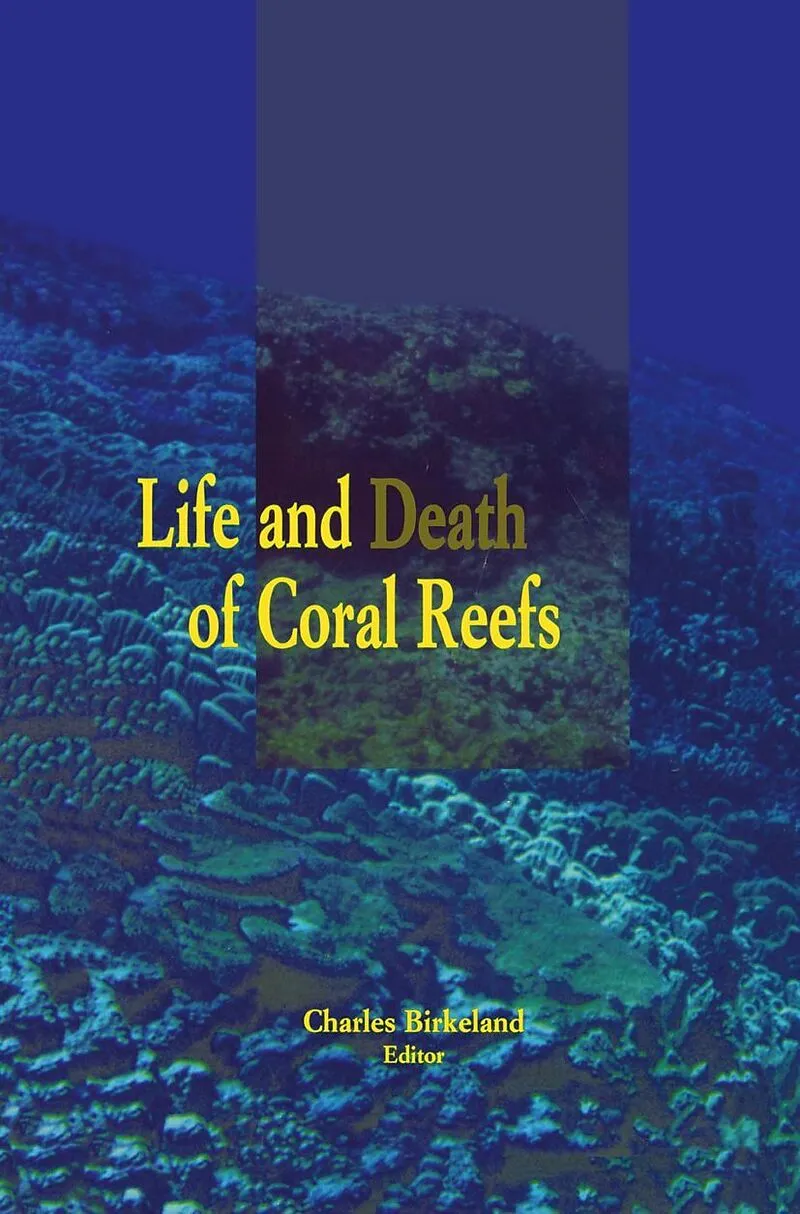
Life and Death of Coral Reefs
Beschreibung
Charles Birkeland Living coral is a thin veneer, measured in millimeters. Yet this thin film of living tissue has shaped the face of the Earth by creating limestone structures sometimes over 1,300 m thick from the surface down to its base on volcanic rock (Ene...Format auswählen
- Kartonierter EinbandCHF 304.00
- Fester EinbandCHF 364.80

Wird oft zusammen gekauft
Andere Kunden kauften auch
Beschreibung
Charles Birkeland Living coral is a thin veneer, measured in millimeters. Yet this thin film of living tissue has shaped the face of the Earth by creating limestone structures sometimes over 1,300 m thick from the surface down to its base on volcanic rock (Enewetak Atoll), or over 2,000 km long (Great Barrier Reef). About half the world's coastlines are in the tropics and about a third of the tropical coastlines are made of coral reef. Archipelagoes of hundreds of atolls such as the Marshalls, the Maldives, the Tuamotus, and most of the Carolines and Kiribati have been fonned by coral. In addition to enlarging high islands (such as the entire northern end of Guam) and extending and protecting coastlines, ancient biogenic reefs have fonned even larger areas on the present continents. Shallow living coral 2 reefs are estimated to presently cover over 600,000 km (Smith, 1978). Coral reefs are dynamic systems, producing limestone at the rate of 400-2,000 tons per hectare per year (Chave et aI. , 1972). The Great Barrier Reef dominates 2 230,000 km and has grown to this size in a geologically brief period of a few million years. Coral reefs influence the chemical balance of the world's oceans. Roughly half the calcium that enters the sea each year around the world, from the north to south poles, is taken up and temporarily bound into coral reefs (Smith, 1978).
Klappentext
Coral reefs have shaped the surface of our planet far more than has any other ecosystem. They are dynamic systems, producing limestone at the rate of 400-2,000 tons per hectare per year, and influencing the chemical balance of the world's oceans. Coral reefs have been around since before the prairies or other ecosystems of flowering plants existed, yet they vanish about a million years before other groups of organisms each time there is a global mass extinction. They return after each catastrophe, however, following a long period of absence. Although coral reefs are the most productive communities in the sea, the fisheries of coral reefs are among the most vulnerable to overexploitation. Despite having the power to create the most massive structures in the world made by living creatures (including man), the thin veneer of living tissue of coral reef is particularly sensitive to natural disturbances and effects of human activities. Coral reefs are the first to go during periods of climate change, but they have always come back. This combination of attributes, creative power and fragility, resilience and sensitivity, makes management of coral-reef systems a challenge to science. Over 70% of the coral reefs in the Caribbean and Asian waters have been degraded, and perhaps a third of the 400 species of corals in Japanese waters are in danger of local extinction unless effective coastal management practices are established. This book presents what is known about factors that shift the balance between accretion and erosion, recruitment and mortality, stony corals and filamentous algae, recovery and degradation--the life and death of coral reefs. Insight into the factors controlling the direction of these processes is essential for appropriate management decisions.
Inhalt
- Introduction.- 1.1 The Value of Reefs.- 1.2 Present Conditions of Coral Reefs.- 1.3 Shift in Controlling Factors.- 2. Reefs and Reef Limestones in Earth History.- 2.1 Biogenic Sediments and Bioherms.- 2.2 Basic Carbonate Chemistry.- 2.3 Limestones and Earth History.- 2.4 The Atmosphere and the Evolution of Life.- 2.5 CO2 and Time Scales.- 2.6 Atmospheric CO2 as an Evolutionary Driving Force.- 2.7 What It Takes to Accumulate CaCO,.- 2.8 History of Biogenic Reefs Through Time.- 2.9 Modern Reefs.- 2.10 Conclusion.- 3. Reefs as Dynamic Systems.- 3.1 Process: The Ultimate Control of Reef Development.- 3.2 Reef Accretion: How It Works.- 3.3 Reefs and Global Warming.- 3.4 Where Do We Go from Here?.- 4. Bioerosion and Coral-Reef Growth: A Dynamic Balance.- 4.1 Bioeroder Diversity.- 4.2 Conditions Favoring Bioerosion.- 4.3 Variety of Effects.- 4.4 Case Studies.- 4.5 Conclusion.- 5. Interactions Between Corals and Their Symbiotic Algae.- 5.1 Description of the Symbiosis.- 5.2 Nutrition and Adaptations to Environmental Factors.- 5.3 Stability of the Symbiosis.- 5.4 Cost-Benefit Analysis of the Symbiosis.- 5.5 Environmental Effects on the Symbiosis.- 5.6 Conclusion.- 6. Diseases of Coral-Reef Organisms.- 6.1 Diseases of Reef Plants.- 6.2 Diseases of Reef Invertebrates.- 6.3 Diseases of Reef Vertebrates.- 6.4 Unanswered Questions.- 6.5 Ecological Implications.- 7. Organic Production and Decomposition.- 7.1 Definitions and Methodologies of Production.- 7.2 Producers and Consumers.- 7.3 Rates of Coral-Reef Metabolism and Their Variation in Space and Time.- 7.4 Controls on Coral-Reef Production.- 7.5 Interactions Between Humans and Coral-Reef Production.- 8. Reproduction and Recruitment in Corals: Critical Links in the Persistence of Reefs.- 8.1 Coral Reproduction.- 8.2 Larval Recruitment.- 8.3 Reproductive and Recruitment Failure of Corals.- 9. Invertebrate Predators and Grazers.- 9.1 Invertebrates Having Minor Effects.- 9.2 Invertebrates Having Major Effects.- 9.3 Disproportionate Effects of Some Invertebrate Species.- 10. Effects of Reef Fishes on Corals and Algae.- 10.1 The Players: Corallivorous and Herbivorous Reef Fishes.- 10.2 Fish Effects on Algae.- 10.3 Fish Effects on Corals.- 10.4 Fish Effects on Invertebrate Corallivores and Herbivores.- 10.5 Ramifications for Reef Management.- 11. Indirect Interactions on Coral Reefs.- 11.1 Definition, Variety, and Examples of Indirect Effects.- 11.2 Relative Importance on Coral Reefs.- 11.3 Some Practical Considerations.- 11.4 Future Directions.- 11.5 Conclusion.- 12. Geographic Differences in Ecological Processes on Coral Reefs.- 12.1 Physical Processes That Bring About Geographic Differences.- 12.2 Geographic Differences in Characteristics of Dominant Species.- 12.3 Regional Differences in Ecological Processes.- 13. Ecosystem Interactions in the Tropical Coastal Seascape.- 13.1 Biological Interactions in the Seascape.- 13.2 Fluxes of Nutrients and Organic Material in the Seascape.- 13.3 Physical Interactions in the Seascape.- 13.4 Reef Management, Global Change, and Comparative Research.- 14. Diversity and Distribution of Reef Organisms.- 14.1 Definitions and Scales.- 14.2 Biota of Reefs.- 14.3 Role of Diversity in Reef Ecosystems.- 14.4 Practical Biodiversity: Identification of Reef Organisms.- 14.5 Distribution of Diversity: Large-Scale Patterns.- 14.6 Distribution of Diversity: History of Regionalization.- 14.7 Distribution of Diversity: Evolutionary Diversification.- 14.8 Effects of Human Activities.- 14.9 Conclusion.- 15. Disturbances to Reefs in Recent Times.- 15.1 Conceptual Framework.- 15.2 Tolerances of Reef Corals.- 15.3 Natural Disturbances on Coral Reefs.- 15.4 Human Disturbances to Coral Reefs.- 15.5 Human Versus Natural Influences on Coral Reefs.- 15.6 Prediction of Responses of Reefs to Climate Change.- 16. Traditional Coral-Reef Fisheries Management.- 16.1 Value of Traditional Knowledge.- 16.2 Putting Management Back at the Village Level.- 16.3 Applying Traditional Knowledge in Modern Settings.- 17. Resource Use: Conflicts and Management Solutions.- 17.1 Sustainable Use.- 17.2 Resource-Use Conflicts.- 17.3 Case Study: Logging Versus Fisheries and Tourism in the Philippines.- 17.4 Marine Parks.- 17.5 Implementation of Sustainable Development.- 17.6 Conclusion.- 18. Implications for Resource Management.- 18.1 Export Fisheries Not Sustained.- 18.2 High Productivity, Low Yield.- 18.3 Reserves for Breeding Stock.- 18.4 Economics of Harvesting Diverse Resources.- 18.5 Village-Based Control.- 18.6 Exemplary Cases: Bermuda and Palau.- 18.7 Nonextractive Commercial Uses of Coral-Reef Resources.- 18.8 Integrative Coastal-Area Management.- 18.9 Conclusion.- References.