
IHR WARENKORB IST AKTUELL LEER.
Haben Sie noch nichts passendes gefunden? Stöbern Sie durch unser komplettes Sortiment.
Oder melden Sie sich an bzw. registrieren Sie sich.
- Kostenlose Lieferung
- Kauf auf Rechnung
- Ex Libris Tiefpreis
- Filiallieferung und 650+ Abholorte
- Rabatt-Bons als Club-Mitglied

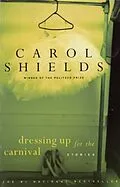
Dressing Up for the Carnival
Beschreibung
From one of Canada's best-loved, award-winning authors comes a surprising treasure trove: Carol Shields distilling her wisdom, elegance, insouciant sense of humour and eroticism into twenty-two delightful stories. The title story sets the stage: a Shakespearea...Format auswählen
- Kartonierter EinbandCHF 16.55

Wird oft zusammen gekauft
Andere Kunden kauften auch
Beschreibung
From one of Canada's best-loved, award-winning authors comes a surprising treasure trove: Carol Shields distilling her wisdom, elegance, insouciant sense of humour and eroticism into twenty-two delightful stories. The title story sets the stage: a Shakespearean prologue in which the narrative flame jumps from character to character, each of them dressed up and putting their best foot forward, conscious of costuming themselves for the daily carnival of life. Playful, graceful, acutely observed and generous of spirit, these stories are Carol Shields at her most accomplished and appealing.
"A radiant gift, a brilliant archive, a book of common prayer for those who appreciate the transcendence of all that is prosaic...this latest clutch of stories is rich with a poetic intensity seldom present in contemporary fiction today. Dressing Up for the Carnival is a book to be savoured, the kind of book a dedicated reader will place gently on the bedside table, doling out one story each night to make the book last longer." —Winnipeg Free Press
"Here's Shields doing what she does so marvellously: taking an ordinary, over-looked object and re-illuminating it, offering us a chance to meditate on ignored corners or fragments of our own lives.... There's much intelligence here and a singular inventiveness enlivened by odd passions and deft humour...dazzling and wickedly funny." —The Globe and Mail
"Dressing up for the Carnival is a taste of something different from Shields. It is a gourmand's delight with each tale centered around one stabilizing theme: life is a carnival.... The tenderness of Shields' narration is her trademark. Her gift of narrowing the telescope and uncoiling the springs of private thoughts — those that blow past in seconds — is her particular genius." —New Brunswick Telegraph
"Shields is an alchemist who can somehow produce gold from the mundane.... Every story in this collection is a small, glittering masterpiece." —National Post
Autorentext
CAROL SHIELDS (1935–2003) is the author of The Stone Diaries, which won the 1995 Pulitzer Prize for fiction, the National Book Critics Circle Award, and Canada's Governor General's Award. Her other novels and short story collections include The Republic of Love, Happenstance, and Swann. Shields’s work has been translated into 33 languages.
Zusammenfassung
A bestselling collection of short stories from the author of The Stone Diaries (winner of the Pulitzer prize) and Larry’s Party (winner of the Orange prize)
All over town people are putting on their costumes; X slips into his wife’s lace-trimmed night gown and waltzes around his bedroom; Tamara is no longer the dull clerk receptionist when she wears that yellow skirt, she evolves into a stunning creature exuding passion and vitality. In ‘Weather’ a couple’s life is thrown into utter chaos when The National Association of Metereorologists go on strike – what will they wear? What will they eat? In ‘Soup du Jour’ a young boy contemplates life, the cracks in the pavement and his mother’s soup-making.
Each story encapsulates the human spirit, its diversities, complexities and absurdities. Shields observes with compassion the carnival that goes on in each of our lives and the realities that we create for ourselves. Carol Shields’ second collection of short stories celebrates the extraordinary details that are found in ordinary, everyday lives.
**
Leseprobe
Chapter One
All over town people are putting on their costumes.
Tamara has flung open her closet door; just to see her standing there is to feel a squeeze of the heart. She loves her clothes. She knows her clothes. Her favorite moment of the day is this moment, standing at the closet door, still a little dizzy from her long night of tumbled sleep, biting her lip, thinking hard, moving the busy hangers along the rod, about to make up her mind.
Yes! The yellow cotton skirt with the big patch pockets and the hand detail around the hem. How fortunate to own such a skirt. And the white blouse. What a blouse! Those sleeves, that neckline with its buttoned flap, the fullness in the yoke that reminds her of the morris dancers she and her boyfriend Bruce saw at the Exhibition last year.
Next she adds her new straw belt; perfect. A string of yellow beads. Earrings of course. Her bone sandals. And bare legs, why not?
She never checks the weather before she dresses; her clothes are the weather, as powerful in their sunniness as the strong, muzzy early morning light pouring into the narrow street by the bus stop, warming the combed crown of her hair and fueling her with imagination. She taps a sandaled foot lightly on the pavement, waiting for the number 4 bus, no longer just Tamara, clerk-receptionist for the Youth Employment Bureau, but a woman in a yellow skirt. A passionate woman dressed in yellow. A Passionate, Vibrant Woman About To Begin Her Day. Her Life.
Roger, aged thirty, employed by the Gas Board, is coming out of a corner grocer's carrying a mango in his left hand. He went in to buy an apple and came out with this. At the cash register he refused a bag, preferring to carry this thing, this object, in his bare hand. The price was $1.29. He's a little surprised at how heavy it is, a tight seamless leather skin enclosing soft pulp, or so he imagines. He has never bought a mango before, never eaten one, doesn't know what a mango tastes like or how it's prepared. Cooked like a squash? Sliced and sugared like a peach? He has no intention of eating it, not now anyway, maybe never. Its weight reminds him of a first-class league ball, but larger, longer, smooth skinned, and ripely green. Mango, mango. An elliptical purse, juice-filled, curved for the palm of the human hand, his hand.
He is a man of medium height, burly, divorced, wearing an open-necked shirt, hurrying back to work after his coffee break. But at this moment he freezes and sees himself freshly: a man carrying a mango in his left hand. Already he's accustomed to it; in fact, it's starting to feel lighter and drier, like a set of castanets which has somehow attached itself to his left arm. Any minute now he'll break out into a cha-cha-cha right here in front of the Gas Board. The shriveled fate he sometimes sees for himself can be postponed if only he puts his mind to it. Who would have thought it of him? Not his ex-wife Lucile, not his co-workers, not his boss, not even himself.
And the Borden sisters are back from their ski week in Happy Valley. They've been back for a month now, in fact, so why are they still wearing those little plastic ski passes on the zipper tabs of their jackets? A good question. I SKIED HAPPY MOUNTAIN these passes say. The Bordens wear them all over town, at the shopping center, in the parking lot. It's spring, the leaves are unfolding on the hedges in front of the post office, but the Borden girls, Karen and Sue, still carry on their bodies, and in their faces too, the fresh wintry cold of the slopes, the thrill of powder snow and stinging sky. (The air up there chimes with echoes, a bromide of blue.) It would be an exaggeration to say the Borden sisters swagger; it would be going too far. They move like young ponies, quivery and thoughtful, with the memory of expended effort and banked curves. They speak to each other in voices that are loud and musical, and their skin, so clear, pink, bright, and healthy, traps the sunshine beneath its surface. With one hand, walking along, they stroke the feathering-out tops of hedges in front of the post office, and with the other they pull and tug on those little plasticized tags—I SKIED HAPPY MOUNTAIN. You might say it's a kind of compulsion, as though they can't help themselves.
And then there's 'Wanda from the bank who has been sen…