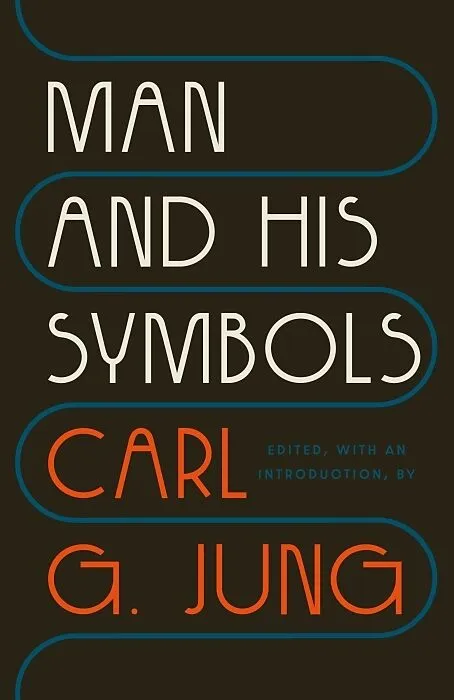
Man and His Symbols
Beschreibung
Informationen zum Autor Carl G. Jung Klappentext Originally published in hardcover in the United States by Dell, in 1968. Leseprobe The importance of dreams Man uses the spoken or written word to express the meaning of what he wants to convey. His language is ...Format auswählen
- Poche format BCHF 22.70

Wird oft zusammen gekauft
Andere Kunden kauften auch
Beschreibung
Informationen zum Autor Carl G. Jung Klappentext Originally published in hardcover in the United States by Dell, in 1968. Leseprobe The importance of dreams Man uses the spoken or written word to express the meaning of what he wants to convey. His language is full of symbols, but he also often employs signs or images that are not strictly descriptive. Some are mere abbreviations or strings of initials, such as UN, UNICEF, or UNESCO; others are familiar trade marks, the names of patent medicines, badges, or insignia. Although these are meaningless in themselves, they have acquired a recognizable meaning through common usage or deliberate intent. Such things are not symbols. They are signs, and they do no more than denote the objects to which they are attached. What we call a symbol is a term, a name, or even a picture that may be familiar in daily life, yet that possesses specific connotations in addition to its conventional and obvious meaning. It implies something vague, unknown, or hidden from us. Many Cretan monuments, for instance, are marked with the design of the double adze. This is an object that we know, but we do not know its symbolic implications. For another example, take the case of the Indian who, after a visit to England, told his friends at home that the English worship animals, because he had found eagles, lions, and oxen in old churches. He was not aware (nor are many Christians) that these animals are symbols of the Evangelists and are derived from the vision of Ezekiel, and that this in turn has an analogy to the Egyptian sun god Horus and his four sons. There are, moreover, such objects as the wheel and the cross that are known all over the world, yet that have a symbolic significance under certain conditions. Precisely what they symbolize is still a matter for controversial speculation. Thus a word or an image is symbolic when it implies something more than its obvious and immediate meaning. It has a wider unconscious aspect that is never precisely defined or fully explained. Nor can one hope to define or explain it. As the mind explores the symbol, it is led to ideas that lie beyond the grasp of reason. The wheel may lead our thoughts toward the concept of a divine sun, but at this point reason must admit its incompetence; man is unable to define a divine being. When, with all our intellectual limitations, we call something divine, we have merely given it a name, which may be based on a creed, but never on factual evidence. Because there are innumerable things beyond the range of human understanding, we constantly use symbolic terms to represent concepts that we cannot define or fully comprehend. This is one reason why all religions employ symbolic language or images. But this conscious use of symbols is only one aspect of a psychological fact of great importance: Man also produces symbols unconsciously and spontaneously, in the form of dreams. It is not easy to grasp this point. But the point must be grasped if we are to know more about the ways in which the human mind works. Man, as we realize if we reflect for a moment, never perceives anything fully or comprehends anything completely. He can see, hear, touch, and taste; but how far he sees, how well he hears, what his touch tells him, and what he tastes depend upon the number and quality of his senses. These limit his perception of the world around him. By using scientific instruments he can partly compensate for the deficiencies of his senses. For example, he can extend the range of his vision by binoculars or of his hearing by electrical amplification. But the most elaborate apparatus cannot do more than bring distant or small objects within range of his eyes, or make faint sounds more audible. No matter what instruments he uses, at some point he reaches the edge of certainty beyond which conscious knowledge cannot pass. There are, moreover, unconscious...
Autorentext
Carl G. Jung
Klappentext
Originally published in hardcover in the United States by Dell, in 1968.
Zusammenfassung
The landmark text about the inner workings of the unconscious mind—from the symbolism that unlocks the meaning of our dreams to their effect on our waking lives and artistic impulses—featuring more than a hundred updated images that break down Carl G. Jung’s revolutionary ideas
“What emerges with great clarity from the book is that Jung has done immense service both to psychology as a science and to our general understanding of man in society.”—The Guardian
“Our psyche is part of nature, and its enigma is limitless.”
Since our inception, humanity has looked to dreams for guidance. But what are they? How can we understand them? And how can we use them to shape our lives?
There is perhaps no one more equipped to answer these questions than the legendary psychologist Carl G. Jung. It is in his life’s work that the unconscious mind comes to be understood as an expansive, rich world just as vital and true a part of the mind as the conscious, and it is in our dreams—those personal, integral expressions of our deepest selves—that it communicates itself to us.
A seminal text written explicitly for the general reader, Man and His Symbols is a guide to understanding our dreams and interrogating the many facets of identity—our egos and our shadows, “the dark side of our natures.” Full of fascinating case studies and examples pulled from philosophy, history, myth, fairy tales, and more, this groundbreaking work—profusely illustrated with hundreds of visual examples—offers invaluable insight into the symbols we dream that demand understanding, why we seek meaning at all, and how these very symbols affect our lives. Armed with the knowledge of the self and our shadow, we may build fuller, more receptive lives.
By illuminating the means to examine our prejudices, interpret psychological meanings, break free of our influences, and recenter our individuality, Man and His Symbols proves to be—decades after its conception—a revelatory, absorbing, and relevant experience.