Beschreibung
This book is about melanomaits biology, immunology, and pathology, as well as the initial use of powerful genomic tools to study its fundamental mole- lar and genetic characteristics. The study of cancer will be profoundly impacted by the Human Genome Project....This book is about melanomaits biology, immunology, and pathology, as well as the initial use of powerful genomic tools to study its fundamental mole- lar and genetic characteristics. The study of cancer will be profoundly impacted by the Human Genome Project. I would like to discuss some of these changes. The first draft of the human genome sequence was announced in June 2000, and we have just scratched the surface of the changes it will engender in medicine. A relevant question is what are the long-term effects of the Human Genome Project for medicine? I would argue that there are three, and each of these three point toward the view that systems biology will dominate biology and medicine of the 21st century. First, the Human Genome Project introduced a new type of s- encediscovery science. Discovery science takes a biological system (e. g. , the genome) and defines all of its elements (e. g. , the sequences of the 24 human ch- mosomes). Thus, it creates a rich infrastructure from which the classical hypo- esis-driven science can be done more effectively. The effective integration of discovery- and hypothesis-driven science is a key for systems approaches to bi- ogy and medicine. Second, the Human Genome Project has provided a periodic table of life.
Includes supplementary material: sn.pub/extras
Klappentext
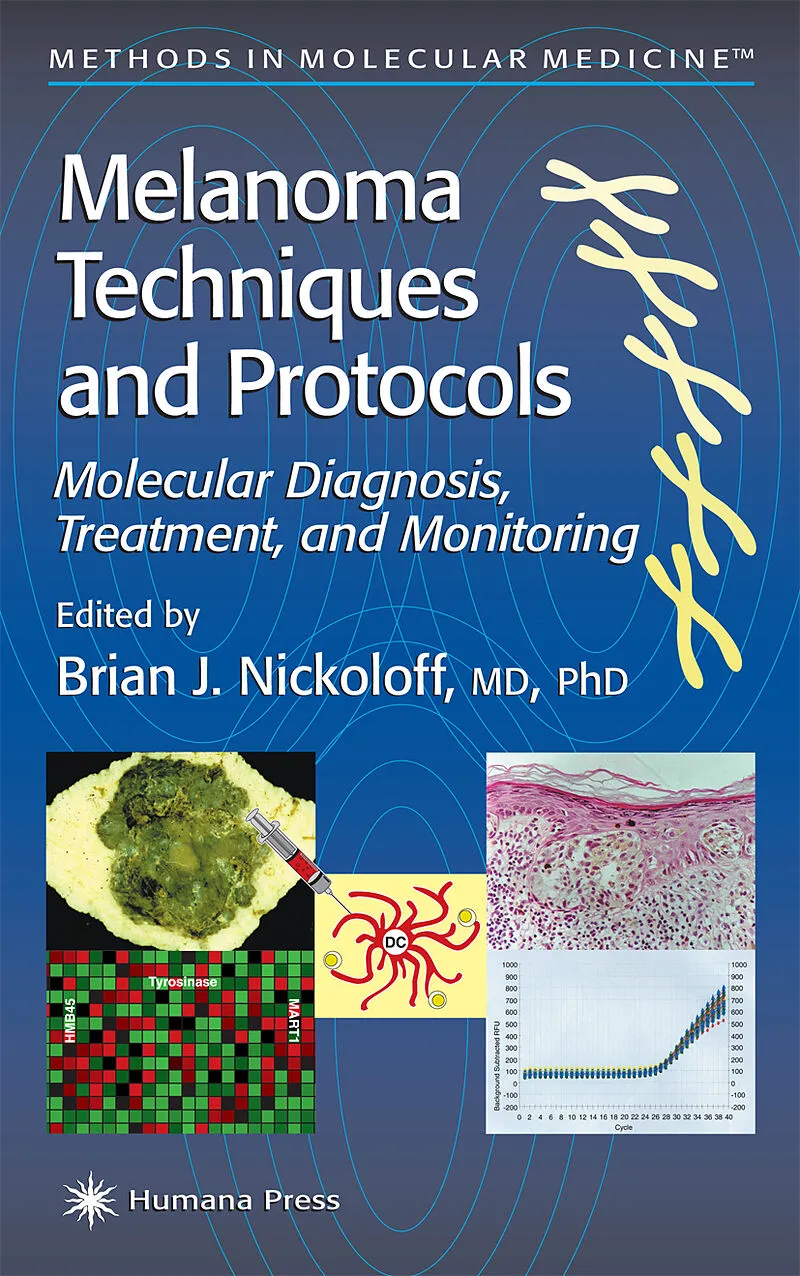
With the completion of the Human Genome Project, it is now possible to decipher the biochemical cascade of events that lead to melanoma, a virulent form of cancer that is currently at epidemic proportions worldwide. In Melanoma Techniques and Protocols: Molecular Diagnosis, Treatment, and Monitoring, a broadly diverse group of researchers and clinicians offer not only reviews of the most important recent advances in melanoma oncology, tumor immunology, and pathology, but also state-of-the-art molecular techniques for probing melanoma's basic biology. These readily reproducible methods can be used to develop diagnostic approaches, therapeutics, and status monitoring of patients suffering both early- and late-stage melanoma. With emphasis on the experimental details critical to success, each method is described in step-by-step fashion by hands-on masters, often those who have developed them in their own laboratories. Notes about potential pitfalls and troubleshooting tips on how to adapt procedures to new experimental systems are also provided.
Comprehensive and highly instructive, Melanoma Techniques and Protocols: Molecular Diagnosis, Treatment, and Monitoring offers clinicians and basic scientists concerned with malignant melanoma both rich new clinical perspectives and the wide ranging experimental protocols essential for achieving more rapid breakthroughs in this near-epidemic disease.
Inhalt
Biology.- The Many Molecular Mysteries of Melanoma.- Isolation of Tumor Suppressor Genes in Melanoma by cDNA Microarray.- Molecular Characterization of Melanoma-Derived Antigens.- Experimental Induction of Human Atypical Melanocytic Lesions and Melanoma in Ultraviolet-Irradiated Human Skin Grafted to Immunodeficient Mice.- Dissection of Immunosuppressive Effects of Ultraviolet Radiation.- Antisense Oligonucleotides as Research Tools.- Diagnosis.- Genetic Testing in Familial Melanoma.- Role of Molecular Biology in Diagnostic Pathology of Melanoma.- Identification of Altered Gene Expression Associated with Pigmentary Lesions by Differential Display Analysis.- Fluorescence In Situ Hybridization as a Tool in Molecular Diagnostics of Melanoma.- Treatment.- Antigen-Pulsed Dendritic Cell Approach to Melanoma.- Gene Therapy in Melanoma.- Use of Gene Gun for Genetic Immunotherapy.- Role of Cytokines in Pathology of Melanoma and Use of Biologic Response Modifiers in Melanoma.- Surgical Techniques for Treatment of Primary Cutaneous Melanoma.- Monitoring.- Utility of Fine-Needle Aspiration Biopsy for Prospective Analysis of Patients Undergoing Therapy for Metastatic Melanoma.- A Molecular Technique Useful in the Detection of Occult Metastases in Patients with Melanoma.- Immunoscope Analysis of T-Lymphocytes Infiltrating Melanocytic Tumors.- T-Cell Receptor Clonotype Mapping Using Denaturing Gradient Gel Electrophoresis.- Methods for Use of Peptide-MHCTetramers in Tumor Immunology.