
IHR WARENKORB IST AKTUELL LEER.
Haben Sie noch nichts passendes gefunden? Stöbern Sie durch unser komplettes Sortiment.
Oder melden Sie sich an bzw. registrieren Sie sich.
- Kostenlose Lieferung
- Kauf auf Rechnung
- Ex Libris Tiefpreis
- Filiallieferung und 650+ Abholorte
- Rabatt-Bons als Club-Mitglied
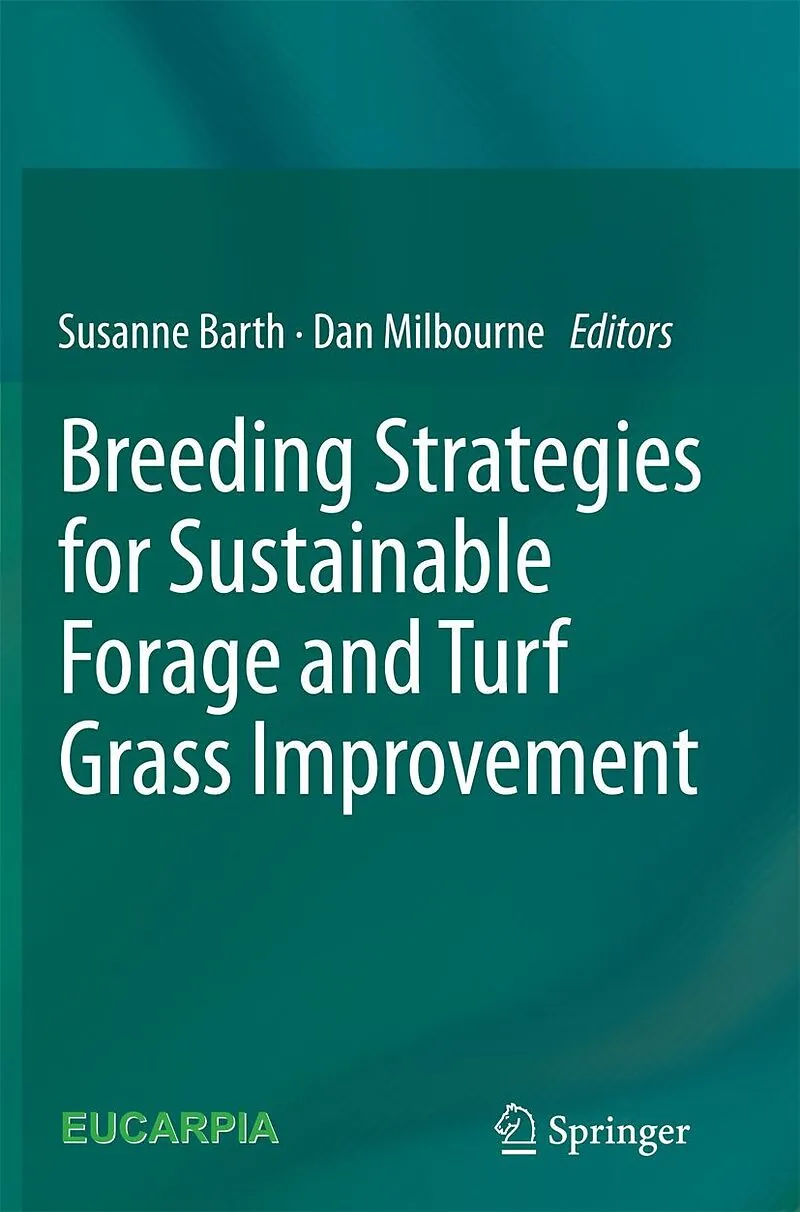
Breeding strategies for sustainable forage and turf grass improvement
Beschreibung
From the 4th 8th of September 2011, the Eucarpia Fodder Crops and Amenity Grasses Section, held its 29th Meeting in the surroundings of Dublin Castle in Ireland. The theme of the meeting was 'Breeding strategies for sustainable forage and turf grass improvemen...Format auswählen
- Kartonierter EinbandCHF 201.60
- Fester EinbandCHF 201.60
- E-Book (pdf)CHF 167.90

Wird oft zusammen gekauft
Andere Kunden kauften auch
Beschreibung
From the 4th 8th of September 2011, the Eucarpia Fodder Crops and Amenity Grasses Section, held its 29th Meeting in the surroundings of Dublin Castle in Ireland. The theme of the meeting was 'Breeding strategies for sustainable forage and turf grass improvement'. Grasslands cover a significant proportion of the land mass of the world, and play a pivotal role in global food production. At the same time we are faced with several challenges that affect the way in which we think about this valuable set of resources. The population of the world is expected to exceed 9 billion by 2050, and increase of about one third relative to today's levels. This population increase will be focused in urban areas, and in what are currently viewed as developing countries, meaning that the buying power of this increased population will be greater shifting the balance of demand from staple crops to high value items such as meat and dairy products. Overall that the world will have to approximately double agricultural output across all categories of food to meet the demands of this larger, urbanised population. This is occurring against a backdrop of equally large challenges in terms of global climate change. Agriculture is already a significant contributor to e.g. greenhouse gas emissions, deforestation and soil erosion. The situation is made more complex by an increased emphasis on biofuels as a solution for our imminent oil shortage, resulting in increased competition between land utilised for food and fuel. In short, agriculture must continue to feed the world, whilst not contributing to damaging it further. It must be sustainable. Plant breeding plays a significant but frequently understated role in meeting the challenges presented by this complex and changing scenario. However, plant breeding and improvement is itself undergoing radical change driven by technology. This book explores how forage and turf breeding is changing and adapting to meet these challenges using the technological advances being experienced in plant breeding as a whole.
Many timely techniques in phenotyping and genotyping of forage and turf crops species are covered Covers issues relating to environmental adaptation of forage and turf crops Covers issues relating to genetic resources in forage and turf Includes supplementary material: sn.pub/extras
Autorentext
Susanne Barth war zuletzt wissenschaftliche Assistentin am Lehrstuhl für historische Leseforschung an der Universität Köln.
Klappentext
Grasslands cover a significant proportion of the land mass of the world, and play a pivotal role in global food production. At the same time we are faced with several challenges that affect the way in which we think about this valuable set of resources. The population of the world is expected to exceed 9 billion by 2050, and increase of about one third relative to today's levels. This population increase will be focused in urban areas, and in what are currently viewed as developing countries, meaning that the buying power of this increased population will be greater shifting the balance of demand from staple crops to high value items such as meat and dairy products. Overall that the world will have to approximately double agricultural output across all categories of food to meet the demands of this larger, urbanised population. This is occurring against a backdrop of equally large challenges in terms of global climate change. Agriculture is already a significant contributor to e.g. greenhouse gas emissions, deforestation and soil erosion. The situation is made more complex by an increased emphasis on biofuels as a solution for our imminent oil shortage, resulting in increased competition between land utilised for food and fuel. In short, agriculture must continue to feed the world, whilst not contributing to damaging it further. It must be sustainable. Plant breeding plays a significant but frequently understated role in meeting the challenges presented by this complex and changing scenario. However, plant breeding and improvement is itself undergoing radical change driven by technology. This book explores how forage and turf breeding is changing and adapting to meet these challenges using the technological advances being experienced in plant breeding as a whole.
Inhalt
Preface.- 1. What global and/or European agriculture will need from grasslands and grassland breeding over the next 10-15 years for a sustainable agriculture.- 2.1. Marker Assisted Selection Made Cheap and Easy.- 2.2. Genome-wide SNP marker development and QTL identification for genomic selection in red clover.- 2.3. Breeding for resistance to bacterial wilt in ryegrass: insights into the genetic control of plant resistance and pathogen virulence.- 2.4. Mechanisms utilized within the IBERS diploid Lolium perenne L. forage grass breeding programmes to improve rumen nitrogen use efficiency.- 2.5. Population genetics of the grass self-incompatibility system Practical implications for grass breeding programmes.- 2.6. Use of molecular marker information in the construction of polycrosses to enhance yield in a Lolium perenne breeding programme.- 2.7. An analysis of chromosome pairing behaviour in newly synthesized alfalfa tetraploids by means of SSR markers.- 2.8. Genome constitution in selected and unselected plants of F 2 -F 4 generations derived from an allotetraploid Festuca pratensis x Lolium perenne hybrid.- 2.9. Estimation of temporal allele frequency changes in ryegrass populations selected for axillary tiller development.- 2.10. Understanding the genetic basis for slow plant-mediated proteolysis in Festulolium hybrids.- 2.11. Chromosomal rearrangements in tetraploid introgressions of Lolium perenne/Festuca pratensis .- 3.1. Establishing Chromosome Genomics in Forage and Turf Grasses.- 3.2. DArTFest DNA Array Applications and Perspectives for Grass Genetics, Genomic s and Breeding.- 3.3. Using DArT markers in Festuca x Lolium breeding.- 3.4. Development of an SNP identification pipeline for highly heterozygous crops.- 3.5. First insights into the mitochondrial genome of perennial ryegrass ( Lolium perenne ).- 3.6. Quantifying early vigour and ground cover using digital image analysis.- 3.7. Expression of the Lolium perenne TERMINAL FLOWER 1 gene in alfalfa and tobacco.- 3.8. Morphological and molecular characterization of branching in red clover ( Trifolium pratense ).- 4.1. Designing grass cultivars for droughts and floods.- 4.2. Variation and heritability of -linolenic acid content and rumen escape protein fraction in fodder grass and clover.- 4.3. Similarities and differences in leaf proteome response to cold acclimation between Festuca pratensis and Lolium perenne .- 4.4. Multi-population QTL detection for flowering time, stem elongation and quality traits in Medicago truncatula .- 4.5. Role of RCT1 gene in anthracnose resistance in alfalfa.- 4.6. The EUCARPIA multi-site rust evaluation results 2010.- 4.7. The main topics of resistance breeding in grasses in the Czeck Republic.- 5.1. Origins of diploid Dactylis from the Canary Islands as determined by DNA sequencing.- 5.2. Introduction and adaptation of Cynodon L. C. Richspecies in Australia.- 5.3. Variation in traits associated with carbon sequestration for a range of common amenity grass species.- 5.4. Suitability of different grass species for phytoremediation of soils polluted with heavy metals.- 5.5. Targeting Lucerne cultivars to saline-soil environments.- 5.6. Comparison of seed mixtures for technical revegetation at high altitude.- 5.7. Genetic diversity for cell wall digestibility in a diverse Lolium perenne collection.- 5.8. Variability among accessions of forage vetch for basic agronomic and morphological traits under agro-ecological conditions of Serbia.- 5.9. Genetic variation of root characteristics and deep root production in perennial ryegrass cultivars contrasting in field persistency.- 5.10. …