Beschreibung
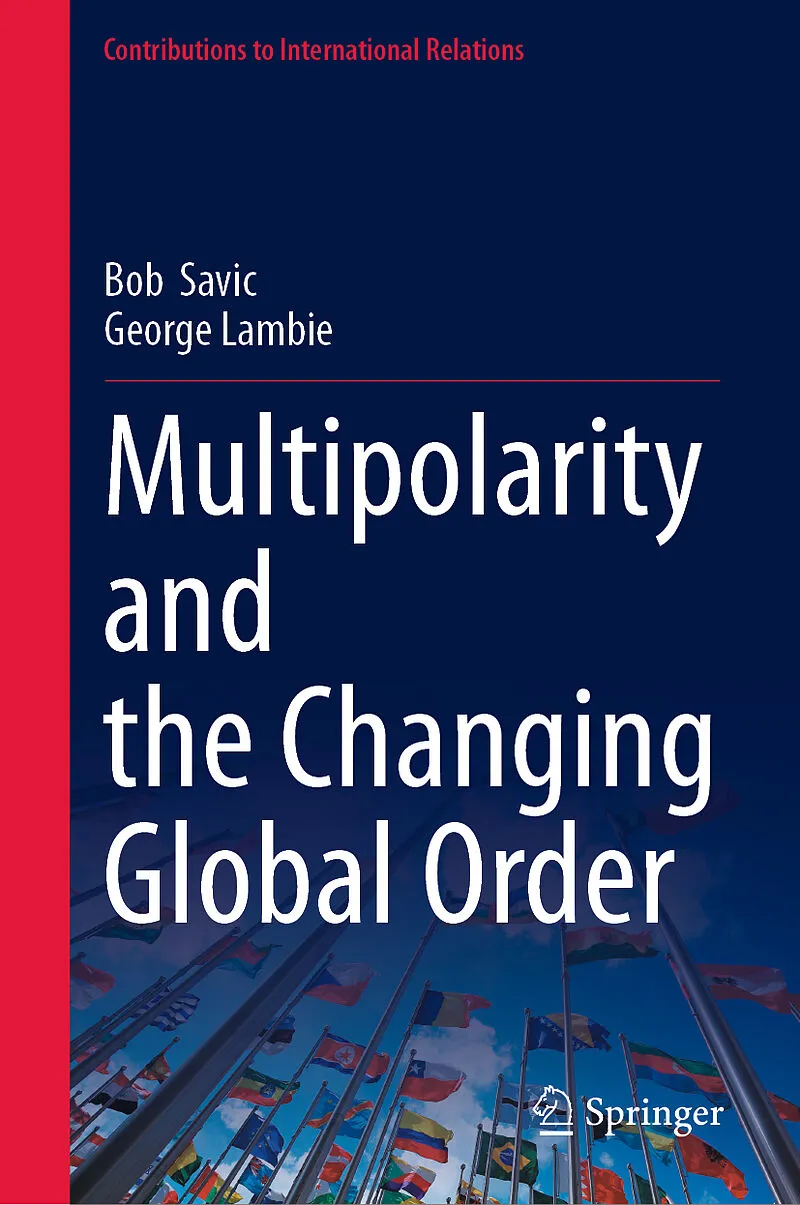
This volume discusses the rise of Multipolarity as a response to the post-Communist presumed victory of Unipolarity through the lenses of geo-politics, international relations and international political economy. When Francis Fukuyama proclaimed the 'End of H...
This volume discusses the rise of Multipolarity as a response to the post-Communist presumed victory of Unipolarity through the lenses of geo-politics, international relations and international political economy. When Francis Fukuyama proclaimed the 'End of History' at the time of the collapse of the Soviet Communist bloc in the late twentieth century, it was assumed that the West had won not just the Cold War but also consolidated more than half a millennium of hegemonic supremacy over the international order. Globalisation, the most recent and presumed last phase of this trajectory, was expected to become embedded in a transnationally integrated and Unipolar 'New World Order' based on Western values and principles. Supported by several decades of policy and academic experience, the authors argue that transnational globalisation in a Unipolar framework is no longer unchallenged and now faces the rise of 'Multipolarity' as an increasing number of nations, led by Russia and China, reject the global paradigm. This book gives an objective and informed account of the rise of Multipolarity and its consequences. It proceeds to suggest ways in which the 'West' can engage the new Multipolar realities to its best advantage.
Explains the process and development of globalisation from an IPE perspective Explores and suggests ways in which the 'Combined West' can engage the new multipolar realities to it best advantage Gives an objective and informed account of the rise of multipolarity and its consequences
Autorentext
Bob Savic is Head of Sanctions & Geopolitical Advisory Services at the Global Policy Institute in London and Visiting Professor of International Relations at the University of Nottingham (UK). He has over 30 years of high-level professional experience across China and Southeast Asia, Russia and Central Asia, the Americas, Central and Eastern Europe, the European Union and United Kingdom, in positions held with major global accounting and law firms, and publishing houses. His current areas of advisory and research include tariff and restrictive trade measures, unilateral sanctions and export controls, industrial policies on critical minerals and strategic metals, and government initiatives on achieving strategic autonomy in international relations.
George Lambie is Visiting Professor at the School of International Studies (ZIS) at the Technical University of Dresden (Germany). He has also taught at other academic institutions including the University of Hong Kong. His specialist academic areas are International Political Economy (Globalisation) and Latin American Politics. Since 1995, he has also carried out international consultancy work in Poland, Hungary, Honduras, Venezuela, and Cuba where he was Co-Director, with Cuba s Minister of Finance, between 1996 and 2000 of the first major European Commission co-operation program with the island. He has a PhD in history from University of Warwick (UK).
Inhalt
Chapter 1: Introduction.- Chapter 2: Multipolarity Setting an Analytical Context and Background.- Chapter 3: The Ascendancy of Multipolar Global and Regional Institutions.- Chapter 4: China and Russia - The Primary Pillars of the Multipolar World.- Chapter 5: A Multipolar View of the One Belt One Road.- Chapter 6: Central Asia as the Eurasian Supercontinent's Integrating Crossroads.- Chapter 7: Currency Wars and Emerging U.S. Dollar Alternatives.- Chapter 8: The Islamic World as a Rising and Coalescing Centre of Multipolarity.- Chapter 9: India and Southeast Asia The Coming Economic Superpowers and Leaders of the Global South.- Chapter 10: Enhancing Financial Multipolarity Through Central Bank Digital Currencies.- Chapter 11: Latin America and Sub-Saharan Africa Position Their Interests on the Emerging Global Power Chessboard.- Chapter 12: Europe's Stuttering Transition To Multipolarity Amid Turkey's Full Embrace.- Chapter 13: The Second U.S. Administration of President Donald Trump and the Advance of Multipolarity.- Chapter 14: Contemporary Contestations Between the Combined West's Unipolarity and Emerging Multipolarity.