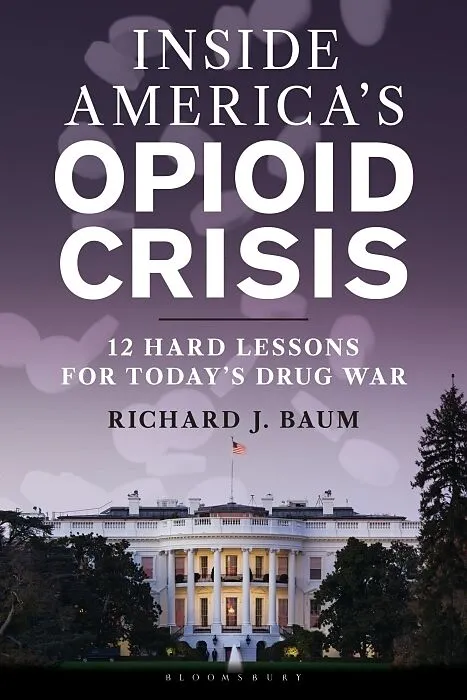
Inside America's Opioid Crisis
Beschreibung
The story of the emergence of the opioid epidemic through the corruption of big pharma has been told, the heartbreaking consequences to American families and communities have been explored, but never has someone working inside the agency leading national effor...Format auswählen
- Fester EinbandCHF 133.20

Wird oft zusammen gekauft
Andere Kunden kauften auch
Beschreibung
The story of the emergence of the opioid epidemic through the corruption of big pharma has been told, the heartbreaking consequences to American families and communities have been explored, but never has someone working inside the agency leading national efforts against drugs revealed why government has failed to produce better results and what to do about it. As a career civil servant who has served through five administrations at the White House Office of National Drug Control Policy (ONDCP), and earlier as a Congressional staff member and writer/researcher on drug policy, the author has had a perch inside the war on drugs like no other. From the start of his career working on the crack cocaine epidemic on Capitol Hill, to a year-long stint as Acting Drug Czar during the Trump Administration, he has worked on every aspect of the drug issue. Why, one might ask, when there is so much consensus among democrats and republicans, both in Washington and in state capitols, on the need to address the devastating opioid epidemic, are the results so poor? Part of the answer is the sheer lethality and ubiquity of fentanyl and the isolating covid-19 epidemic, but there is much more to the story. There are critical gaps, the author explains, in both how we understand the drug problem and how government organizes and funds the national response. The rise in fatal overdoses to over a 100,000 a year is telling us that we cannot keep operating the same way. The devastating four waves of the opioid epidemic has revealed serious weaknesses in America''s drug strategy. These weaknesses are not the fault of one administration or one political leader. Rather they are baked in deeply to how government grapples with the massive epidemic of addiction and overdose throughout the nation. These weaknesses can only be addressed if we directly confront the hard lessons from inside the war on drugs. Every component of the drug fight needs to change. The health system must do so much more than just increase the number of quality and affordable treatment slots they provide. Instead, treatment professionals must get out of their brick-and-mortar offices and start bringing mobile health services directly to people who need help. The justice system needs to accept that their job is not just to disrupt retail drug markets but also to minimize wasteful and unfair arrests while steering many more people into treatment. Homeland Security officials must tightly focus on disrupting fentanyl trafficking organizations wherever they operate and resist the political pressure to fixate over border infrastructure. Congress must increase federal spending but stop relying so heavily on large block grants that fail to produce the highest return on investments. Bureaucratic rivalries must be overcome in Washington, especially regarding the Office of Management and Budget''s damaging 30-year ''drug war-civil war'' with the Drug Czar''s office. There is a lot of blame to go around for the opioid crisis. It is time for Washington to own up to its own errors and change how it takes on the drug problem. Major reforms are urgently needed, both to address the opioid crisis and to be prepared for whatever comes next. Past mistakes ignored for too long must be forthrightly confronted so they are not repeated. This book will reveal the hard lessons and lay out a better, sounder path forward. ...
Autorentext
Richard J. Baum is Adjunct Professor at Georgetown University, and he previously served as Acting Director of the White House Office of National Drug Control Policy (ONDCP) and Executive Director of the President's Opioid Commission. Prior to his distinguished, almost three decades-long career at ONDCP, Baum was a Congressional staffer, NGO executive, and journalist. Baum's expertise has been sought after by policymakers and professionals alike. He has testified before Congress and served as a keynote speaker at national and international conferences focused on drugs, crime, and health. Raised in New York City, Baum currently lives in Falls Church, Virginia.
Klappentext
**Every component of the drug fight needs to change, from the health care system to the justice system, from Homeland security to Congress. American lives depend on it.**
The country has been buffeted by four deadly overlapping waves of the opioid crisis, starting with prescription painkillers followed by heroin, fentanyl, and now dangerous drug combinations of opioids with methamphetamine, cocaine, and other substances, often sold as pills via social media. Fatal overdoses, reduced from peak levels, is still disturbingly high. Further, drug addiction, which impacts 28 million Americans, remains unchanged. Why are the country's efforts to reduce overdoses, addiction and drug-related crime not working better? What can be done to get us back on track?
This bold new book answers these questions-not with glib rhetoric or easy solutions-but with straight talk and a clear roadmap to take on the crisis. It is time for Washington to own up to its own errors and change how it takes on the drug problem. Major reforms are urgently needed, innovations in public health, justice and social policies are spelled out throughout this book which address the opioid crisis and prepare us for whatever comes next.
Each chapter focuses on a hard lesson, detailing past failures and then outlining a path forward based on the author's lived experiences working on drug policy for over three decades, through both the crack cocaine and opioid epidemics and five administrations at the White House Office of National Drug Control Policy (ONDCP).
Recommended as the main text for courses that are focused specifically on drugs and society, war on drugs, crime and society, addiction or the opioid crisis. Higher level classes on public health, criminology, sociology, public administration, government it would be a good supplement, especially for those wanting to utilize the example of the opioid crisis as a case study on responses to this social problem of the opioid crisis and response, or the whole "failed war on drugs."
Inhalt
Acknowledgments
Introduction
1. The Longest War: America Launches Drug Fight with Supply Control, Propaganda and Prejudice
Chapter Introduction: What can Iron Man teach us about the early war on drugs?
Hard Lesson: We must confront the two original sins of the drug war - racism and the stigmatization of addiction - to effectively combat today's crisis
The Ancient Power of Opioids to Heal and to Harm
The Unregulated American Drug Market Results in Misuse, Addiction
America Helps Launch the Global War on Drugs
Cracking Down on Doctors, Dealers, and Consumers
The Trouble with Drug Treatment - There Isn't Any
The First Federal Drug Agency Focuses on Supply Control and Propaganda
The Ugly Racism of Harry Anslinger
Growing Drug Use in the 1960s Raises Anxiety in a Troubled Time
Richard Nixon and his Psychiatrists Launch the White House Drug Czar's Office
Nixon Era Drug Enforcement
Assessing the Racism in the Early Drug War
The Harsh Legacy of the Stigmatization of Addiction
Recommendations
2. Coked Up: Building Washington's Drug War Infrastructure in the Crack Cocaine Era
Chapter Introduction: This Scourge Will Not End
Hard Lesson: Drug policies and programs, built for the crack cocaine epidemic, must be overhauled for the opioid crisis
American's Taste for Cocaine Fuels Powerful Colombian Cartels
Powder Cocaine Becomes the Elite's Drug of Choice
Crack Cocaine and Its Consequences
Violent Open Air Crack Markets
Drugs, AIDS, and the Reagans
The Cocaine Overdose of Basketball Star Len Bias Sparks Political Earthquake
The 100-1 Crack Cocaine Sentencing Disparity Fiasco
Cocaine Myths and Legends
The Crack Era Ends, But the Policy Infrastructure Built for it Remains
Recommendations
**3. Prescription for Disaster: Purdue Pharma's Crime …