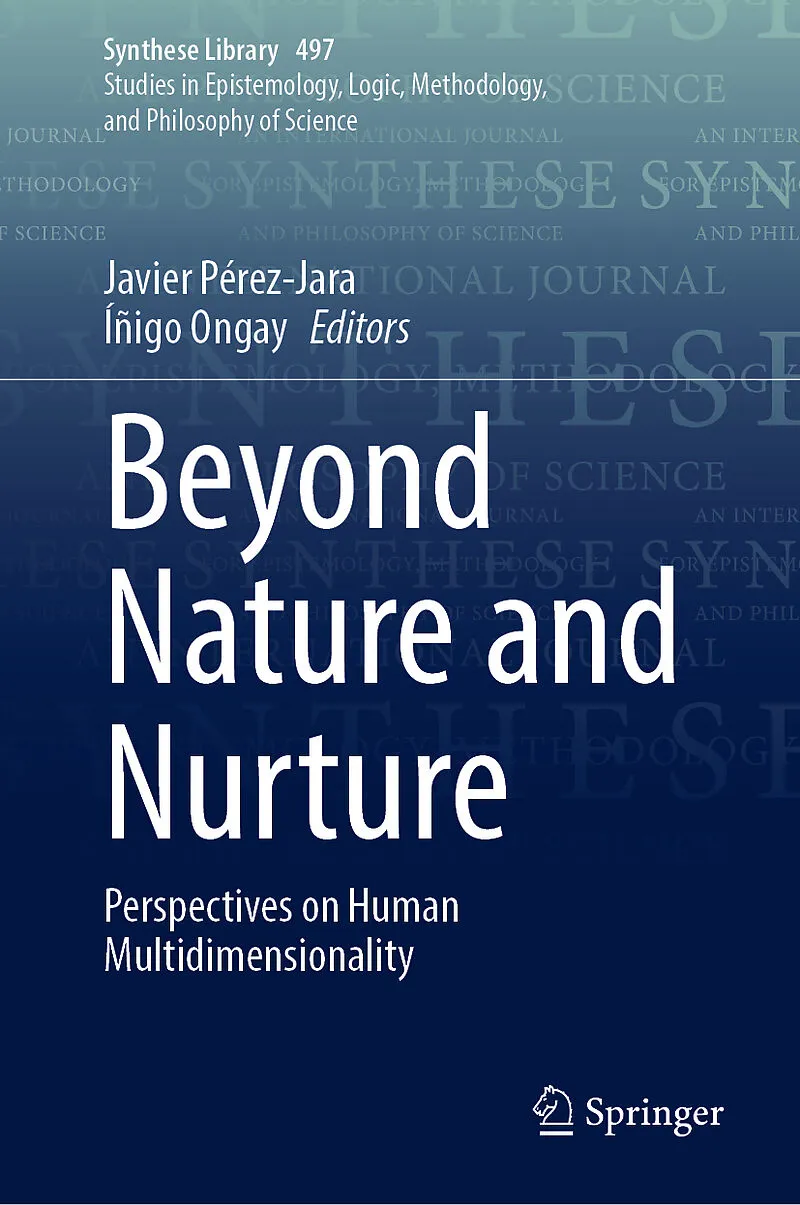
Beyond Nature and Nurture
Beschreibung
This book gathers several of the world's leading scholars in the nature vs. nurture debate, offering a timely reconsideration of the dynamic interactions between physical, chemical, biological, social, and cultural factors that shape human multidimensionality...
Format auswählen
- Fester EinbandCHF 141.20
- E-Book (pdf)CHF 142.00

Wird oft zusammen gekauft
Andere Kunden kauften auch
Beschreibung
This book gathers several of the world's leading scholars in the nature vs. nurture debate, offering a timely reconsideration of the dynamic interactions between physical, chemical, biological, social, and cultural factors that shape human multidimensionality. Emphasizing this multidimensionality, this edited volume seeks to bridge the divide between biology and social theorytwo research communities that have too often overlooked each other. These disciplines, despite being central to understanding human nature, have long operated in isolation.
While some animal species exhibit higher degrees of phenotypic plasticity in specific traits, humans stand out as the most plastic species in both their neurological and sociocultural systems. This plasticity leads the contributors of this book to move beyond both biological reductionism and the blank-slate hypothesis. While biology undoubtedly plays a role in shaping and stabilizing human social and cultural processes, it does so only within the framework of an inherently social environmentone shaped by historically contingent and socially constructed realities, such as values, codes, and cultural perceptions. More importantly, cultural structures and social interactions actively shape and transform certain biological features that were once considered immutable.
This book lays the groundwork for a productive dialogue among biologists, psychologists, social theorists, and philosophers. It also highlights some of the moral and political consequences of different perspectives within the nature vs. nurture debate. Through updated scientific and philosophical theorizing, the chapters in this book aim to overcome, once and for all, the simplistic yet persistent opposition between nature and nurture, offering a far more complex and dynamicyet richer and epistemologically manageablepicture of the human being.
The first book to cover the existing gap between the social sciences and the life sciences Bringing together two research communities which have often-times worked separately up to the present point Focusing on the logic governing the interplay between social, cultural, and biological factors in giving rise to complex systems
Autorentext
Javier Pérez-Jara is an Assistant Professor of Philosophy and East Asian Studies at the University of Seville and a Faculty Fellow at Yale University's Center for Cultural Sociology. He earned his Ph.D. in Philosophy with honors ( cum laude ) from the University of Seville in 2012. He then conducted postdoctoral research at the University of Cambridge's Department of Sociology from 2013 to 2015. Following this, he joined Beijing Foreign Studies University's International Business School as an Assistant Professor, where he taught Philosophy, Critical Thinking, and Sociology for eight years.
His work has appeared in many peer-reviewed journals, and, among his books, he is the author of Techno-Utopia and Techno-Apocalypse in Global Capitalism (Cambridge University Press, forthcoming), Science and Apocalypse in Bertrand Russell: A Cultural Sociology (co-authored with Lino Camprubí, Lexington Books/Bloomsbury, 2022), and La Filosofía de Bertrand Russell (Pentalfa, 2014). He also co-edited Dramatic Intellectuals (Palgrave Macmillan Series in Cultural Sociology, 2025) and Contemporary Materialism: Its Ontology and Epistemology (Springer's Synthese Library , 2022).
Pérez-Jara has held visiting positions across the world, including at Stanford University, Yale University, the University of Tokyo, Kyoto University, Sangyo University of Kyoto, Tohoku University, the University of Gothenburg, Aristotle University of Thessaloniki, Fu Jen Catholic University in Taiwan, and Minzu University of China.
Íñigo Ongay has been teaching philosophy at the University of Deusto in Spain since 2013. Previously, he was an Associate Professor at the Facultad de Filosofía de León (Mexico) and a Visiting Professor at several universities, including Minzu University of China, Qingdao University, Shanghai Finance University, China Jiliang University in Hangzhou, Fu-Jen Catholic University in Taipei, the University of La Rioja, and the National University of Costa Rica.
His research covers a broad range of topics, from the general philosophy of sciencefocusing particularly on the philosophy of biology and life sciencesto the history of modern and contemporary philosophy. His recent publications include articles in Filozofia Nauki ( The Philosophy of Science ) and Science and Education , as well as book chapters in edited volumes published by Springer.
Klappentext
1 Introduction: From the Ancient Greek Sophists’ Binary Between Physis and Nomos to the Present (Javier Pérez-Jara and Íñigo Ongay).- Part I The Nature vs Nurture Debate.- 2 Nature vs nurture: time to let it go (Massimo Pigliucci and Jonathan Kaplan).- 3 Human Nature. A Process Perspective (John Dupré).- 4 Positioning Sociology in the Nature vs Nurture Debate – An Ongoing Project (Ullica Segerstrale).- 5 Cultural Sociology and the Relative Independence of Culture: An Ontological and Epistemological Analysis (Javier Pérez-Jara).- 6 Psychogenesis in Evolution and History (José-Carlos Sánchez-González).- 7 Neither Nature nor Nurture: on the inadequateness of innatism and environmentalism in Biology and Psychology (Íñigo Ongay).- 8 Is Science and Ideology? (Gustavo E. Romero).- 9 Nature, Nurture, and Nous: The Role of Reflection and Reason in the Nature-Nurture Debate (Liane Gabora and Cosette Robertson).- Part II Case Studies in the Nature vs Nurture Debate.- 10 Naturalism of Mother’s Milk and its Historical Change in Japan – Modernization of Nature as Normative Concept (Shinji Kajitani).- 11 Sociocultural factors influencing fathers’ involvement in childcare: A historical perspective of Japan’s Edo and Meiji periods (Atsuko Fujino).- 12 Culture and the Microbiome-Gut-Brain (Gabe Ignatow).- 13 From Territorial Behavior to Imagined Territories and Back – Exploring Spatiality in International Relations (Jun J. Nohara).- 14 The constitutive component of sexes, genders, and sexualities: The case of Thailand (Porranee Singpliam).- 15 Naturalizing the "Unnatural" Beauty: Making Sense of the Iconic Performance of the Body in the Social Media Platform of China (Renxue Wan).- 16 Nature loves variety. On the "Backlash" against Gender Equal Policies in Japan (Kimio Ito).
Inhalt
1 Introduction: From the Ancient Greek Sophists' Binary Between Physis and Nomos to the Present (Javier Pérez-Jara and Íñigo Ongay).- Part I The Nature vs Nurture Debate.- 2 Nature vs nurture: time to let it go (Massimo Pigliucci and Jonathan Kaplan).- 3 Human Nature. A Process Perspective (John Dupré).- 4 Positioning Sociology in the Nature vs Nurture Debate An Ongoing Project (Ullica Segerstrale).- 5 Cultural Sociology and the Relative Independence of Culture: An Ontological and Epistemological Analysis (Javier Pérez-Jara).- 6 Psychogenesis in Evolution and History (José-Carlos Sánchez-González).- 7 Neither Nature nor Nurture: on the inadequateness of innatism and environmentalism in Biology and Psychology (Íñigo Ongay).- 8 Is Science and Ideology? (Gustavo E. Romero).- 9 Nature, Nurture, and Nous: The Role of Reflection and Reason in the Nature-Nurture Debate (Liane Gabora and Cosette Robertson).- Part II Case Studies in the Nature vs Nurture Debate.- 10 Naturalism of Mother's Milk and its Historical Change in Japan Modernization of Nature as Normative Concept (Shinji Kajitani).- 11 Sociocultural factors influencing fathers' involvement in childcare: A historical perspective of Japan's Edo and Meiji periods (Atsuko Fujino).- 12 Culture and the Microbiome-Gut-Brain (Gabe Ignatow).- 13 From Territorial Behavior to Imagined Territories and Back Exploring Spatiality in Internati…


